 CONTACT US!
 Doggie Deals

Mimi Green Blog
Where Should a Dog Collar Sit? Fit & Placement Guide
Jun
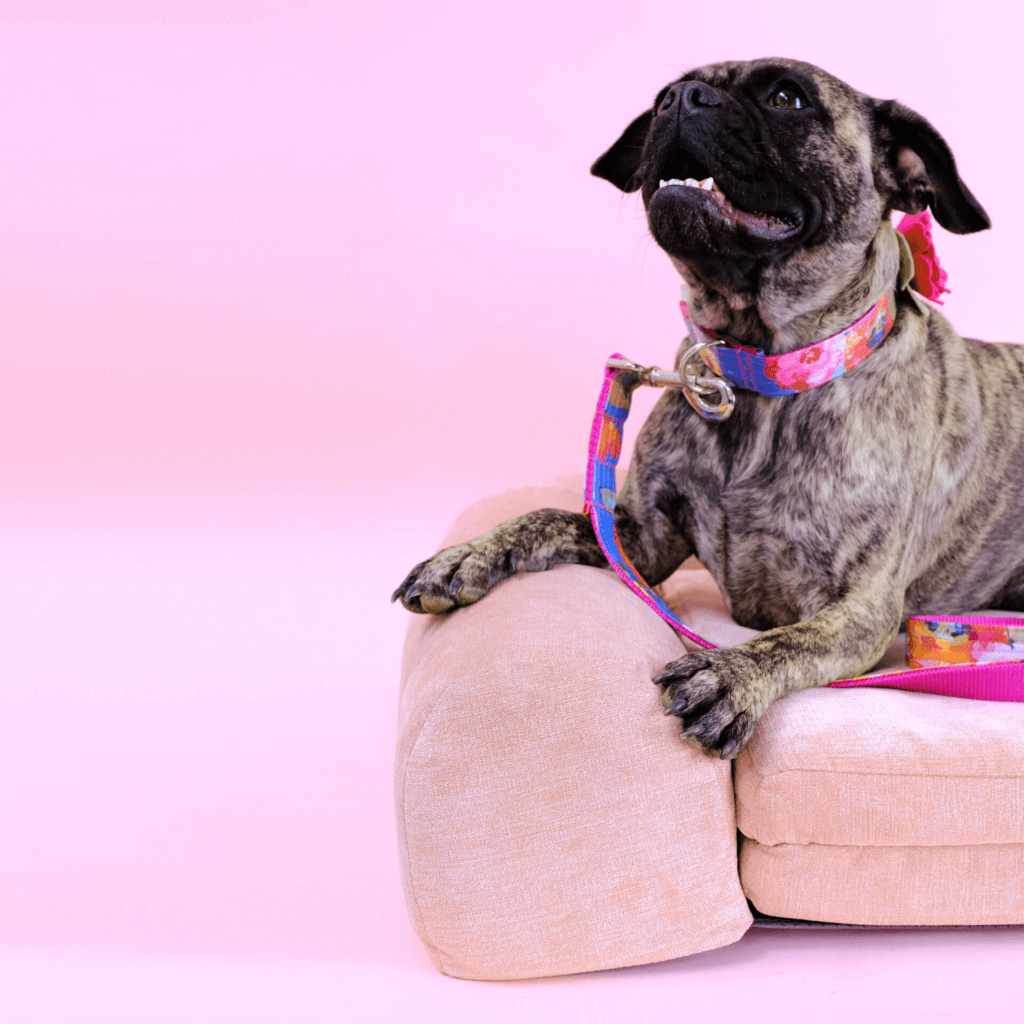
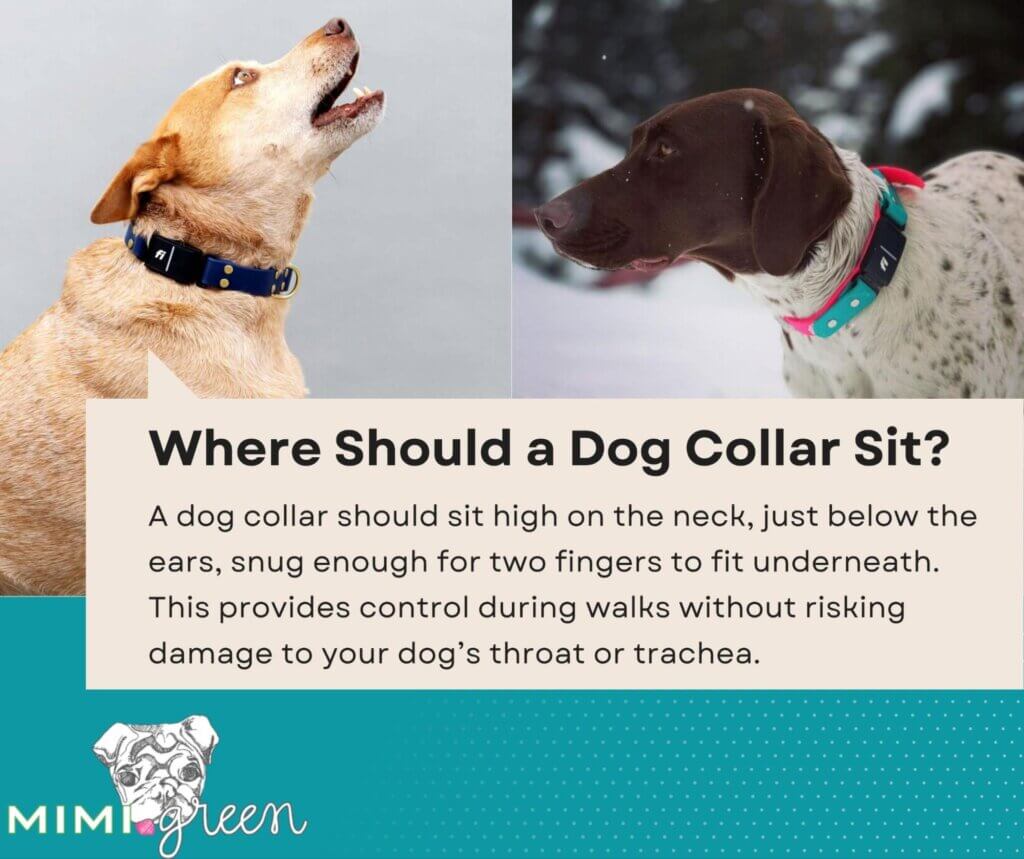
A dog collar should sit high on the neck, just below the ears, snug enough for two fingers to fit underneath. This provides control during walks without risking damage to your dog’s throat or trachea.
This guide breaks down where a collar should sit on your dog’s neck, how tight it should be, how to adjust for coat changes. Let’s find that sweet spot, because your dog deserves a collar that feels as good as it looks.
Finding The Best Position
The best position for a collar is high on the neck, just under the ears and above the shoulders. This area provides the control, especially if you’re working on loose-leash walking or using a training collar like a martingale.
But not every dog calls for a high-and-tight setup. For casual wear around the house or relaxed walks, a collar can sit lower on the neck as long as it fits securely and doesn’t slide over the shoulders.
How High Is Too High?
If the collar sits so high that it presses into your dog’s skull base or restricts movement, that’s too high. The collar should stay firmly in place but still allow you to slide two fingers underneath it.
Gravity Issue, Why Collars Slide
Let’s talk physics. Even the best-fitted collars can shift downward throughout the day, especially if your dog has a smooth coat or a top-heavy collar (like one with a chunky ID tag). This “gravity slide” is totally normal, but it can make high positioning frustrating.
To keep the collar in place:
- Use adjustable hardware and test for fit often
- Try a Martingale collar, which gently tightens if your dog pulls
- Choose grippier materials like Biothane that resist slipping
How Much Slack Should a Dog Collar Have?
A collar that’s too tight can leave marks, or worse, restrict breathing. Too loose, and your pup might back right out of it. The goal is balance: a fit that’s snug but not restrictive.
- Flat Collars: Use the two-finger test, you should be able to slide two fingers between the collar and your dog’s neck. That’s your baseline for comfort and security.
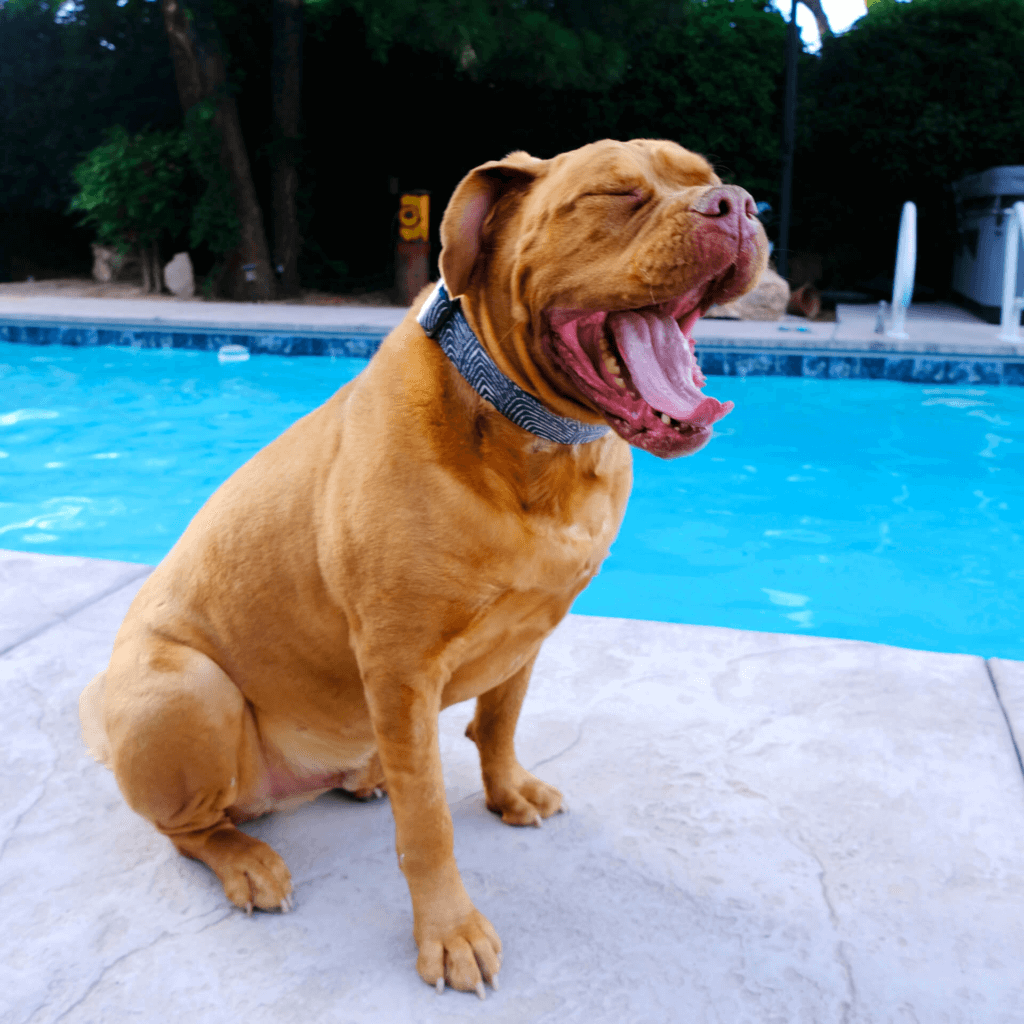
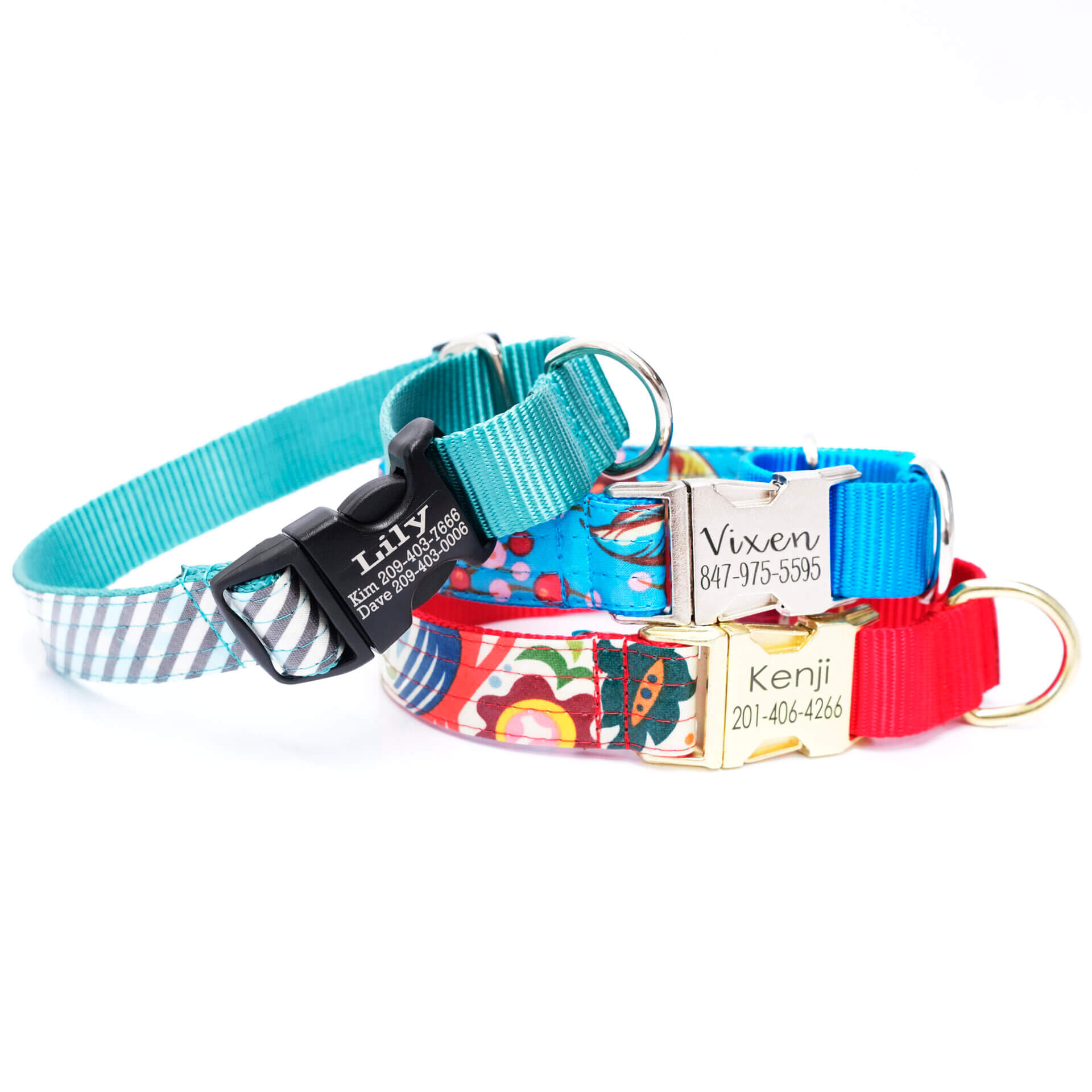
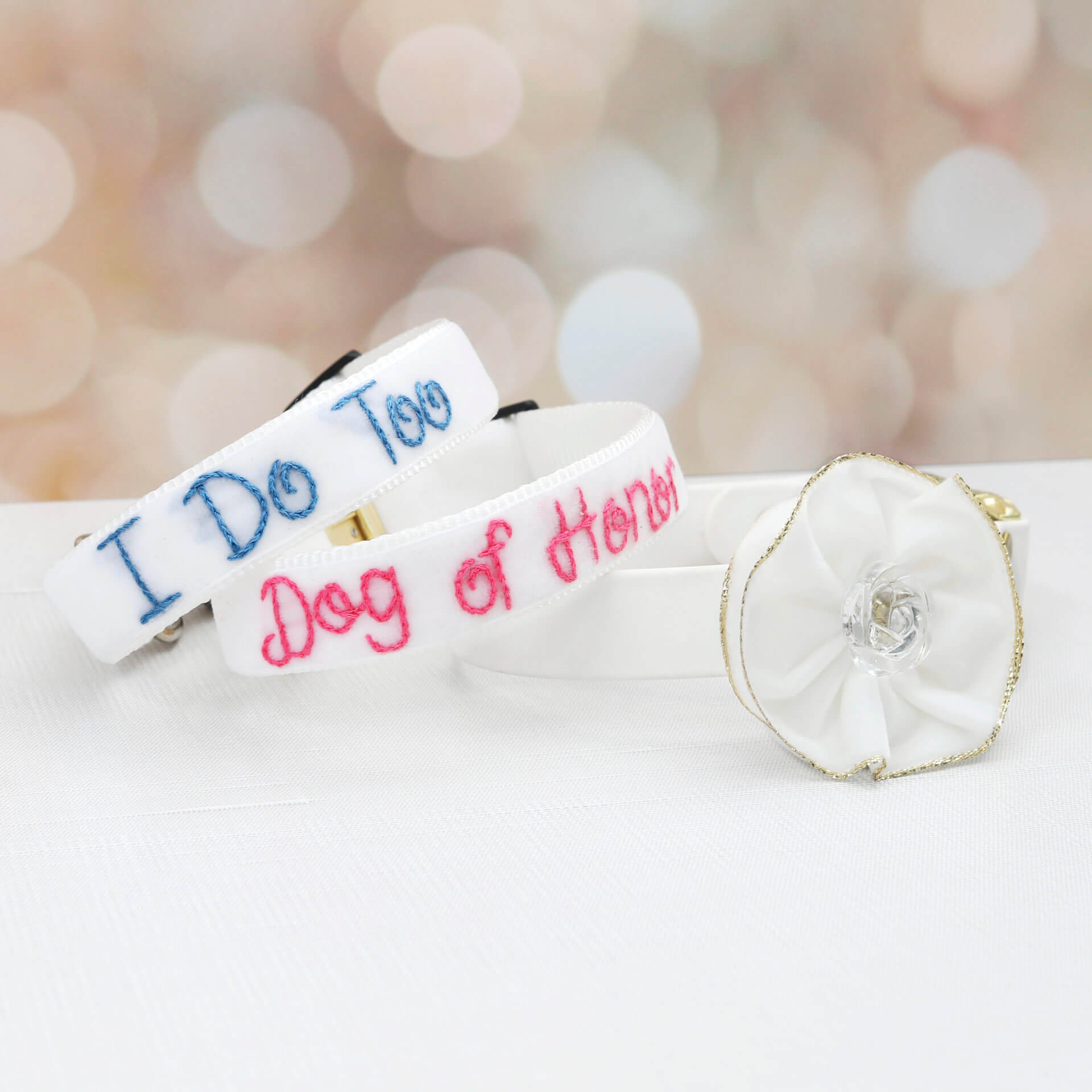
Elevate your dog’s style with our ‘Capri’ 1.5″ Wide Personalized Blue and White Laminated Dog Collar.
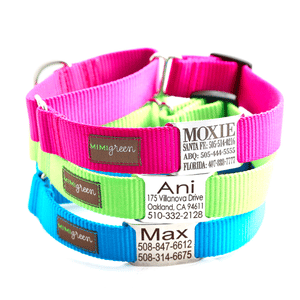
- Martingale Collars: These should also pass the two-finger test when relaxed. When pulled tight you should see 1 to 1.5 inches of space between the D-rings, preventing over-tightening.
What’s the Rule of Thumb for Dog Collars?
Coat thickness, weight fluctuations, and grooming all change how a collar sits. A freshly groomed doodle might lose a full inch of neck volume overnight. That same collar could go from snug to sliding in a single session.
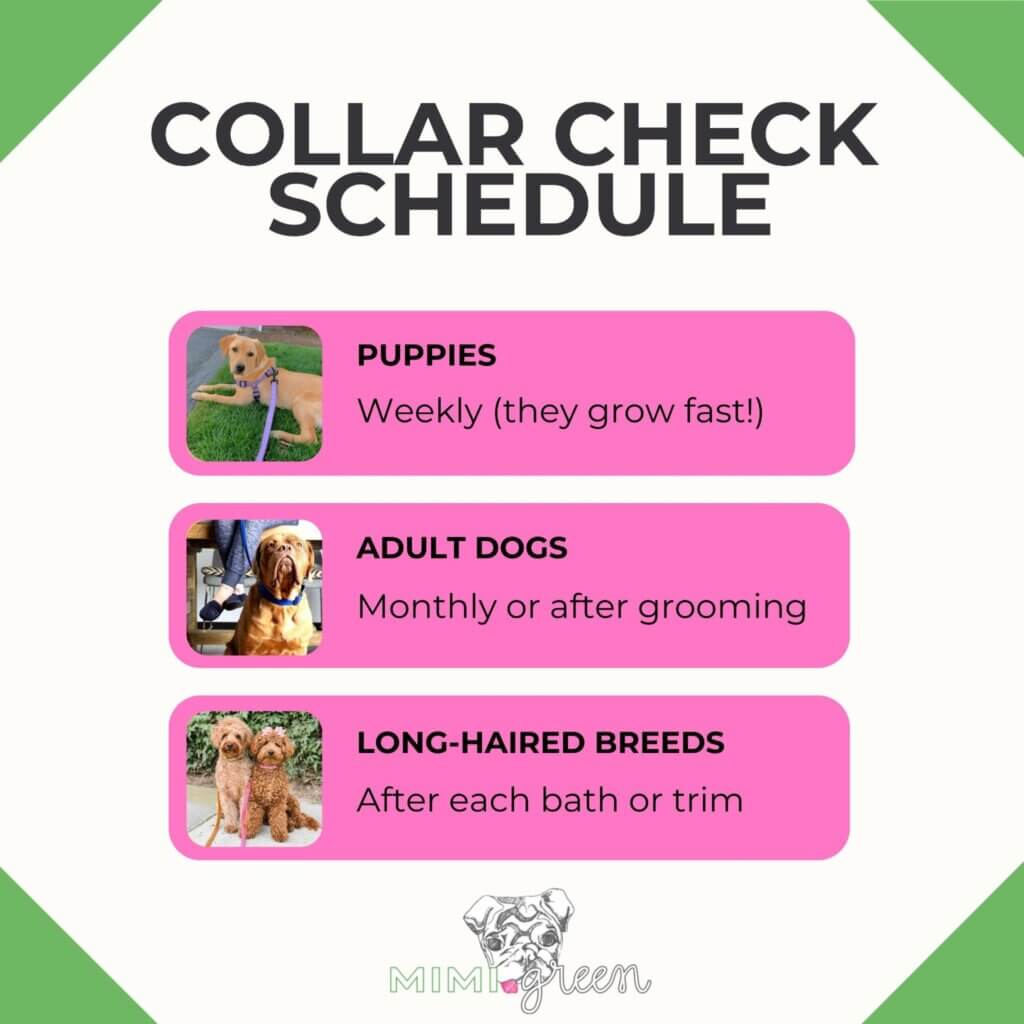
Collar Check Schedule:
- Puppies: Weekly (they grow fast!)
- Adult dogs: Monthly or after grooming
- Long-haired breeds: After each bath or trim
Fit by Collar Type
| Collar Type | Pros | Cons | Correct Fit |
| Flat | Simple, ID-ready | Can slip off narrow heads | Two-finger test |
| Martingale | Secure for escape artists | Needs adjustment with coat | Snug with 1–1.5″ between D-rings |
| Slip | Easy to slip on | Can over-tighten | Supervision only |
| Prong | Strong correction | Can injure if misused | Professional fit only |
| Breakaway | Safe for home use | Not for leash walks | Must click override D-rings for walks |
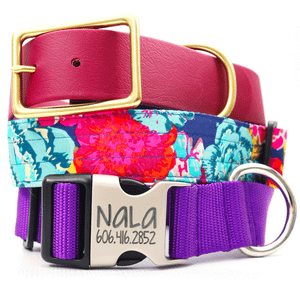
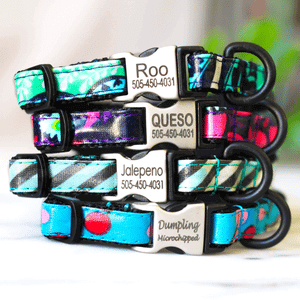
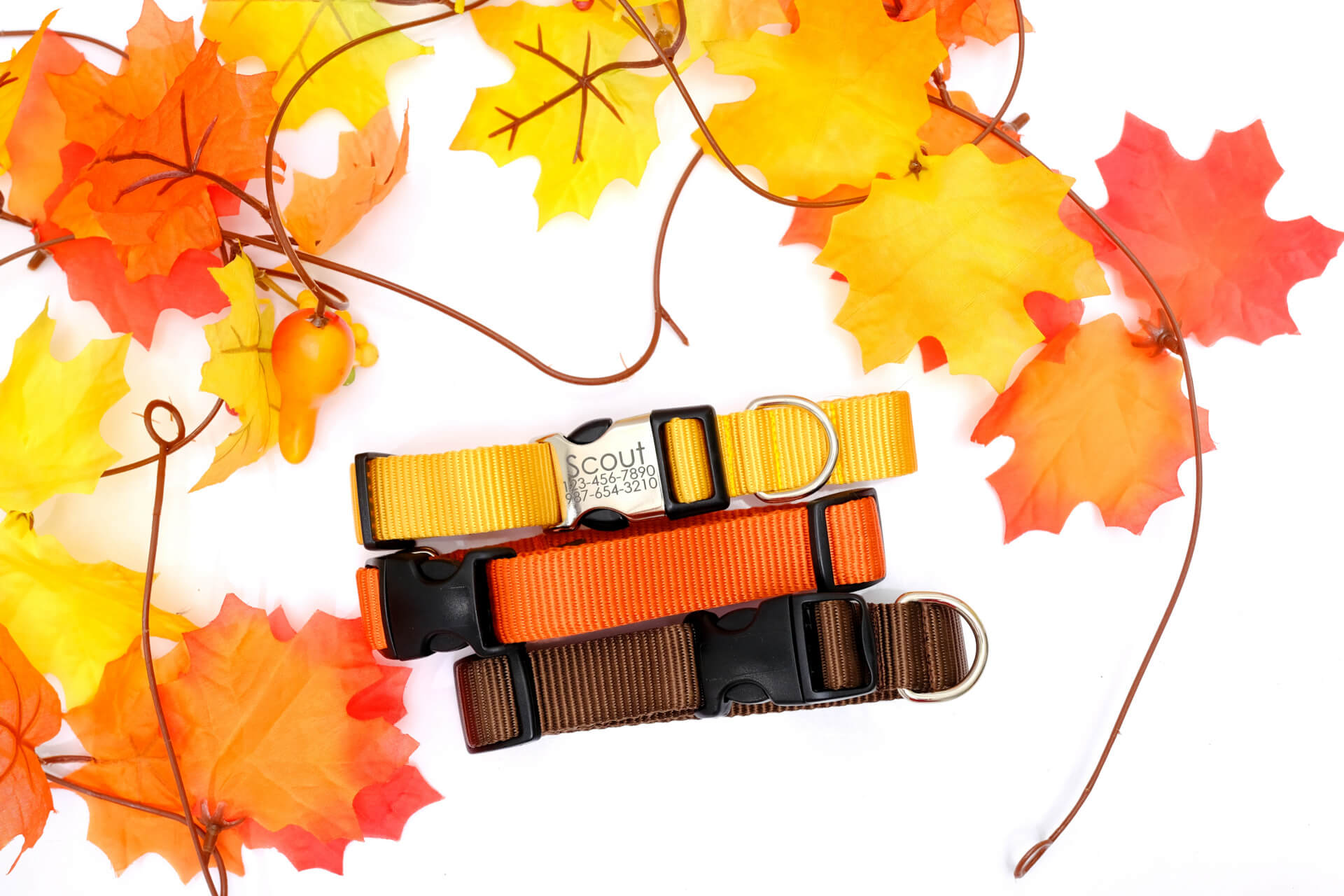
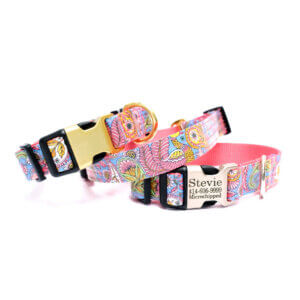
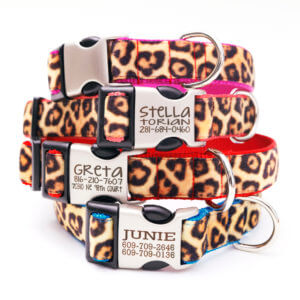
Add a splash of personality to your pup’s look with our Metal Buckle Engraved Dog Collar available in 13 vibrant laminated cotton styles, combining durability with designer flair.
What Colors Do Dogs Like the Best?
You’re picking a collar that fits, but don’t forget, your dog sees the world differently than you do.
Dogs are red-green colorblind, meaning they can’t distinguish red from green. But they do see yellow, blue, and some grays, and those colors really pop in their visual spectrum.
So if you want a collar that’s easier for your dog to notice (or that looks vibrant in your photos), stick to:
- Blue, yellow, and orange for max visibility
- Avoid muted greens, reds, and browns, they all blend into “gray” for dogs
Best Color by Coat
Choosing a color that contrasts with your pup’s coat will make the collar stand out more, too. Here’s a quick guide:
- Black coats: Go bold: try orange, yellow, or red
- White/light coats: Jewel tones like teal, purple, or black work beautifully
- Brindle or multicolor: High-contrast options like turquoise or lemon yellow keep it fun and vibrant
Looking for inspiration? Mimi Green has color palettes for every pup personality, from sleek and minimal to “look at me” brights.
Step-by-Step: How to Fit Your Dog’s Collar Correctly

Helpful Resource -> Dog Collar Size Chart
Getting a paw-fect fit isn’t hard, it just takes a few simple steps and a little observation.
- Measure your dog’s neck where you want the collar to sit (high for control, mid-low for casual).
- Add 1–2 inches to that measurement for comfort and movement.
- Check if you are able to slip two fingers under the collar snugly.
- Adjust regularly, especially after haircuts or growth spurts.
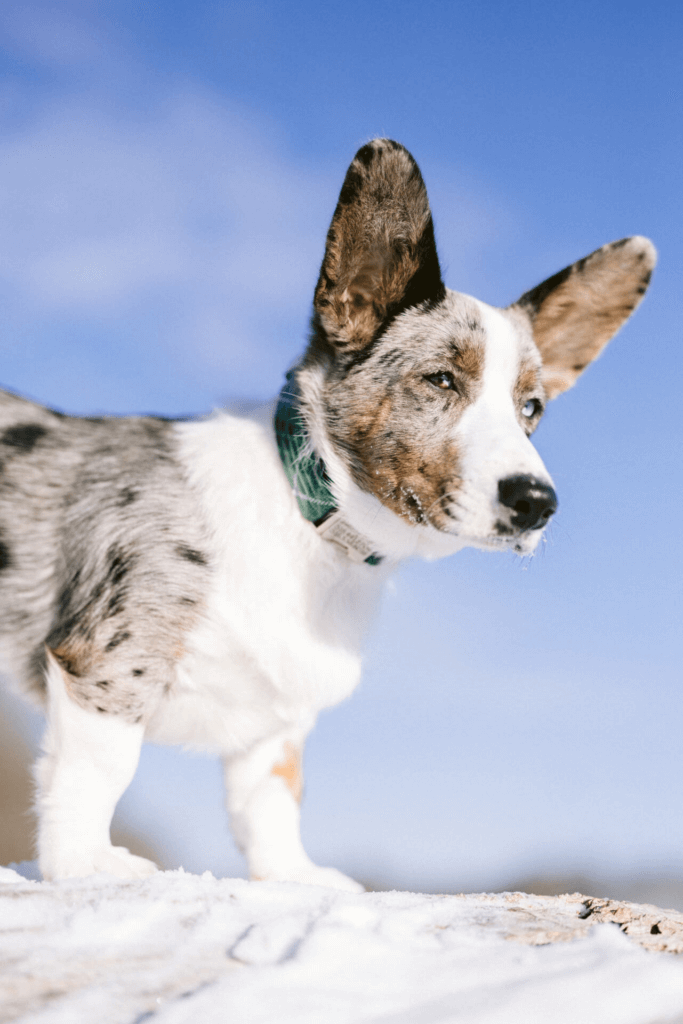
- Choose the right materials: Leather or cotton for sensitive skin, Biothane for water lovers, velvet for softness, and always pick what matches your dog’s lifestyle and coat type.
We’ve Got You Covered
You’ve measured, adjusted, and learned the “two-finger rule.” But if your dog’s collar still slips, chafes, or just doesn’t look like them, it might be time for something made just for them.
We handcraft every collar to order in our New Mexico studio. Whether you’re managing a slippery e-collar setup or shopping for a stylish martingale that actually fits, our custom collars solve real-world fit problems. Choose from:
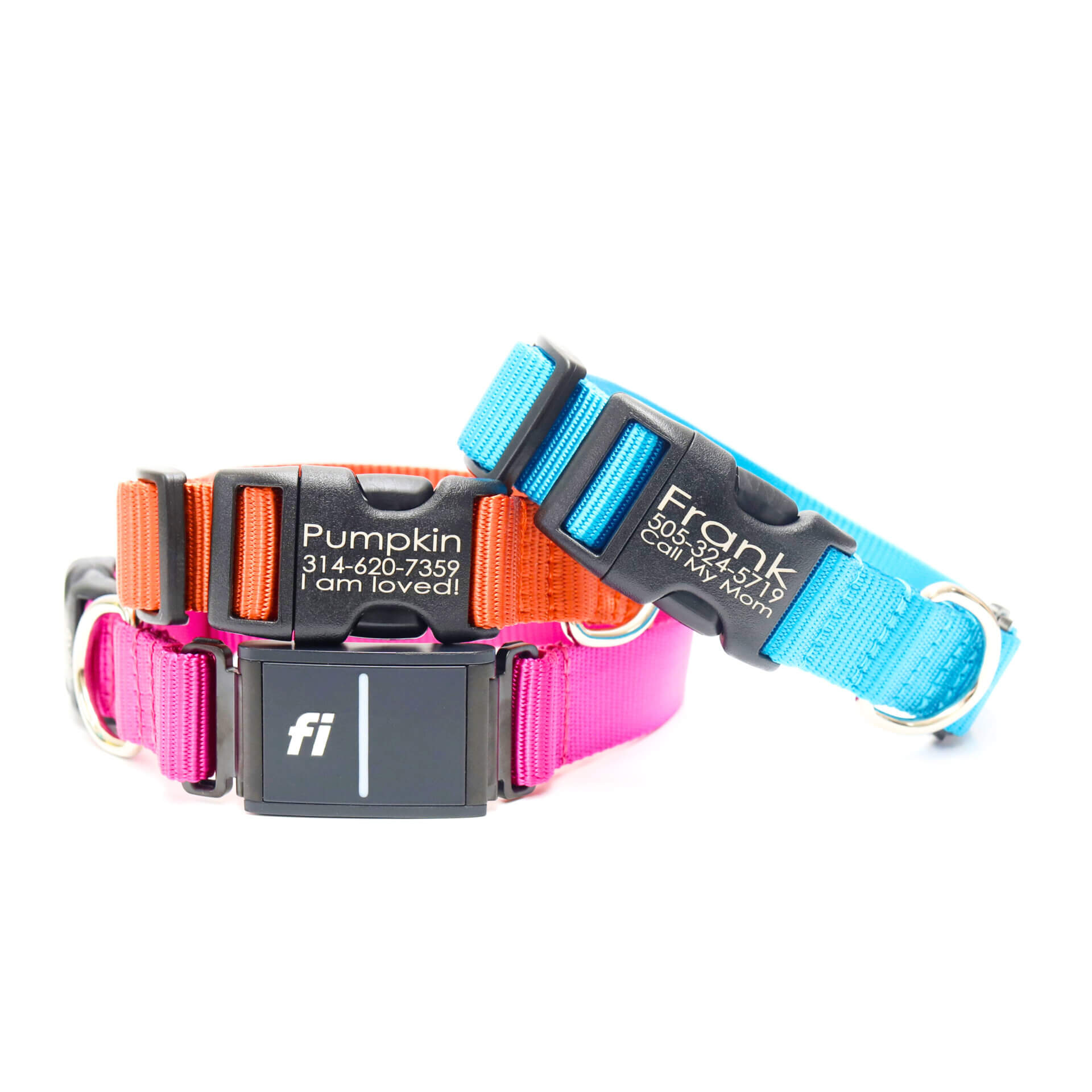
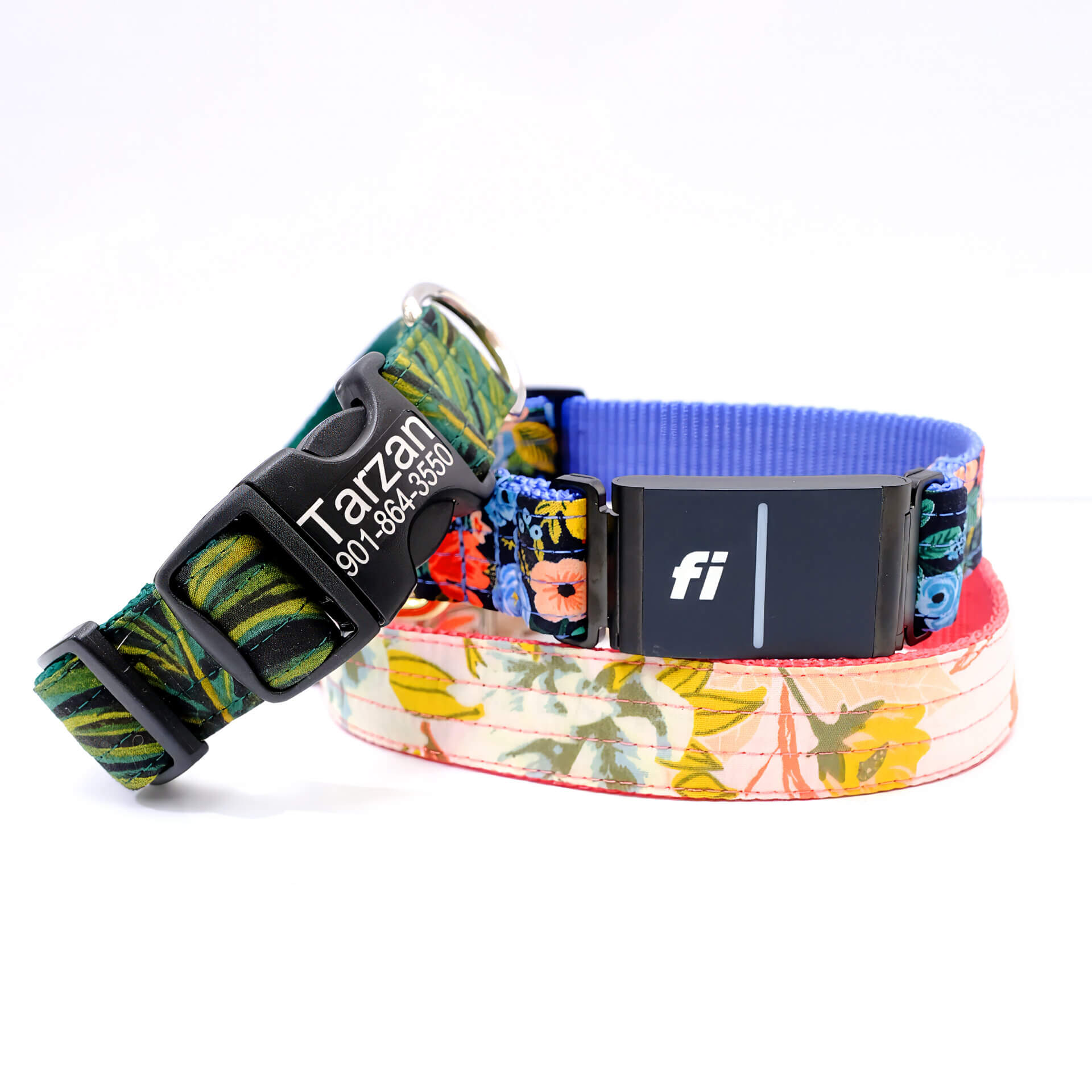
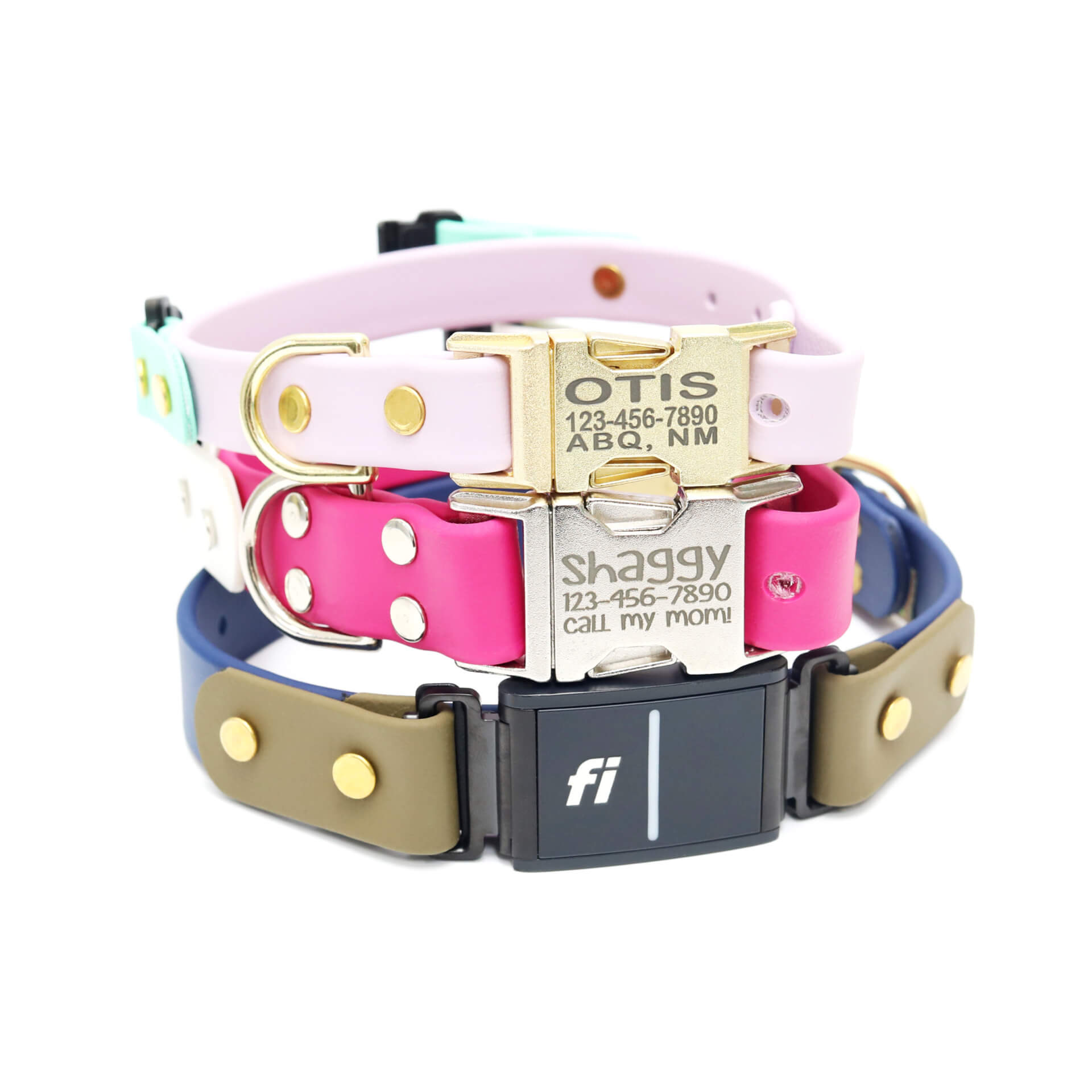
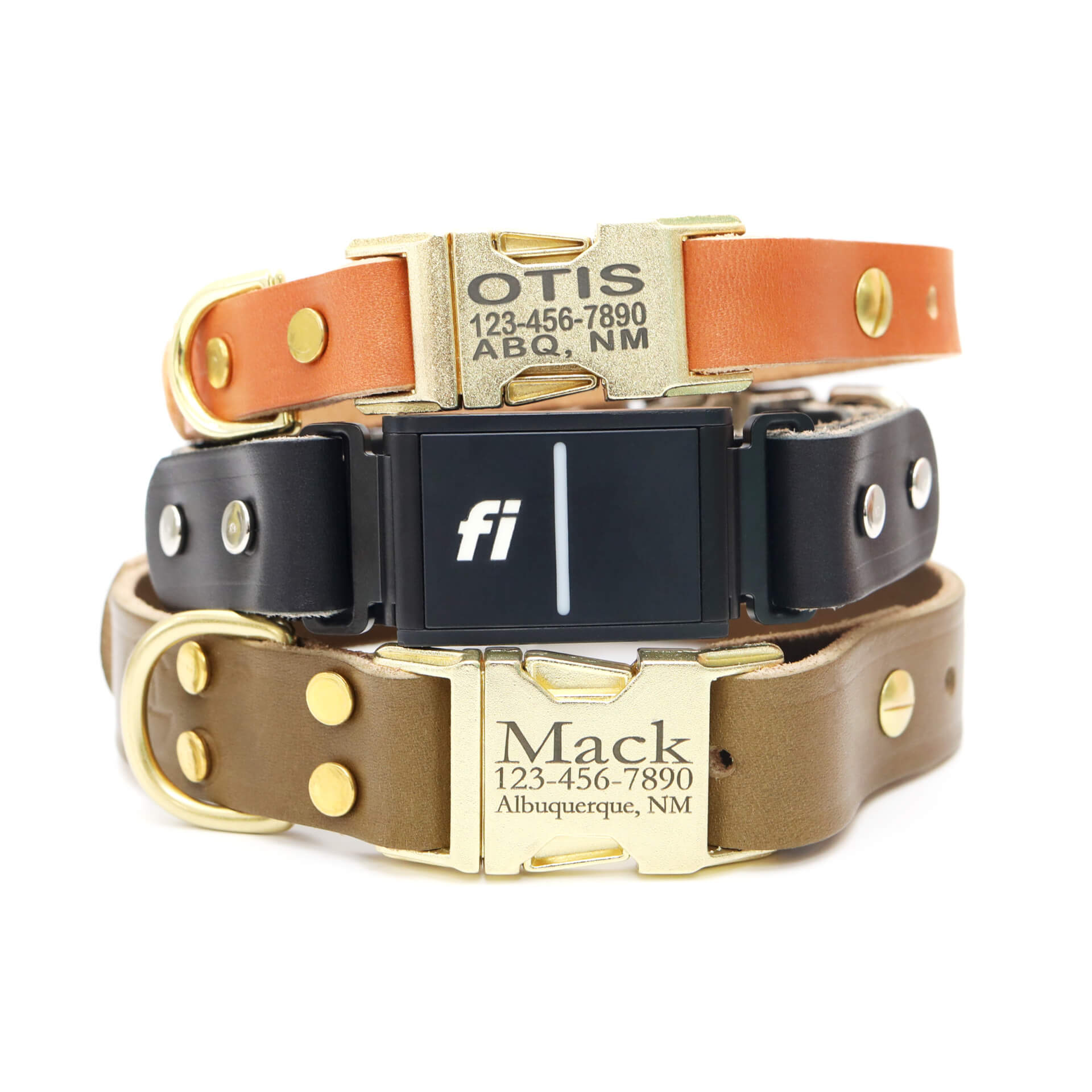
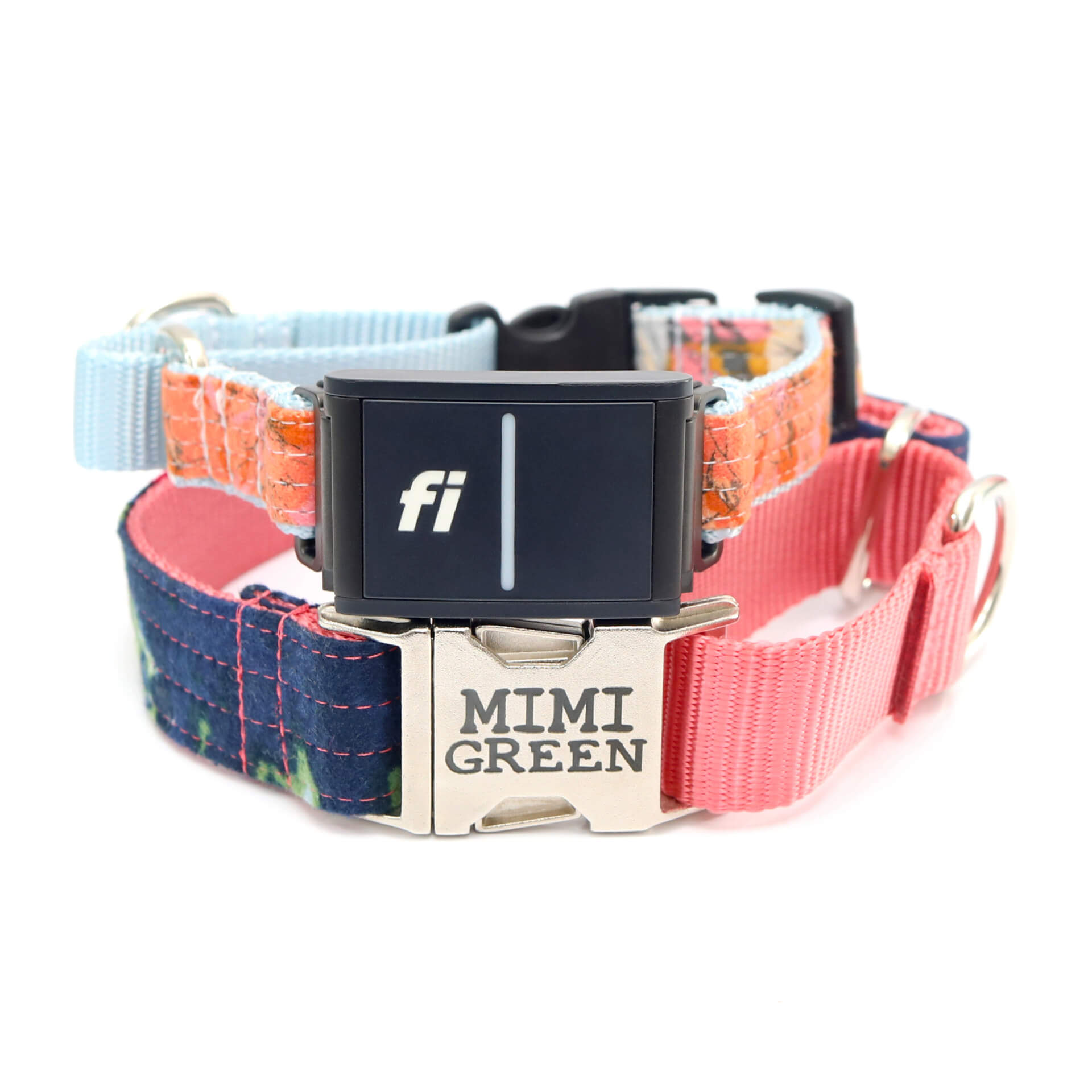
- Fi-compatible collars that stay put without pinching
- Soft, velvet-lined designs perfect for daily wear
- Biothane waterproof collars for pups who roll in everything
You stop adjusting the collar every five minutes. Your walks feel smoother. And maybe best of all? Your dog looks amazing, and feels good too. That’s what Mimi Green is all about: collars that fit better and feel better.
👉Shop the Mimi Green’s collar that reflect the love you have for your dog.
Dog Owner Worries: What Can Go Wrong?
“My Dog Keeps Slipping Out”
A collar that rides too low or fits too loosely is often the culprit. This is especially common with dogs who have slick coats or narrow heads.
Try This:
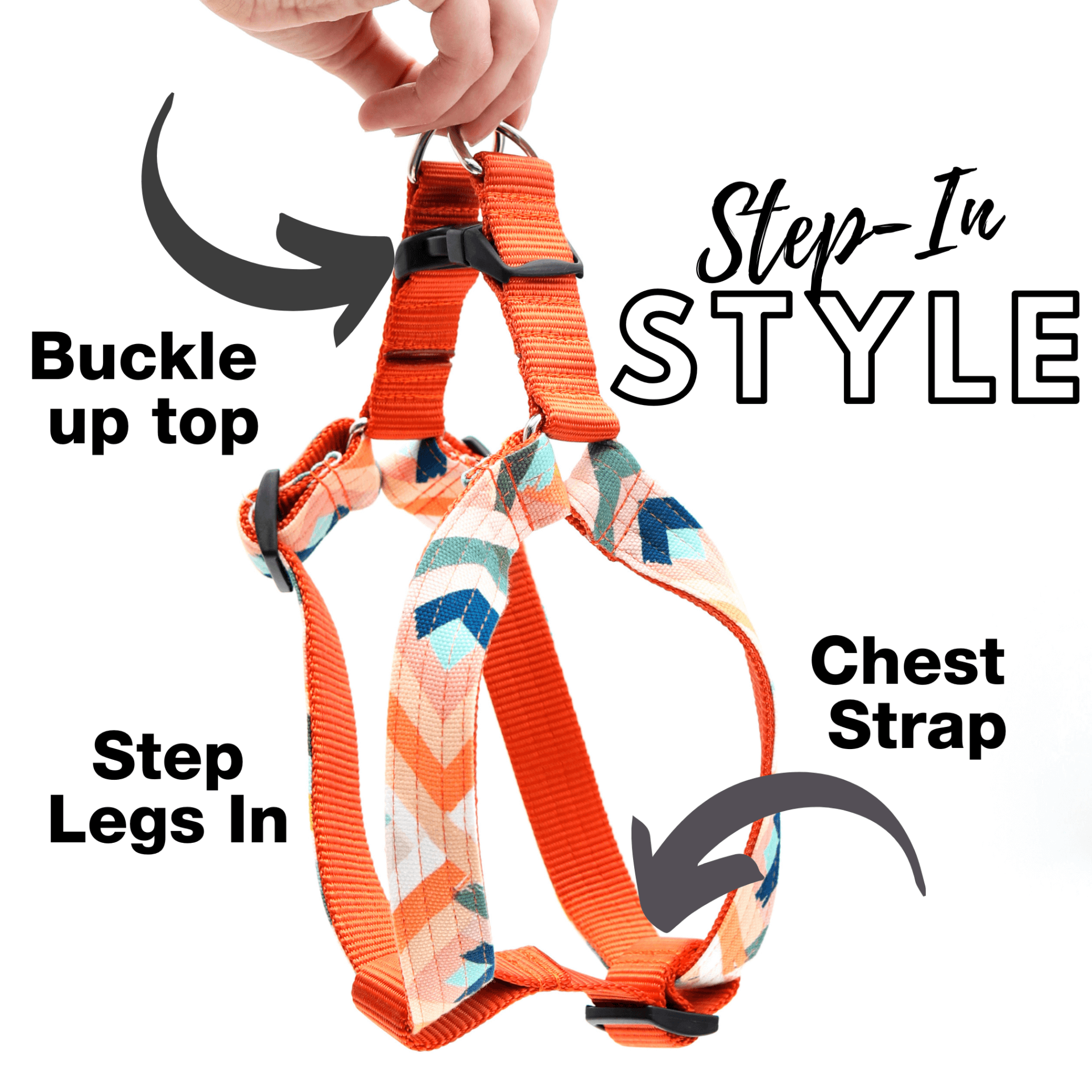
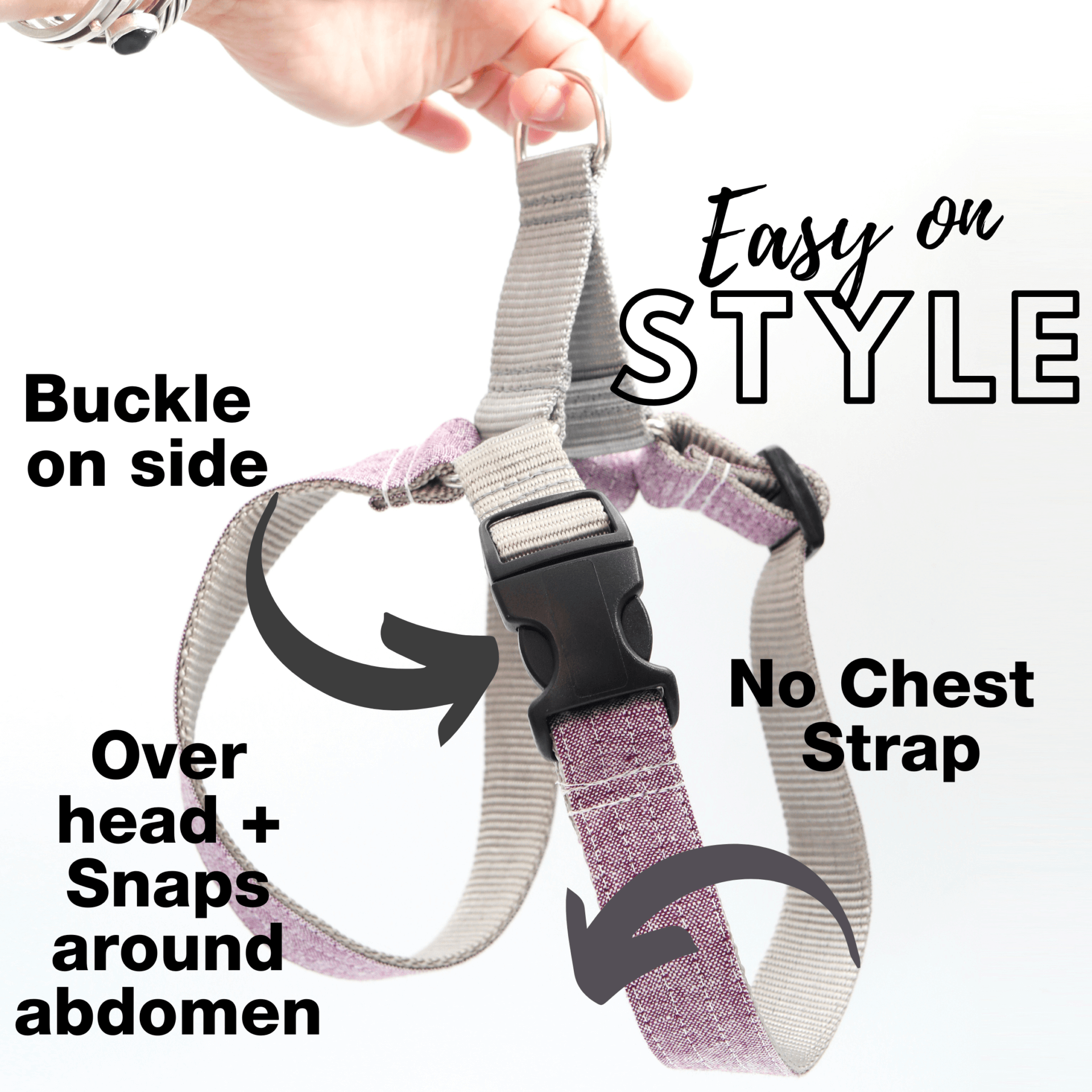
A Martingale collar or a properly sized harness can help keep your dog secure without sacrificing comfort or control.
“Is My Dog’s Collar Too Tight?”
If you see red marks, loss of fur, or your dog refuses to walk with the collar on, something’s off. Sometimes it’s the fit; other times, the material is to blame.
Solution:
- Double-check the two-finger fit
- Rotate collar position slightly each day
- Consider soft, rolled leather or hypoallergenic options like Biothane
- Have size questions? Reach to confirm size prior to ordering
“Where Should Stim Collars Sit? They Keep Sliding.”
You’re not alone. Between coat fluff and gravity, keeping an e-collar in place can feel impossible.
Tips to Fix This:
- Use a bungee strap or wing-style contacts to maintain secure contact
- Adjust placement after grooming
- Look for collar setups designed to stabilize e-collars without overtightening
“Is the Collar Damaging Their Throat?”
Tugging on low-set prong collars or tight flat collars can strain your dog’s trachea, especially in small or short-necked breeds.
What to Do:
- Avoid prong collars unless fitted by a pro
- Use padded, rolled, or soft-edged collars to reduce pressure
- Position higher on the neck when control is needed (like during training sessions)

 Engraved
 Name Plate
 Hand Embroidery
 Standard Collars
 Big Dog Collars
 Toy/Puppy Collars
 Cat Collars
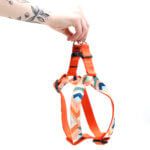 Step in Dog Harness
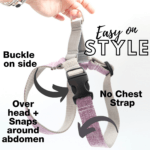 Easy On Dog Harness