Tag Archives: shopbybreed

Best Collar for Whippet: Martingale Guide

Whippets need a secure, gentle collar that won’t slip off their narrow heads. A 1–1.5″ martingale is the safest choice, tightening just enough to prevent escape while protecting the neck. Most adults measure 11–13″; always size behind the ears for a snug, slip-proof fit.

5 Key Points

  1. Whippets have narrow heads and slim necks, so standard collars slip off too easily.
  2. A 1–1.5″ martingale is the safest collar for Whippets, tightening just enough to prevent escape.
  3. Fishtail collars are stylish and protective, but martingales are more secure for everyday walks.
  4. House collars are useful for holding ID tags indoors but aren’t safe for outdoor walks.
  5. Proper measuring (behind the ears, snug fit) ensures safety and comfort, most adults fall in the 11–13″ range.

If you’ve been worried about your Whippet slipping a collar, damaging their delicate neck, or simply not finding one that fits, you’re not alone.

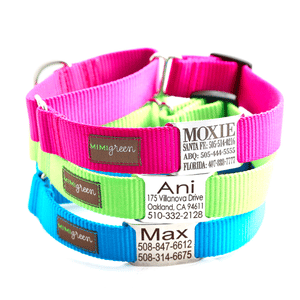
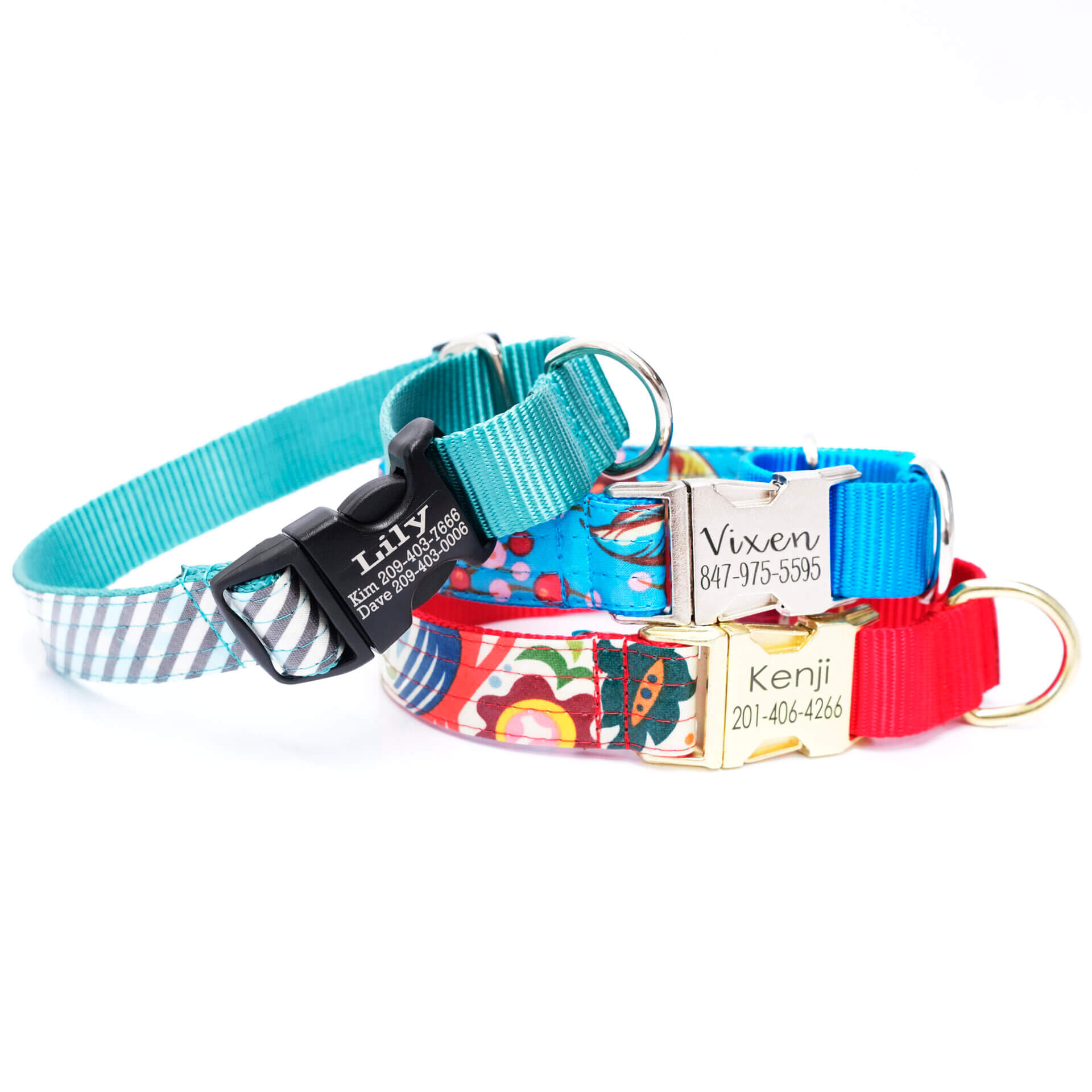
At Mimi Green, we handcraft 1–1.5″ martingale collars tailored for Whippets. Our collars combine safety with style, using durable yet soft materials like Biothane, velvet, or leather, plus custom engraving options for ID security. 

That’s the quick answer. But if you’d like step-by-step guidance, collar types compared, how to measure correctly, when to choose a harness, and how to solve worries like slipping or neck irritation, then keep reading.

Go With a 1–1.5″ Martingale Collar

A martingale collar is the safest and most practical choice for Whippets. Unlike flat collars that can slip right over their heads, martingales tighten slightly when tension is applied, keeping your Whippet secure without choking.

  • Whippets’ narrow heads mean flat collars aren’t reliable.
  • A 1–1.5″ martingale distributes pressure evenly, protecting their delicate necks.
  • Especially helpful for nervous or energetic Whippets who might bolt.

Why Whippets Need Special Collars

Featured Product: Wide Canvas Dog Collar

Whippets aren’t built like most dogs. Their slim heads and long, delicate necks make finding a safe collar more challenging.

  • Slip risk: Standard collars slide off too easily.
  • Neck strain: Thin collars can dig into soft tissue and cause injury.
  • Owner worries: Many fear choking, irritation, or an unsafe fit.
  • Everyday use: Lightweight house collars are fine for ID at home, but outdoor walks call for a martingale.

A Whippet-specific design is non-negotiable if you want both safety and comfort.

Best Collar Types for Whippets (Pros & Cons)

Featured Product: 1.5″ Wide Leather Dog Collar with Engraved Riveted Nameplate

Martingale Collars: The #1 Pick

  • Slip-resistant and escape-proof by design.
  • Great for nervous or flighty Whippets.
  • Gentle tightening avoids throat pressure.
  • Remove when unsupervised for safety.

Fishtail Collars (Leather, Wide Canvas)

  • Wide mid-section protects the neck.
  • Classic, elegant look that flatters Whippets.

House Collars for Everyday ID

  • Lightweight and simple, designed only for tags.
  • Not safe for walks, always switch to a walking collar outside.

Collar vs Harness: Which Works Best?

Both collars and harnesses can work for Whippets, but each has a time and place.

  • Collars are best for ID and for Whippets who walk calmly.
  • Harnesses distribute force across the chest, helping dogs with throat issues or strong pullers.
  • The challenge: Slim, deep-chested Whippets can chafe in poorly fitted harnesses. Front-clip harnesses often slide off-center and cause sores.
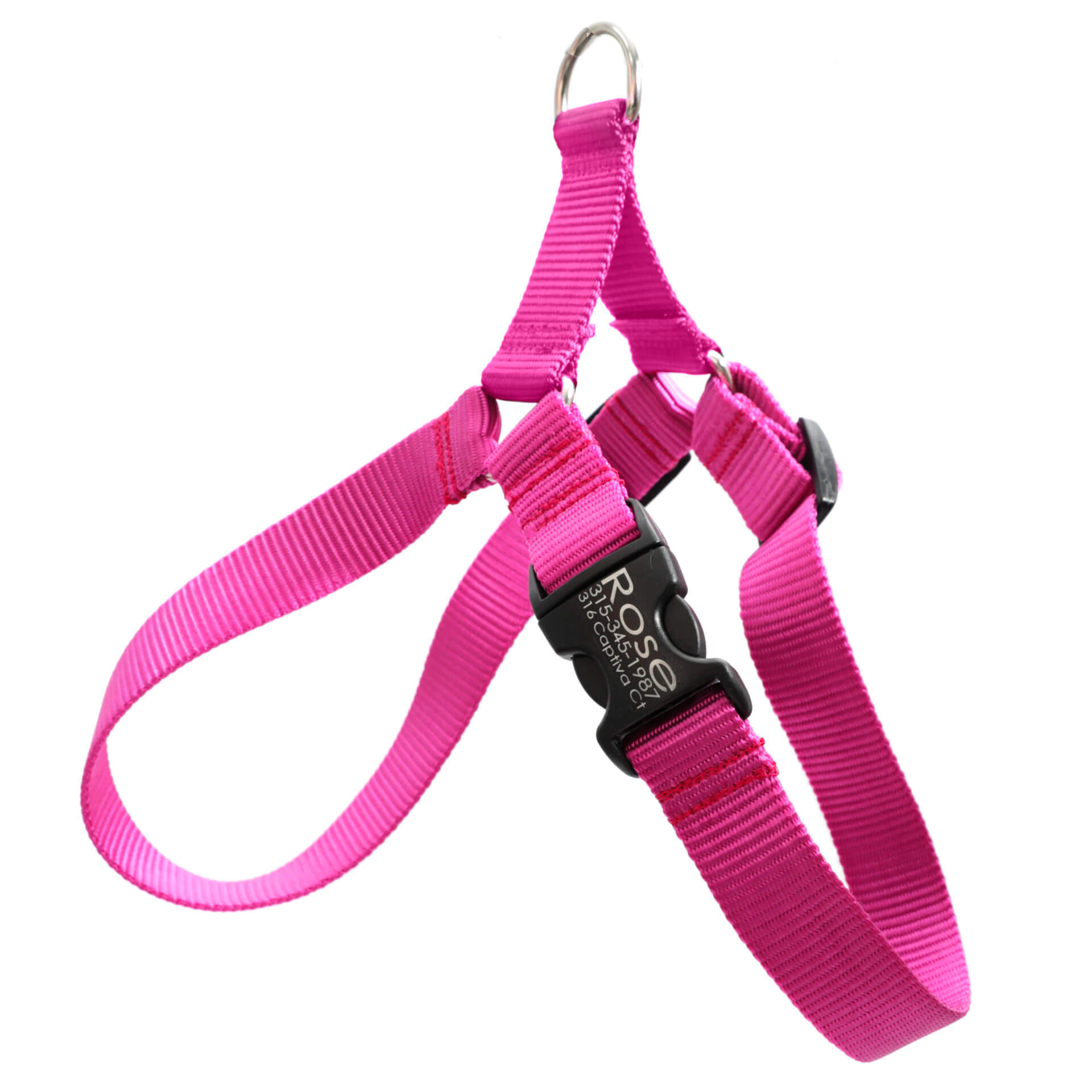
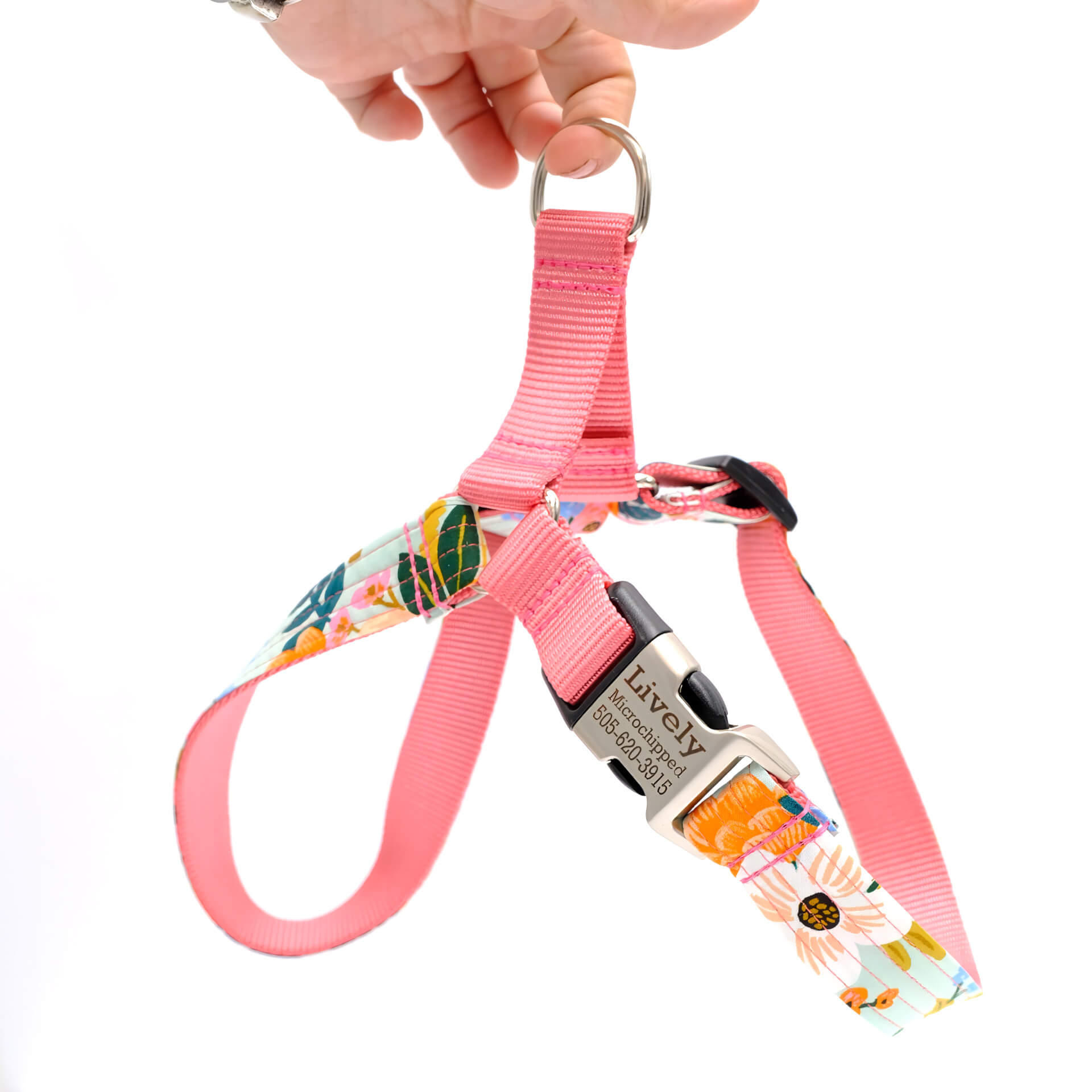
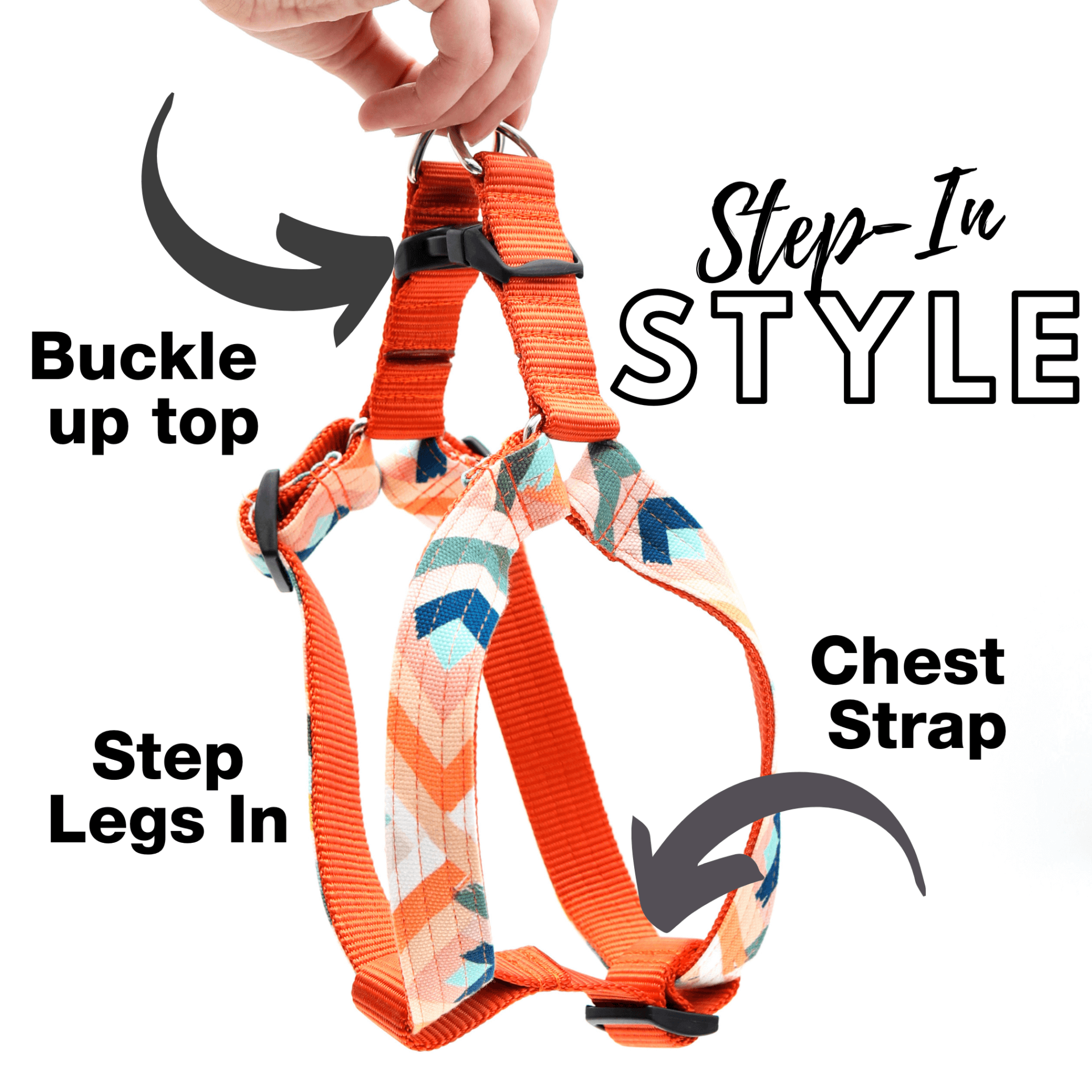
  • The exception: Mimi Green’s Step-In and Easy-On harnesses are handmade in the USA and designed to match collars for a complete set.

Features to Look For in a Whippet Collar

Not all collars are created equal. For Whippets, pay close attention to the details:

How to Measure Your Whippet for a Collar

Fit is everything for Whippets. Because their heads are slimmer than their necks, measuring correctly keeps them safe.

Step-by-step guide:

  1. Use a soft tape and measure high on the neck, just behind the ears.
  2. Keep the tape snug but not tight ,  apply the “two-finger rule.”
  3. Most adult Whippets measure 11–13″ around the neck, but always size your own dog.
  4. Re-check fit regularly, especially after grooming or seasonal weight changes.

Pro Tip: When in doubt, size up slightly. A collar can always be adjusted smaller, but not larger.

Puppies vs Adult Whippets

Whippets grow quickly, and their collar needs change along the way.

  • Puppies: Start with lightweight, 1″ collars. Avoid bulky or heavy hardware that could strain their necks. Check fit weekly ,  they can outgrow a size faster than you expect.
  • Adolescents: As they get more adventurous, switch to a martingale for security.
  • Adults: Most do best in a 1.5″ martingale that balances safety with comfort.

Growing Whippets aren’t one-size-fits-all ,  adjust often and upgrade as needed.

Solving Whippet Collar Problems

Every Whippet owner worries about fit and safety. Here’s how to handle the most common issues:

  • Collar slipping off: Use a martingale fitted high on the neck.
  • Neck irritation: Choose wide dog collars, softer materials like velvet or Biothane.
  • Sizing mistakes: Don’t guess by weight. Always measure the neck directly.

Whippet Owner’s Gear Checklist

Before you head out the door, here’s what most Whippet households rely on:

  • 1–1.5″ Martingale Collar for everyday walks
  • Lightweight house collar for ID tags indoors
  • Properly fitted harness (optional backup for strong pullers)
  • Matching leash (4–6 ft; avoid retractables for safety)
  • Engraved buckles or nameplates to keep ID secure without dangling tags
  • Monthly gear check, replace collars showing fray, wear, or stretched hardware

This quick checklist helps prevent slips, irritation, and those “oh no” moments mid-walk.

Why Mimi Green is the Best Choice for Your Whippet.

  • Made to order in the USA
  • Thoughtful materials
  • Customization that lasts
  • Full sets available

Your Whippet deserves gear that’s as graceful and dependable as they are. 

👉Shop Whippet Martingale Collars Now

FAQs

Do Whippets need special collars? Yes. Their anatomy makes standard flat collars unsafe. Martingales or fishtails are the safest designs.

Are martingale collars safe for Whippets? Yes. When fitted correctly, they tighten gently without choking, preventing escape.

Should I use a collar or a harness? Both can work. Use a collar for ID and walks, and add a harness if your Whippet pulls or has throat sensitivity.

How do you measure a Whippet for a collar? Measure high on the neck, just behind the ears, keeping the tape snug but comfortable.

What size collar does an adult Whippet need? Most adults wear 11–13″ collars, though every Whippet should be measured individually.

Best Collar for German Shorthaired Pointer

The best collar for a German Shorthaired Pointer is a durable, secure everyday collar (nylon or waterproof Biothane®) fitted with a two-finger snugness, plus a martingale for training or fi compatible for escape-risk moments. Choose materials by lifestyle (water, field work, city) and add ID engraving for safety.

Quick Answers for GSP Dog Parents

  1. German Shorthaired Pointers (GSPs) grow fast, expect at least two collar sizes from puppyhood to adulthood.
  2. Durable collars are non-negotiable; flimsy or decorative-only collars won’t last with this athletic breed.
  3. Flat collars work for daily wear, but martingales add safety for pullers or escape risks.
  4. Materials matter: waterproof Biothane® for swimmers, leather for timeless style, nylon webbing for everyday comfort.
  5. Fit is everything, measure correctly and always use the two-finger snugness test.

GSPs aren’t your average couch-potato dogs. They’re hunters, runners, and full-time athletes. 

A weak buckle or itchy fabric won’t cut it for a dog that spends hours charging through fields or swimming after ducks. That’s why size, material, and strength aren’t just “preferences”, they decide whether your dog is safe, comfortable, and secure on every adventure.

At Mimi Green, we hand-make collars in the USA with premium webbing, waterproof Biothane®, leather, velvet, and even glitter for the stylish pups. Every collar can be customized with engraved buckles, embroidery, or matching leashes. 

If you want the full breakdown, collar types, sizing steps, breed-specific tips, and the real differences between options, keep reading, because that’s exactly what follows.

What Makes a GSP’s Best Collar Different?

High-drive, athletic GSPs need a secure, durable, low-maintenance collar with correct fit and quick ID. Materials should resist water, odor, and wear from activity; training add-ons should be used thoughtfully.

German Shorthaired Pointers are bred to work, not lounge. 

Their lean build, boundless energy, and strong prey drive mean they test their collars every single day. Flimsy hardware or cheap nylon frays can’t keep up. 

Unlike small breeds that can get away with lightweight collars, a GSP’s collar has to check three boxes: strength, fit, and safety.

  • Strength: Webbing that withstands thousands of pounds of pulling force.
  • Fit: A secure size that won’t slip off their narrow head during a lunge.
  • Safety: Engraved ID, reflective details, or even GPS for off-leash adventures.

Mimi Green collars combine all three, each handmade in the USA with the option to engraved buckle so ID never slips off.

Step-by-Step: How to Choose the Right Collar for a GSP

Follow this simple path: pick type for use case, choose material for lifestyle, measure and size, add ID, then test fit on a walk.

  1. Pick the collar type – Flat for everyday wear, martingale for training or escape-prone pups.
  2. Choose material for lifestyleWaterproof Biothane Collars for swimmers, strong nylon for daily wear, or leather for long-term style.
  3. Measure carefully – Use soft tape around the mid-neck and apply the two-finger snugness rule.
  4. Add secure ID – Opt for engraved buckles over dangling tags.

This step-by-step approach prevents wasted purchases and keeps your GSP safe whether they’re tearing through fields or snoozing after a run.

Collar Types for GSPs: Pros & Cons

Most GSPs thrive with a flat everyday collar; add a martingale for training or extra security. Specialized tools (head, prong, e-collar) are for experienced handlers with trainer guidance.

Flat/Everyday Collar

All-day wear and ID, choose sturdy webbing or leather with a secure engraved buckle.

Flat collars are simple, reliable, and perfect for daily use. They hold ID securely and come in endless patterns and fabrics at Mimi Green. Choose engraved buckles.

Martingale


Ideal for narrow-headed breeds like GSPs, martingales prevent slipping out without choking. Ours are handmade to order, with optional engraving and embroidery.

Material Guide for GSPs

Match material to how your GSP lives: water dogs, field runners, or city strollers.

  • Waterproof Biothane Collars – Best for swimmers, mud lovers, or rainy climates. Easy to wipe clean, odor-resistant, and flexible in cold weather.
  • Nylon – Strong and washable, perfect for daily wear. Mimi Green’s webbing withstands 3,100+ pounds of pressure.
  • Leather – Classic, long-lasting, and softens over time. Needs conditioning and is not ideal for water-heavy lifestyles.
  • Velvet or Glitter Options – For style-conscious pet parents who want durability with flair. These are lined with sturdy nylon for comfort and function.

Buckles, Hardware & Safety

Choosing the right hardware is just as vital as material:

  • Plastic vs. Metal: Many assume metal is stronger, but Mimi Green’s military-grade plastic buckles often outperform because they have fewer weak moving parts.
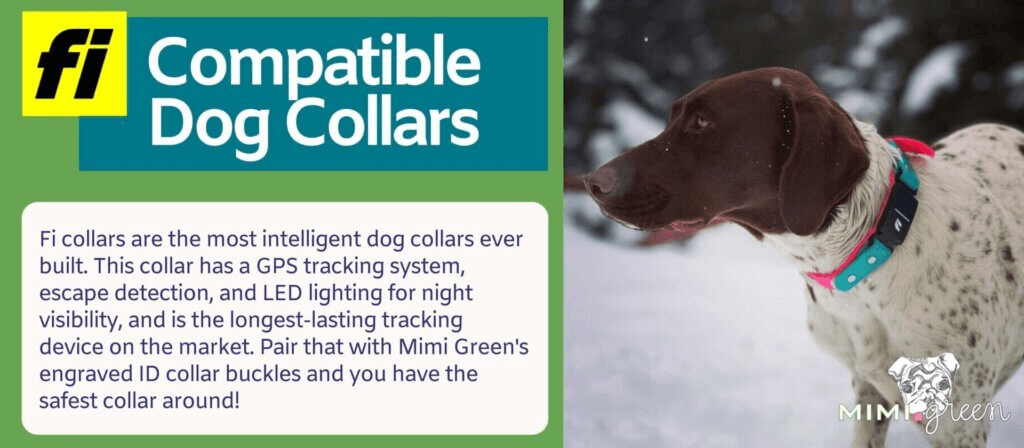
  • Fi Compatible: For roaming adventurers, GPS compatible collars add peace of mind.
  • Engraved buckle: Keep ID permanently attached without dangling tags that can snag or break off.

GSP Sizing & Fit (Exact Steps)

Measure at mid-neck where the collar sits; use your chosen collar’s size chart; confirm with two-finger snugness and a short walk test.

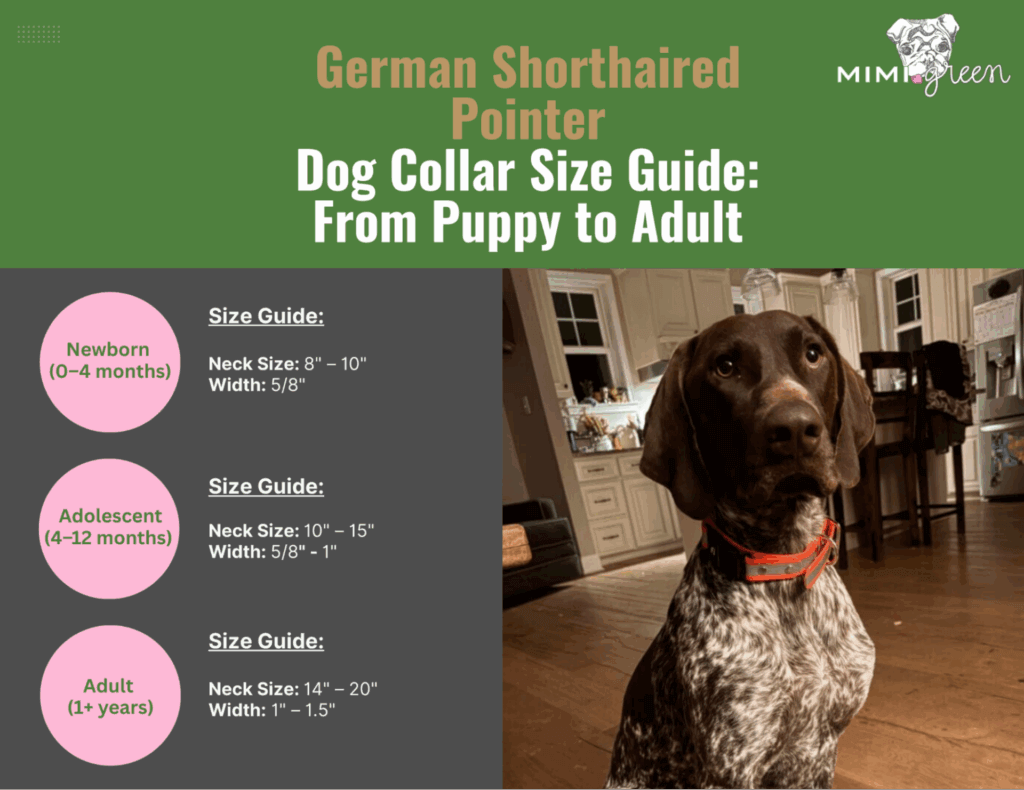
German Shorthaired Pointers grow quickly between 8 weeks and 6 months, so expect at least two collars in their lifetime. Puppies may start with 8–10″ collars, while adults range from 14–20″ depending on sex and build.

How to size correctly:

  1. Wrap a soft tape around the middle of your dog’s neck.
  2. Add the two-finger rule, you should be able to slip two fingers under the collar with light pressure.
  3. For martingales, check the loop gap: when pulled tight, the two rings should never touch.
  4. Test with a short walk, if the collar spins or slides over the head, it’s too loose.

Collar vs. Harness for GSPs

  • Collars: Best for ID tags, everyday use, and leash attachment in well-trained dogs.
  • Harnesses: Useful for dogs that pull or slip collars. Mimi Green’s Step-In and Easy-On harnesses are USA-made and customizable to match collars.
  • Avoid misleading labels: Terms like “escape-proof” often don’t hold up, proper sizing and training matter more.

For most GSPs, a collar is the everyday standard, with a harness added for long hikes or high-pulling situations.

Real-World Scenarios (GSP Use Cases)

Pick by situation: field training, lakeside weekends, city walks, puppies vs. adults.

  • Water Lovers: Waterproof Biothane Collars resist odor and bacteria, ideal for dogs that swim or play in mud.
  • Field Dogs: Durable nylon with reflective stitching keeps them visible and secure in low light.
  • City Strollers: Stylish velvet or patterned webbing for fashion-forward pups who still need strength.
  • Puppies: Lightweight, adjustable flat collars that can be swapped as they grow.
  • Escape Risks: Martingale or Fi Compatible collars provide added safety.

Addressing Worries from GSP Parents

  • Slipping out: Martingales prevent escape from slim heads.
  • Durability: Heavy-duty webbing withstands over 3,000 lbs of pull, cheap collars won’t.
  • Choking fears: Proper fit avoids pressure; martingales tighten safely without choking.
  • Buying multiple collars: Puppies do outgrow collars, but choosing adjustable designs extends their use.
  • Style vs. function: At Mimi Green, glitter, velvet, or floral collars are built on strong nylon bases, fashion doesn’t mean fragile.

These worries are normal, but with the right fit and material, they disappear.

GSP Collar Checklist

A skimmable list to confirm before you buy.

  • Correct type chosen 
  • Collar sized using two-finger snugness rule
  • Engraved buckle
  • Material matched to your dog’s lifestyle (water, city, field)
  • Fi Compatible upgrade considered
  • Matching leash selected for activity

This quick list ensures your choice balances safety, comfort, and style.

Why the Right Collar Matters Most

German Shorthaired Pointers are athletes, explorers, and escape artists rolled into one. 

At Mimi Green, every collar is handmade to order in the USA. That means no mass production, no shortcuts, just gear built to match your dog’s life. 

Whether you need a Waterproof Martingale Collar for the lake, a flat collar for city strolls, or a Fi Compatible option for GPS peace of mind, we can build it, personalized, engraved, and stitched just for your pup.

Your GSP deserves more than “good enough.” They deserve a collar that works as hard as they do. 

👉If you’re ready to explore options made with care and creativity, browse our collars collection and design something as unique as your best friend.

People Also Ask: Quick Answers for GSP Owners

Should I use a martingale collar for my GSP? Yes, if your dog slips out of flat collars or pulls. Martingales tighten gently without choking when fitted properly.

Are harnesses better than collars for GSPs? Harnesses distribute pulling force, but collars are better for ID and daily wear. Many owners use both depending on the activity.

How strong should a GSP collar be? Strong enough to withstand 3,000+ lbs of pull force, cheap collars snap too easily for this athletic breed.

What’s the average neck size of a full-grown GSP? Most fall between 14–20 inches. Always re-measure after growth spurts or seasonal coat changes.

Can GSPs slip out of regular collars? Yes, slim heads make it possible. Martingales or properly fitted collars prevent escapes.

What collar material lasts longest for active breeds? Leather lasts longest with care, while Biothane® is best for waterproof durability.

Best Collar for Bloodhound

The best collar for a Bloodhound is a wide martingale or leather collar to prevent slipping and spread pressure. Choose Biothane for mud and drool, measure neck, use strong hardware with engraved ID, and consider a step-in harness for heavy pullers.

5 quick wins for Bloodhound collars

  • Go wide: 1.5″ width-style collars spread pressure and reduce slip-outs.
  • Use a martingale for escape-resistant control when scent mode kicks in.
  • Match materials to lifestyle: leather for long wear, Biothane for drool/mud.
  • Nail the fit: measure at collar spot, add two fingers, recheck often.
  • Choose rated hardware and engraved ID (skip dangly tags).

Bloodhounds have long necks, and loose skin fit is a routine. At Mimi Green, we hand-make 1–1.5″ martingale, leather, and waterproof collars in the USA.

If you’d like step-by-step sizing, side-by-side pros and cons of martingale vs. leather vs. Biothane, hardware guidance, and setup combos for real-world walks, keep reading.

Why a Martingale Works for Bloodhounds

Bloodhounds live nose-first. When that scent switch flips, a flat collar can slip over their generous ears and loose skin. A Martingale Collar gently tightens when your dog surges, then relaxes when they don’t, giving you control without constant pressure.

  • Helps prevent backing out during sudden pulls
  • Adds feedback without a harsh snap
  • Shines for training walks, busy sidewalks, and vet visits

For Bloodhounds, a 1.5″ collar spreads pressure across skin folds so the collar doesn’t “bury” into the neck. 

Measure Once, Fit Right, Sizing for a Bloodhound

Grab a soft tape. We’ll take three quick measurements to dial in a secure, comfy fit.

  1. Neck at rest: Where the collar will sit. Record this number.
  2. Behind the ears: Slightly higher on the neck for martingale checks. Record this too.
  3. Head/ear pass-over: Around the widest part that the collar must slide over (for buckleless designs).

Fit check: Adjust so you can slip two fingers flat under the collar at rest. On a martingale, tighten the slider until, at full tension, you still have those two fingers’ worth of room.

Material Matchups: Leather, Waterproof, Velvet

Different days, different needs. Pick the build that suits your hound’s routine.

  • Leather: Soft, strong, and timeless. Stays comfortable for all‑day wear, and looks classic on big, wrinkly faces. 
  • Waterproof: Laughs at drool, rain, and mud. Quick rinse, towel dry, no lingering odor, perfect for creek days and humid climates.
  • Nylon or Canvas: Soft, stylish, and photo‑ready.

Care basics: Wipe leather with a damp cloth, let it air dry, then condition occasionally. For waterproof builds, rinse and pat dry. Check stitching and the martingale loop weekly.

Hardware That Lasts & ID That Never Jingles

Big, scent-driven dogs like Bloodhounds need gear that can keep up. Every Mimi Green collar is built with:

  • Welded D-rings so your leash stays secure, even when your hound decides to follow a trail full steam ahead.
  • Reinforced stitching that keeps the collar strong where it matters most.
  • Side-release or belt-style buckles: side-release for quick on/off (and available with custom engraving), or traditional belt buckles on our leather collars for a timeless, sturdy fit.
  • Engraved buckle ID that replaces noisy, dangling tags with silent, permanent info, like your pup’s name and your phone number.

No gimmicks, no jingles, just reliable hardware and built-in ID that keeps your Bloodhound safe while looking good.

Real-World Setups for a Bloodhound

Featured Product: Wide Floral Martingale Collar

Farmers’ market or busy sidewalks

  • Wide martingale (1.5″) for steady control during sudden scent surges.
  • Standard 5–6 ft leash; hold short near crowds, give slack when calm.
  • Engraved ID on the collar to keep info silent and secure.

Trail sniffaris & creek days

  • Waterproof Biothane martingale; rinse and towel dry after.
  • Reflective option for dawn/dusk.
  • Pair with a matching waterproof leash for easy cleanup.

Training class or vet days

  • Leather martingale or wide leather collar: comfortable, classic, and steady on loose skin.
  • Keep treats handy; reward check-ins and calm walking.

When a Harness Makes Sense (and Which Kind)

Some Bloodhounds walk more comfortably in a harness for longer outings or car-to-trail transitions. 

If you prefer a harness, we offer two made-in-the-USA styles that match our collar fabrics:

  • Step-In Harness: Adjustable, great for big chests and dogs that wiggle out of other shapes. Optional buckle engraving or embroidery.
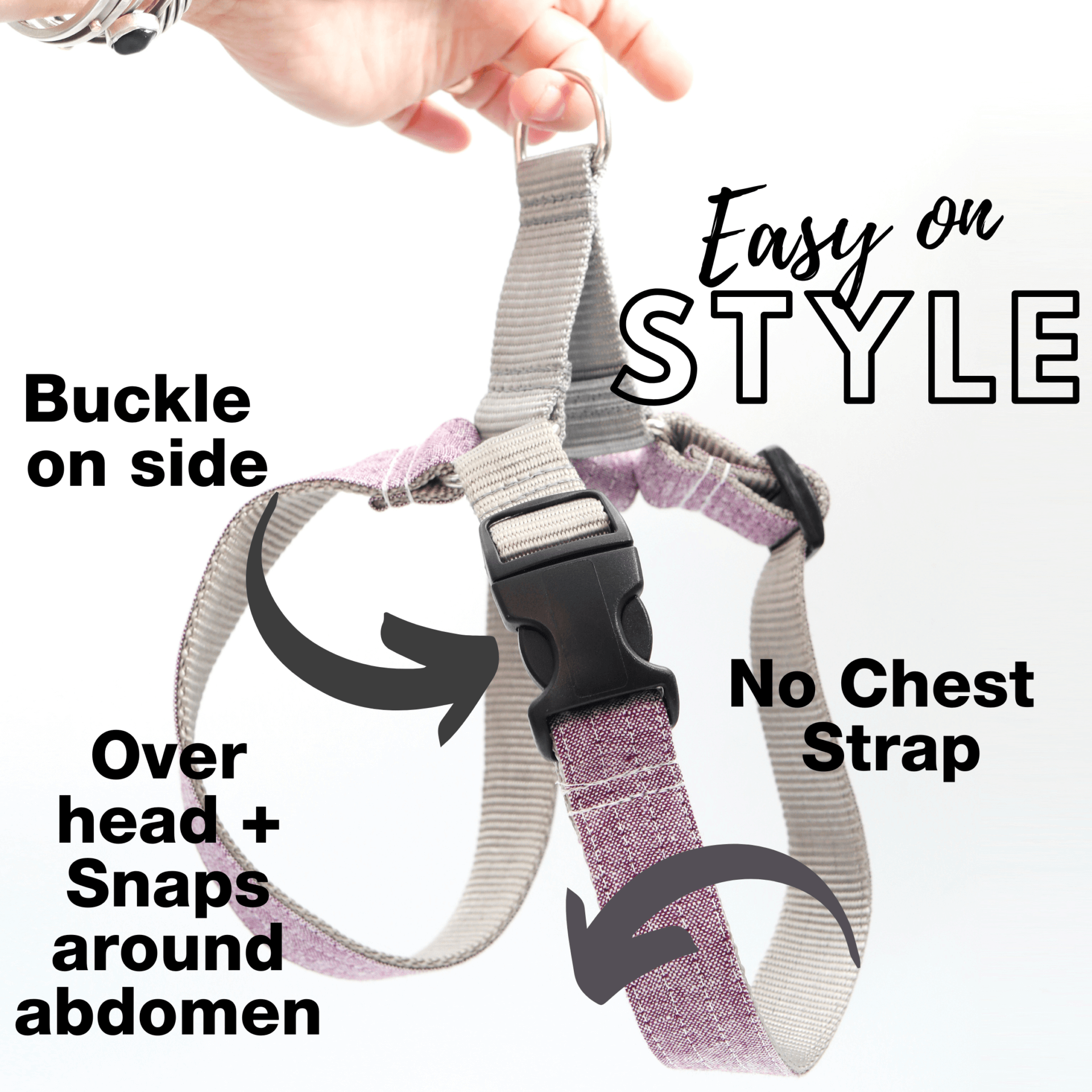
  • Easy-On Harness: Minimal bulk and quick on/off for sensitive chests or dogs who dislike a chest strap. Also available with buckle engraving or embroidery.

Care, Cleaning & Quick Checks

Leather

  • Wipe with a damp cloth, air dry, then condition occasionally.
  • Avoid soaking; store away from heat.

Waterproof Biothane

  • Rinse after mud or salt, pat dry.
  • Check the martingale loop and stitching weekly.

Velvet 

  • Spot clean; let fully dry before reuse.
  • Rotate with a waterproof option for messy adventures.

Weekly safety scan

  • Inspect stitching, D-rings, and buckle function.
  • Confirm the fit (two-finger rule) after weight or coat changes.
  • Engraved ID beats a dangling tag for silence and security.

Ordering & Customization Tips (Made for Your Hound)

  • Choose your build. Leather for classic daily wear; waterproof for mud, drool, and rain; velvet/luxe for dress-up days.
  • Personalize it. Add engraved buckle info (name + two contact lines) so details stay put, no jingle.
  • Tech-friendly options. Select a Fi-compatible setup if you track your explorer.
  • Measure before you order. Neck at rest, behind the ears, and head/ear pass-over (for buckleless styles). Aim to land near the middle of the size range.

Build The Ideal Bloodhound Setup

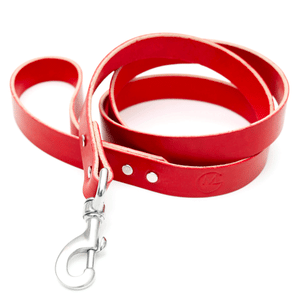
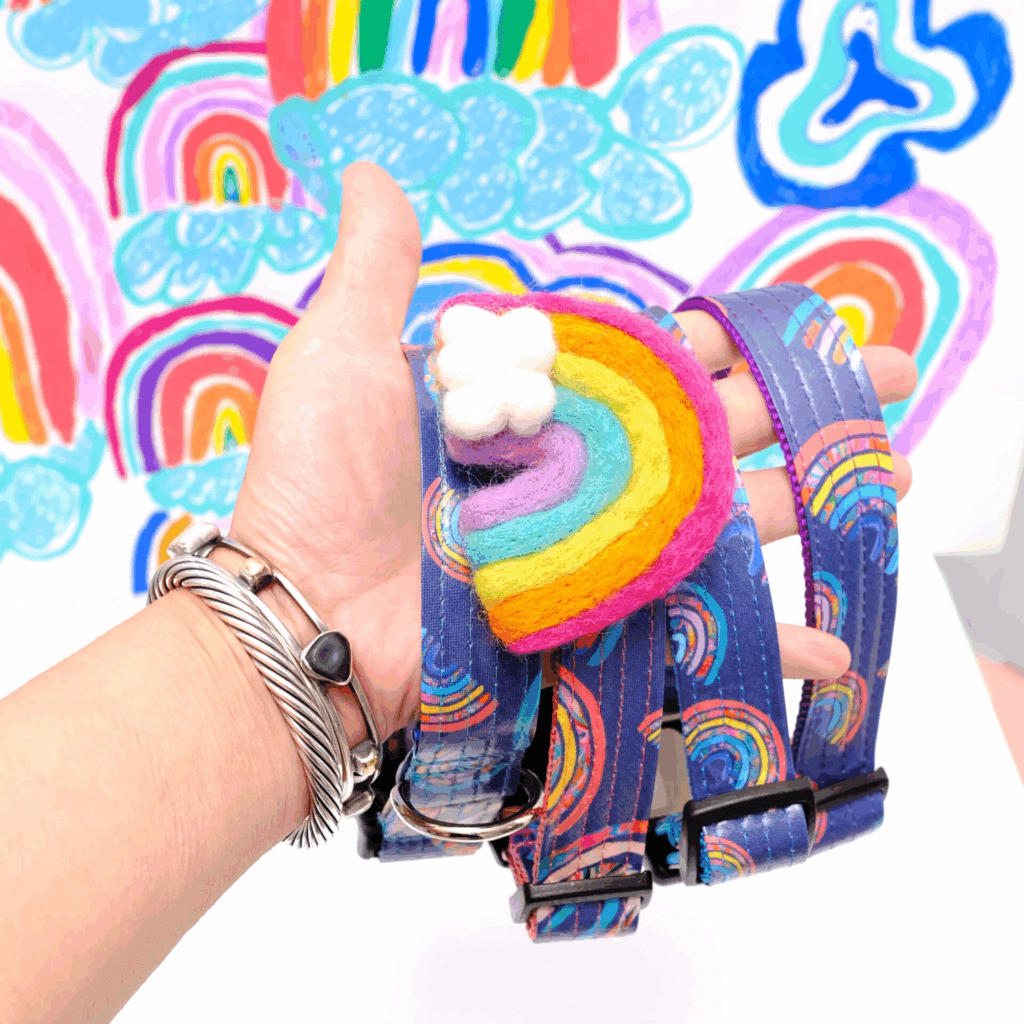
Featured Product: Rainbow Dog Leash – Laminated Cotton

Everyday urban walks

  • Wide martingale + 6′ leash for steady, jingle-free control with engraved ID on the buckle. Pair with a matching leash so handling feels consistent.

Muddy trails & creek days

  • Waterproof Biothane martingale + waterproof leash; wipe clean after adventures. Add reflective details for dawn/dusk visibility.

Power pullers

  • Easy-On or Step-In harness to distribute force, with an ID collar for tagging. Both harness styles are made in the USA and available with buckle engraving.

Roam-risk explorers

  • Fi-compatible collar to keep tabs on your hound’s sniff-quests, available across leather, Biothane, martingale, and designer fabrics.

Top Worries Answered

  • Slip-outs: Wide martingale + correct fit prevent backing out during scent surges.
  • Skin rub or matting: Choose leather or waterproof Biothane and keep the collar snug (not loose) over folds.
  • Hardware failure: Look for reinforced stitching and solid D-rings with strong buckles.
  • Marketing hype: Skip “chew/escape-proof” promises; training + fit beat slogans.

Ready to choose your Bloodhound’s collar?

You’ve got the sizes and Wide Dog Collars, now pick the build that fits your life. Start by measuring at the collar spot, then choose an adjustable size that lands near the middle of the range. 

👉Explore Mimi Green’s Large Dogs Collars Collection Now!

Best Collar for Cavalier King Charles Spaniel

The best collar for a Cavalier King Charles Spaniel is a lightweight, snag-free design that won’t mat their coat. Mimi Green’s cotton collars with Nylon webbing and engraved buckles reduce friction, while waterproof Biothane® is ideal for active or outdoor dogs.

Five Quick Facts Before You Shop:

  • Soft, lightweight collars protect your Cavalier’s delicate coat and skin.
  • The right fit matters more than the material, use the two-finger rule.
  • Martingales are great for gentle control without slipping or choking.
  • Biothane and Cotton offer top comfort and durability for different lifestyles.
  • Always pair a collar with a harness for walks, but don’t skip ID on a collar.

Between their fine, flowing coats, slim necks, and sensitive skin, Cavaliers need gear that’s thoughtfully designed, not mass produced.

In this guide, we’ll walk you through the best collar styles, materials, and fits for your Cavalier King Charles Spaniel. 

If you want handcrafted options tailored to your dog’s needs, Mimi Green offers custom-fit collars in nylon, cotton, Biothane, and much more, each made to order, just for your pup.

Ready to dig deeper? Keep reading for breed-specific advice on collar fit, material, style, and training compatibility.

What Collar Materials Are Best for Cavaliers?

Featured Product: Embroidered Webbing Dog Collar *22 colors

Your dog’s coat type should influence your collar choice just as much as their personality.

  • Cotton: Soft and gentle, perfect for Cavaliers prone to friction or hair breakage. Mimi Green’s collars are strong yet smooth, and totally washable.
  • Biothane: This waterproof, stink-proof, mold-resistant material is ideal for active pups. It wipes clean and won’t absorb odors.
  • Nylon: Durable and soft, not like the scratchy kind at most big-box stores. Mimi Green’s nylon is higher quality, made for daily wear and sensitive skin.

At Mimi Green, we skip anything that doesn’t serve your dog’s comfort. No gimmicks. Just collars that look good, feel good, and actually fit.

Flat Collars

Flat collars are your go-to for everyday use. They’re simple, secure, and perfect for holding ID tags. What to look for:

  • Soft, high-quality webbing that won’t rub or irritate
  • Engraved buckle options to keep tags quiet and secure
  • Adjustable sizing to match your Cavalier’s neck and coat

Martingale Collars

Ideal for Cavaliers who pull, wiggle, or tend to back out of traditional collars.

  • Martingales provide gentle control without choking.
  • They tighten slightly when needed but release immediately.
  • Perfect for leash training or peace of mind on walks.

Unlike harsh training tools, Mimi Green’s Martingales are stylish and soft, available in Cotton, waterproof, or classic nylon styles, all made to order.

Fi-Compatible Collars

If you want real-time GPS tracking without giving up style, we’ve got you. Mimi Green’s Fi-compatible collars are designed to house the tracker securely without adding bulk.

  • Compatible with Fi models
  • Available in all our core materials

This is a smart, low-profile option for Cavaliers who are curious, fast, or easily spooked.

What Makes Cavaliers Unique When Choosing a Collar?

Cavalier King Charles Spaniels are one of the few breeds where a poorly chosen collar can actually harm more than help. Their long, silky coats and narrow necks need gear that doesn’t rub, tangle, or weigh them down.

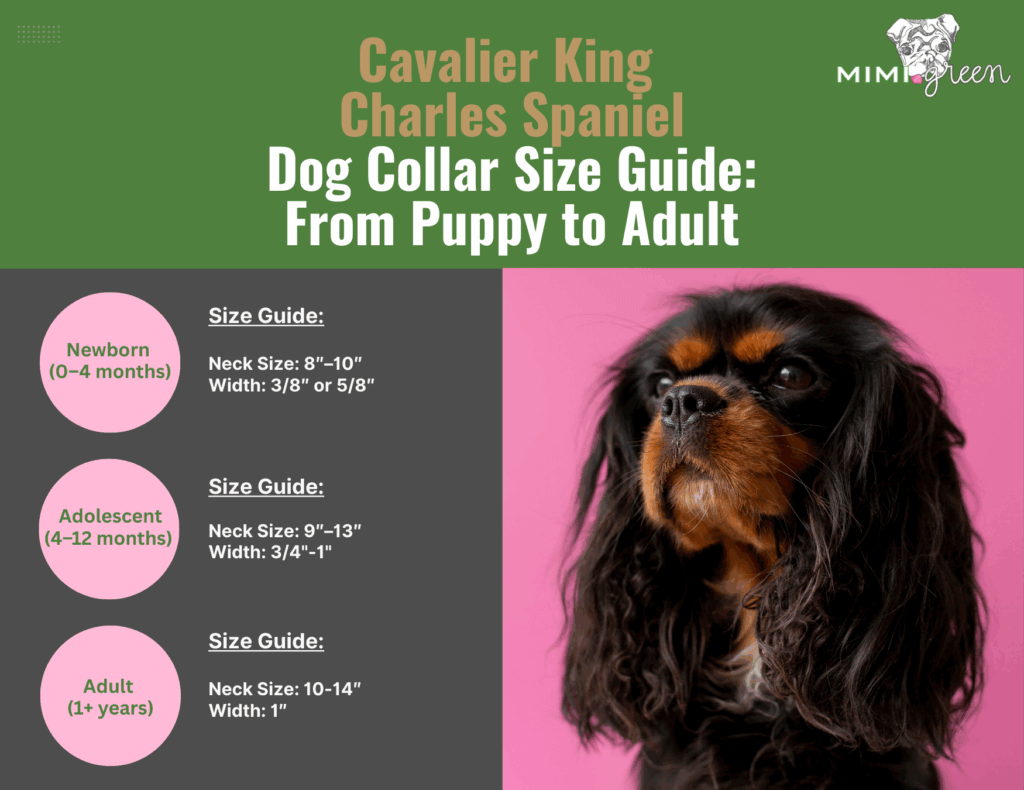
  • Their necks typically measure 10–14 inches, making an adjustable collar in size Small to Medium ideal.
  • Coats are prone to matting and friction, especially around the neck.
  • They’re also emotionally sensitive, anything bulky or scratchy can become a daily discomfort.

That’s why Mimi Green collars are made with lightweight, high-quality materials and designed to feel good from day one. You get a better fit and less fuss, without sacrificing style.

Collar vs. Harness for Cavalier King Charles Spaniels

Here’s the truth: your Cavalier should probably wear both.

  • Collars are best for ID tags, light walks, and general use.
  • Harnesses are ideal when your pup pulls, gets anxious, or needs support without neck pressure.

Mimi Green’s Step-In and Easy-On harnesses are built for dogs who dislike bulky gear or have sensitive skin. Both styles are:

  • Fully adjustable
  • Designed to reduce rubbing or shifting
  • Available in the same fabrics as our collars (yes, you can match!)

Use a collar for ID and a harness for control, that way, you’re covered no matter the scenario.

How to Measure a Cavalier’s Neck for the Perfect Fit

Getting the fit right is half the battle. Too tight and it rubs; too loose and it slides off. Here’s how to measure like a pro:

  1. Use a soft tape measure and wrap it around the base of your Cavalier’s neck.
  2. Add two fingers’ worth of space, this ensures a snug but comfortable fit.
  3. Check the size range. Most Cavaliers fall into Mimi Green’s small dog collars, but if your pup’s between sizes, always size up.
  4. Choose an adjustable style. This allows for a little flexibility with coat thickness or weight changes.

Tip: if your dog has a fluffy mane, brush it before measuring, it’ll give you the most accurate size.

When to Replace Your Cavalier’s Collar

Even the best-made collar won’t last forever, especially with daily use.

  • Inspect monthly. Look for signs of wear like fraying, stretching, or rusting hardware.
  • Replace every 6–12 months, depending on activity level and coat changes.
  • Swap immediately if the collar is too tight, slips off, or starts to irritate your dog’s skin.

Mimi Green collars are built to last, but we always recommend keeping an eye on how they’re aging, especially if your Cavalier’s neck size fluctuates with grooming or growth.

How to Pick a Collar That Matches Your Cavalier’s Lifestyle

Featured Product: Floral Flannel Dog Collar with Engraved Buckle

Your dog’s personality should help you choose their collar, not just their size.

  • Active or outdoorsy? Biothane is your best bet. It’s waterproof, stink-proof, and practically wipe-clean.
  • Sensitive skin or coat? Cotton is soft, smooth, and perfect for delicate fur.
  • Style-forward? Choose from our custom embroidered designs or engraved buckles for a polished, personalized look.

Whether your pup is more park-hopper or pillow-snuggler, we’ve got a material and design that fits seamlessly into your routine.

Common Mistakes to Avoid with Cavalier Collars

We’ve seen it all, from scratchy collars that cause hot spots to ill-fitting gear that dogs escape from. Avoid these missteps:

  • Choosing based on looks alone. A cute collar that rubs or irritates is no good, comfort comes first.
  • Buying too big. A loose collar can lead to matting, slipping, or chewing.
  • Going heavy. Thick hardware might weigh down your dog’s neck and cause rubbing.
  • Leaving it on during grooming. Always remove collars for brushing or trimming to prevent breakage and tangles.

With Mimi Green, you won’t have to choose between comfort and design. Our collars are made for real dogs, not just cute product photos.

Cavalier Collar Checklist

Featured Product: Lightweight Biothane Waterproof Dog Collar with Engraved Buckle

Here’s your quick-fit guide to choosing the best collar for your Cavalier:

✅ Soft, coat-safe material (Cotton, Biothane, or Nylon)
✅ Adjustable fit (use the two-finger test)
✅ Martingale option for dogs who pull
✅ Lightweight buckle (engraved or standard)
✅ Size XS or S depending on neck measurement
✅ Matchable harness if needed for daily walks
✅ Optional GPS compatibility (Fi module support)

Find Your Cavalier’s Perfect Match

At Mimi Green, we handmake every collar to order, so you can build something as unique as your dog. 

Whether you need a Cotton collar that’s soft enough for sensitive skin, a Biothane collar that holds up to trail time, or a Martingale for secure leash training, you’ll find it here.

We design for real dogs and real families, collars that feel good, fit right, and look even better in your camera roll.

🔹 Shop Cotton Collars – Soft, stylish, and gentle on silky coats
🔹 Explore Biothane Styles – Waterproof, stink-proof, ready for anything
🔹 Build a Martingale – For gentle, secure walks (no more slipping out)

Looking for something you can’t find on the shelf? We’re a small team with big creativity, just reach out. We love helping dog parents create custom-fit collars that truly work for their pups.

👉 Find Your Cavalier’s Collar at Mimi Green Now!

FAQs About Cavalier King Charles Spaniel Collars

Should my Cavalier wear a collar all the time? Yes, for ID and safety. But check the fit regularly and remove it during grooming or play sessions where it might get caught.

Can collars damage their coat? Only if they’re too tight, made from rough materials, or worn too long without adjustment. Cotton and Nylon help reduce friction.

Is a Martingale collar safe for small dogs? Yes, especially when it’s properly fitted. It offers more control than a flat collar without putting pressure on the throat.

Do GPS collars work for Cavaliers? Absolutely. Mimi Green’s Fi-compatible collars hold the tracker snugly without adding weight or bulk.

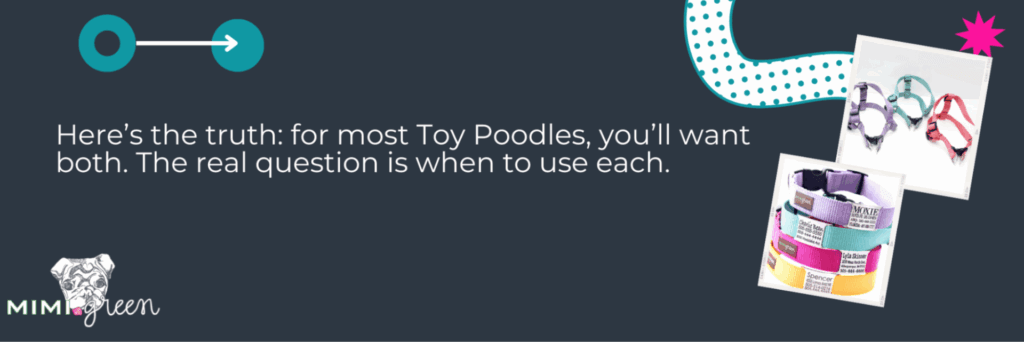
Best Collar for Toy Poodle

The best collar for a Toy Poodle is a lightweight, well-fitted martingale or flat collar with smooth materials and a secure buckle. Avoid thin, stiff, or oversized collars. Choose custom sizing to prevent slipping, matting, or discomfort, especially after grooming or as your dog grows.

What You Need to Know

  1. Toy Poodles need lightweight, secure collars that won’t cause matting or slip off their narrow heads.
    2. Martingales are ideal for preventing escapes without using harsh correction tools.
    3. Steer clear of thin or stiff collars, they often lead to discomfort and coat damage.
    4. Correct sizing matters more than weight, especially for growing puppies or post-grooming fit changes.
    5. Mimi Green offers made-to-order collars in custom sizes, with smart details like engraved buckles for safe ID.

If you’ve ever bought a collar labeled “small” only to find it too bulky or too loose for your Toy Poodle, you’re not alone. Their unique combo of a delicate build, fluffy coat, and surprisingly wiggly nature makes them tough to shop for.

We design every collar with your pup’s comfort and safety in mind. Mimi Green collars are custom-sized for tiny necks and equipped with engraved buckles, no noisy tags, no choking hazards, all handcrafted to order in the USA.

Stick around: we’ll break down styles, materials, fit, and features so you can confidently choose the best collar for your Toy Poodle.

Why Collars for Toy Poodles Need Special Consideration

Toy Poodles might be small, but their collar needs are anything but simple.

Their fine, curly coat mats easily. Their narrow necks and small heads make slipping out of collars a real risk. And their sensitive skin means the wrong material can lead to irritation fast.

Many generic “small dog” collars are either too heavy, too stiff, or just plain uncomfortable. That’s why Toy Poodles need lightweight collars with smooth materials, thoughtful fit, and no unnecessary bulk.

Should they wear collars all the time? Yes, for ID and safety, but only if the collar fits well and avoids pressure points. The goal is secure, not restrictive.

What Size Collar Does a Toy Poodle Need?

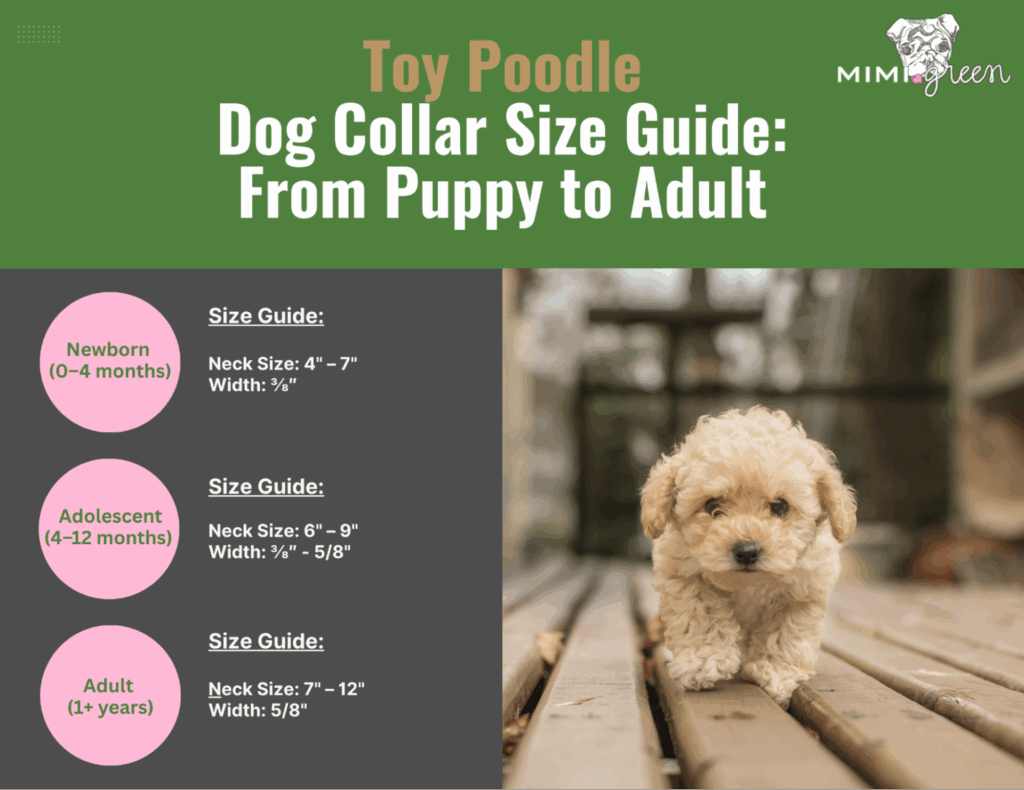
There’s no “universal” collar size that works for all Toy Poodles. But most adult Toy Poodles fall within the 8″–12″ neck range. Puppies and post-groomed pups may need an even smaller size or a collar with more adjustability.

How to measure for the right fit:

  • Use a soft tape and wrap it around the base of their neck, where the collar naturally rests.
  • You should be able to fit two fingers between the tape and their neck, no more, no less.

Weight ≠ size: Don’t rely on weight-based charts. A 6 lb poodle with a freshly groomed neck might need a completely different size from an 8 lb poodle with full coat fluff.

Which Collar Styles Work Best for Toy Poodles?

Not every collar is built for a Toy Poodle’s unique combination of fluff, movement, and smarts. Here’s what works, and why.

Flat Fabric Collars

Flat Fabric buckle collars are the go-to for ID display, vet visits, or casual wear around the house.

  • Lightweight and simple
  • Pair great with harnesses
  • Custom options available with fun patterns, engraved buckles, or embroidered names

They’re a great “daily wear” option when you’re not worried about pulling or slipping out.

Biothane® Waterproof Collars

If your Toy Poodle loves splashing in puddles, running through sprinklers, or just living life outdoors, Biothane® is worth considering.

  • Waterproof and odor-resistant, no more soggy, smelly collars
  • Smooth, matte finish is easy to wipe clean
  • Tougher than leather, yet soft enough for small dogs
  • Great for active lifestyles, rainy day walks, or muddy paws

Unlike traditional waterproof collars that can feel stiff or plasticky, Mimi Green’s Biothane® collars are flexible, lightweight, and made to fit even toy-sized necks comfortably.

Engraved Buckle Collars

Tiny dogs, big energy, Toy Poodles can be surprisingly wriggly, especially in crates or during play. Dangling tags? Not the safest idea.

  • Engraved buckles replace hanging ID tags
  • No jingling, no risk of snagging
  • Permanent, legible contact info that won’t fade or fall off

This style is especially helpful for apartment dogs, crate users, or pups who dislike the sound of metal tags clinking as they move.

Collar vs Harness: What’s Better for Toy Poodles?

  • Collars are best for displaying ID and quick leash walks where there’s little pulling.
  • Harnessess are ideal for longer walks, dogs who pull, or those with delicate tracheas.

For training or daily ID wear, a collar is your best bet. But when you’re out for a longer stroll or working on leash manners, pairing it with a well-fitted harness gives you better control, and keeps your dog more comfortable.

How to Keep Your Poodle’s Collar Comfortable

Even the best collar can become a problem if it’s not maintained. Toy Poodles have delicate skin and curly coats that react quickly to friction or poor fit.

  • Check the fit monthly, especially after grooming or growth spurts
  • Watch for signs of discomfort: fur loss, red patches, scratching
  • Replace worn collars before the stitching or hardware breaks
  • Seasonal grooming? Resize accordingly. Your Poodle’s neck size can change with fluff levels

Toy Poodle Collar Checklist

Before you check out, run through this quick list:

✅ Lightweight, adjustable collar (8–12″)
✅ Smooth, comfortable material (no rough nylon or sharp seams)
✅ Engraved buckle or embroidered ID, no hanging tags
✅ Matching leash for safety and comfort
✅ Optional harness for walks or pullers
✅ Fit check every few weeks (especially after grooming or growth)

Ready to Find the Right Collar for Your Toy Poodle?

Finding a collar that truly fits a Toy Poodle, without causing matting, slipping, or discomfort, is harder than it should be. 

If you’re tired of buying “small” collars that still don’t fit, or dealing with tangled fur and jingly tags, you’re not alone. That’s exactly why we created our made-to-order collar collection.

At Mimi Green, we offer custom sizing for even the tiniest necks and engraved buckle options for silent, safe ID, no more tags to get caught

Each collar is handmade in the USA by our small team, just for your dog. Because your Toy Poodle isn’t generic, and their gear shouldn’t be either.

👉Shop Mimi Green’s Small Dog Collars Now! 

FAQs About Toy Poodle Collars

What size collar does a Toy Poodle wear? Most Toy Poodles wear collars sized 8″–12″. Always measure their neck, not just go by breed or weight.

Can I leave a collar on all day? Yes, as long as it fits well and doesn’t rub. Remove it during crate time or rough play.

Should I use a harness or collar for leash training? Martingale collars work well for leash training. Pair with a harness for added control if needed.

Best Collars for Staffordshire Bull Terrier

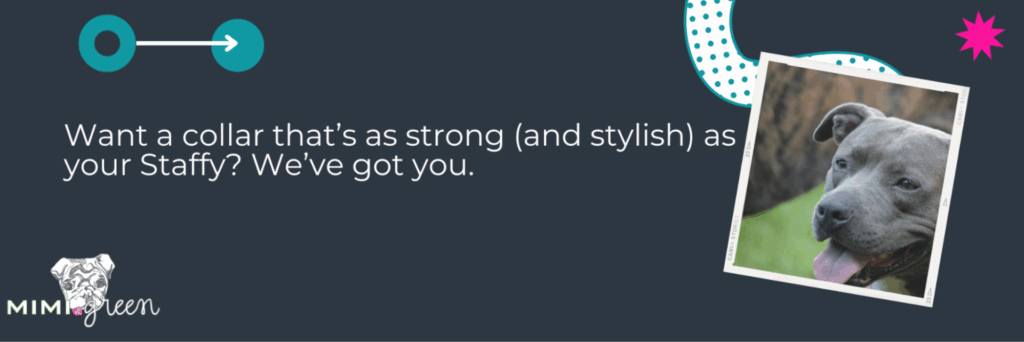
The best collar for a Staffordshire Bull Terrier is a 1.5” martingale or leather collar that won’t slip, rub, or break under pressure. These muscular, short-coated dogs need custom-fit gear that stays secure during pulls and zoomies, without irritating their sensitive skin.

These strong, short-coated dogs need gear that won’t slip off, rub raw, or fray under pressure. Unlike other breeds, Staffies are built like little tanks. 

They have wide necks, powerful shoulders, and a habit of pulling, or suddenly shifting direction when something exciting catches their eye. Add in their short coats and sensitive skin, and the wrong collar can turn daily walks into a chafing, frustrating mess.

That’s why we recommend martingale collars (to prevent slipping), smooth leather (to reduce rubbing), and waterproof Biothane for active pups who dive nose-first into puddles, lakes, or life in general.

At Mimi Green, we hand-make every collar to order in the USA, offering rare options like Fi-compatible martingales, extra-wide fits, velvet-lined styles, and engraved buckles that actually stay readable. 

Want to know exactly which collar type works best for your dog’s energy level, skin sensitivity, and lifestyle? Keep reading for sizing tips, expert-backed recommendations, and breed-specific insights tailored just for Staffies.

Best Collar Types for Staffies at a Glance

Best Collar Types for Staffordshire Bull Terriers

The best collar for your Staffy depends on their walk style, personality, and skin sensitivity. Here’s a breakdown of what works, and what doesn’t.

Martingale Collars (Best for Pullers & Escape Artists)

  • Prevent slipping with wide necks and sudden backing up
  • Gentle tightening mimics leash feedback without choking
  • Especially useful for Staffies who dart, pull, or get overstimulated
  • Great for leash training or high-energy rescues
  • Available at Mimi Green in velvet, leather, and waterproof Biothane, plus Fi-compatible options

Leather Collars (Best for Sensitive Skin & Everyday Wear)

  • Naturally contours to your dog’s neck, reducing friction and rubbing
  • Ideal for short-haired breeds prone to skin irritation
  • Offers a more approachable aesthetic, softens “tough dog” perception
  • Mimi Green’s vegetable-tanned leather collars come with deep engraving and multiple widths

Waterproof Biothane Collars (For Messy or Outdoor-Loving Staffies)

  • Wipes clean after muddy walks or lake dives
  • Doesn’t hold moisture, stink, or debris
  • Soft yet durable material that’s hypoallergenic and lightweight
  • Our Biothane collars come in fun color combos and engraved buckle options

Flat Buckle Collars (For Indoor Use or ID Tags)

  • Not meant for strong pullers or heavy activity
  • Best used at home, on hikes as a backup ID collar, or for stylish flair
  • Mimi Green’s flat buckle collars use military-grade plastic or hybrid buckles, stronger than most metal ones

How to Measure Your Staffordshire Bull Terrier’s Neck for a Perfect Fit

A good fit keeps your collar from slipping off, or rubbing raw.

  1. Wrap a soft measuring tape around the base of your dog’s neck, just below the ears.
  2. Use the two-finger rule: snug enough to stay in place, but not tight.
  3. For martingales, ensure that when tightened, it doesn’t over-cinch, just closes the gap.
  4. Recheck fit every few months. Staffies fluctuate in weight and muscle tone quickly.

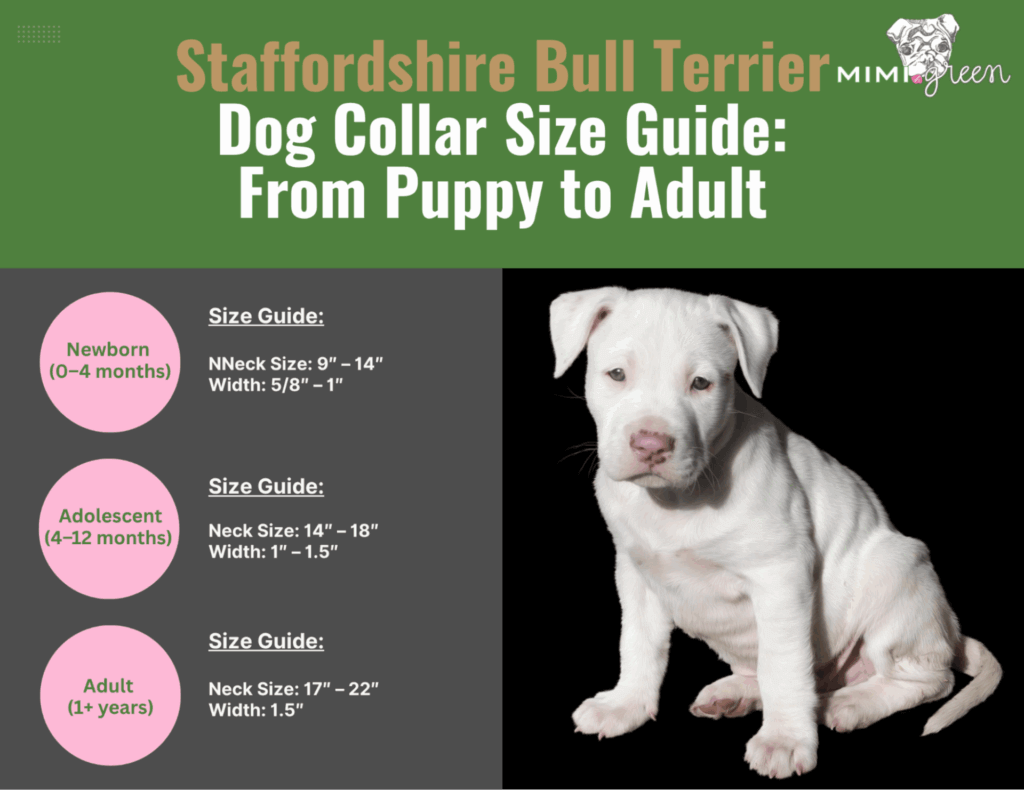
Average size range: Most adult Staffies wear between 17–22 inches, but measurements are always better than guessing.

At Mimi Green, every collar is made to order, so if your Staffy is between sizes, super stocky, or still growing, we’ll adjust accordingly.

Staffordshire Bull Terriers vs. Other Bully Breeds

“Pit Bull” isn’t one-size-fits-all. Even among bully breeds, each has unique collar needs.

Staffordshire Bull Terrier

  • Compact and muscular, with a surprisingly wide neck
  • Needs wide (1.5″) collars for comfort and control
  • Sensitive skin = no rough nylon or stiff webbing

American Pit Bull Terrier (APBT)

  • Leaner and more athletic
  • Martingales and soft leather reduce risk of chafing
  • More prone to escape attempts than Amstaffs

American Staffordshire Terrier (Amstaff)

  • Larger chest, more mass than a Staffy
  • Wider collars help distribute leash pressure
  • Needs strong materials and secure buckles

American Bully

  • Stocky, short-necked, extremely muscular
  • Needs heavy-duty webbing, thick straps, and extra-reinforced hardware
  • Avoid rigid collars, they slip or rub on bulky frames

Whether you’re collar shopping for a Staffy, Amstaff, APBT, or Bully, skip the “one-size-fits-all” gear. Breed-specific sizing and strength matter, and that’s exactly what Mimi Green delivers.

Collar vs Harness for Staffordshire Bull Terriers

So, which is better: collar or harness? The answer, both.

  • Collar: Best for holding ID tags, leash cues, and daily control
  • Harness: Helps distribute force, especially if your Staffy pulls hard or has neck issues

Why Mimi Green Recommends Step-In Harnesses

  • Easy to put on, no overhead slipping
  • Designed to fit wide-chested dogs like Staffies
  • Avoids the rubbing and misalignment common with front-clip harnesses

For the best control, pair a martingale or leather collar with a back-clip harness. It gives you backup strength without sacrificing comfort.

Staffy-Safe Training Tools: What to Use, What to Skip

Staffies are smart and eager, but their strength can be a challenge without the right tools.

✅ Martingales

  • Excellent for leash training
  • Provides feedback without harsh corrections
  • Safe for daily use when properly fitted

⚠️ Prong Collars

  • Only under professional guidance
  • May cause discomfort if fitted or used incorrectly
  • Not necessary for many dogs, but can be effective in specific training situations

⚠️ E-Collars

  • Useful for advanced off-leash training
  • Not a shortcut, must be paired with a consistent plan
  • Avoid for beginners or reactive dogs

❌ Head Collars

  • Poor fit for short, broad muzzles
  • Many Staffies find them uncomfortable or frustrating

When in doubt, start with a custom-fit martingale and reward-based training. The right tools should support, not replace, solid training habits.

Puppy vs Adult Staffy Collar Needs

One collar won’t last from puppyhood to adulthood, and it shouldn’t. Staffies grow fast and need gear that grows with them.

For Puppies

  • Lightweight, adjustable collars are ideal
  • Biothane and soft nylon reduce rubbing on tender skin
  • Avoid heavy leather or training tools like prongs or e-collars
  • Measure weekly, Staffy pups can bulk up fast

For Adults

  • Move up to 1.5” wide collars for better support and control
  • Leather and martingales offer comfort and no-slip security
  • Recheck sizing every few months, muscle tone and weight shifts affect fit

Mimi Green collars are made to order, so you can size up gradually, choosing styles that grow with your pup’s personality and strength.

Common Worries from Staffy Owners, Solved

These are the most common concerns we hear from Staffordshire Bull Terrier families, and how Mimi Green collars help fix them.

My dog chews through every collar: This often comes down to fit. Loose collars can be reached and chewed. Mimi Green collars are snug by design, and Biothane resists bite damage better than nylon.

Collars slip off during walks: With necks nearly as wide as their heads, Staffies can easily back out of standard collars. That’s why martingales are a game-changer, they gently tighten when needed, without choking.

People think my Staffy looks scary: Unfortunately, gear can reinforce stereotypes. Choosing a floral, pastel, or velvet design helps soften your dog’s appearance. We offer styles that show your Staffy’s sweet side.

Collars cause bald spots or irritation: Short coats and sensitive skin make Staffies prone to friction burns. Leather, Biothane, and velvet-backed martingales minimize rubbing, especially when sized properly.

When to Replace a Staffordshire Bull Terrier’s Collar

Even the best collar has a lifespan. Here’s when it’s time to swap yours:

  • Frayed edges or stitching pulling loose
  • Rusty D-rings or damaged hardware
  • Stretching or misshapen material from constant pulling
  • Weight/muscle changes that make the fit too loose or tight

Most active Staffies need a new collar every 6–12 months. Mimi Green collars are built to last longer, but even our toughest materials wear out with time. 

If it’s looking rough, don’t wait, replace it before a failure happens mid-walk.

Matching Collar + Leash Combos for Staffies

Best Materials:

  • Biothane: Grippy, waterproof, easy to clean
  • Leather: Classy and comfortable in your hand
  • Heavy-Duty Nylon: Lightweight, familiar, and built for strength

Best Length:

  • 4–6 feet is ideal for Staffies, enough freedom for sniffing, but still in control

Mimi Green leashes are made to match your collar, color, material, hardware, and even engraving. You can also add a matching key fob or tag holder for a complete look.

Staffy Collar Checklist

Everything you’ll need to walk, train, and style your Staffy with confidence:

✅ Martingale or Wide Leather Collar (custom fit, 1”- 1.5″)
✅ Step-In Harness (for additional control or reactive situations)
✅ Engraved Buckle (no dangling tags, clear ID)
✅ Flexible Tape Measure (for regular fit checks)
✅ Collar Cleaning Wipes (especially for velvet or leather)
✅ 4–6 ft Leash (Biothane, leather, or reinforced nylon)

Your Staffy Deserves More Than a Generic Collar

You didn’t choose a Staffordshire Bull Terrier because you wanted a basic dog. You chose them because they’re bold, loving, and always up for an adventure.

Their collar should match that spirit.

At Mimi Green, we hand-make every collar to order right here in the USA. Whether your Staffy needs a collar that won’t slip off, won’t rub, or simply won’t ruin their look, we’ve got you covered.

From velvet martingales to waterproof Biothane and buttery leather, every detail is made with your dog in mind. And if they need a custom fit? We’ll sew it just for them.

👉 Explore our collar collections now! Because your Staffordshire Bull Terrier deserves gear that works as hard, and looks as good, as they do.

FAQ – Staffordshire Bull Terrier Collar Questions, Answered

What size collar does a Staffordshire Bull Terrier need? Most adults measure between 17-22 inches at the neck base. Always measure with a soft tape and recheck often, especially if your Staffy gains muscle or weight.

Can I use a martingale collar every day? Yes, as long as it’s fitted correctly and your dog is supervised. Martingales should be removed when crated or unsupervised to avoid over-tightening if they get caught.

Which collar is best to stop pulling? A wide martingale offers gentle feedback and stays centered on the neck. For extra strength or long walks, pair it with a step-in harness for better control.

Are prong collars or e-collars safe for Staffies? Only under guidance from a professional trainer. These tools can backfire if misused, especially with confident, high-drive dogs. For most families, a martingale is the safer, more effective option.

Do you offer GPS or Fi-compatible collars for Staffies? Yes! Mimi Green makes Fi-compatible martingales and leather collars tailored for strong, wide-necked breeds like Staffies. Function meets durability, and they still look amazing.

Best Collar for Pembroke Welsh Corgi | Secure & Stylish Fit

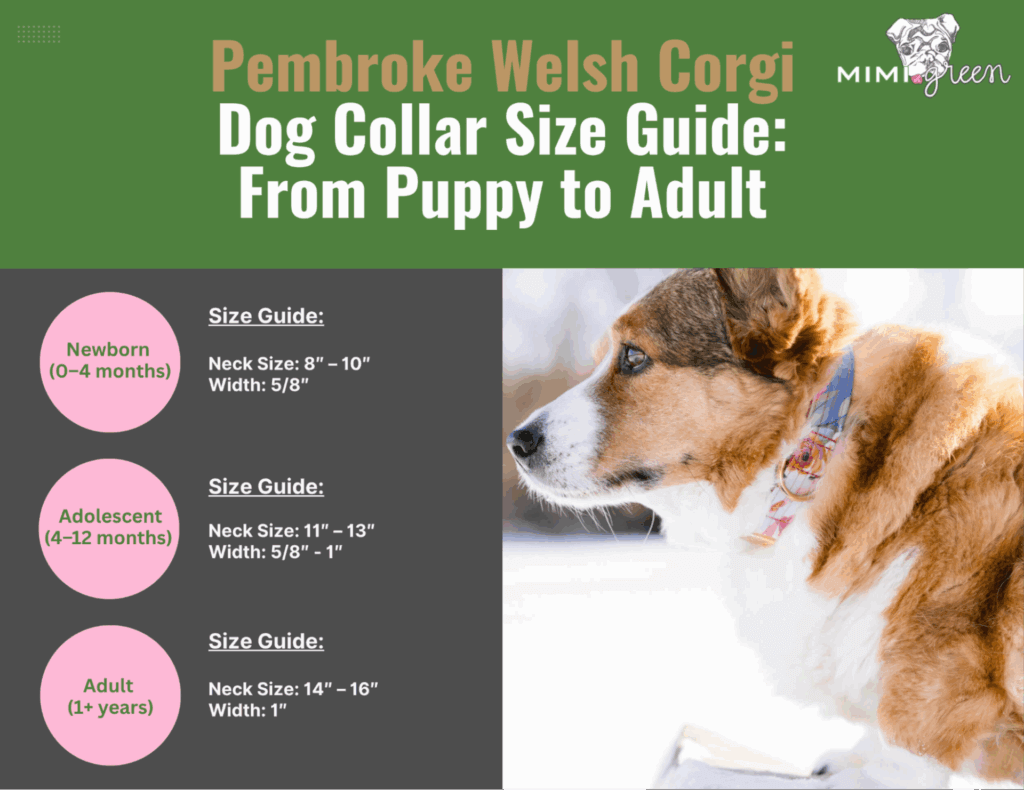
The best collar for a Pembroke Welsh Corgi is a secure, slip-resistant Martingale that prevents escape without harming their neck. Due to their thick necks and active nature, Corgis need a collar that balances comfort, control, and style, ideally one that adjusts as they grow.

Corgis have unique proportions, thick necks, short legs, and surprisingly agile bodies, which means not every collar fits well or holds up. A flat collar might look cute, but it can slip off easily. A harness might reduce strain, but it won’t replace the control a well-fitted collar provides.

At Mimi Green, we handcraft Martingale and Fi-compatible collars designed specifically for dogs like the Corgi. With options in waterproof Biothane, soft velvet, and custom embroidery, you can keep your pup safe and stylish on every adventure.

Want the full scoop on Corgi collar fit, features, and what to avoid? Keep reading, we break it all down below.

Best Collars for Pembroke Welsh Corgis

Short on time? Here’s a quick guide to Mimi Green’s top collar picks for Pembroke Welsh Corgis, each crafted to match their quirky build and bold personality.

All Mimi Green collars are made to order in the USA, with custom sizing and personalization available for that just right fit.

What Makes Corgis Tricky to Fit for a Collar?

Corgis may be small, but their shape and spunk make collar fit a real challenge. Their thick necks, short stature, and sturdy builds can cause common collars to ride up, rub, or even slip off completely.

  • Their necks are often wider than their heads, so a flat buckle collar can slide right off if they back up suddenly.
  • Corgis are energetic, quick to pivot, and known to pull, especially when they spot a squirrel.
  • Their dense double coats trap heat and moisture, which can lead to irritation under certain materials.
  • One-size-fits-all doesn’t cut it. A collar that fits a Terrier won’t necessarily fit your little herder.

That’s why Corgi parents need collars that are secure, adjustable, and designed for their shape, not just their size.

Martingale vs Flat Collar: What’s Better for Corgis?

Featured Product: Fabric Martingale Dog Collar

For most Corgis, a flat collar isn’t enough. These collars are fine for carrying ID indoors, but they offer little control on walks, and many Corgis can slip right out of them.

Martingale Collars, by contrast, gently tighten when pulled, making them safer for dogs with a neck wider than their head (sound familiar?). They’re ideal for training, walking, and preventing surprise escapes.

Use a Martingale when:

  • Your Corgi tends to pull or dash
  • You want more control without harsh pressure
  • Your dog has slipped out of collars before

Use a Flat Collar when:

  • You need an ID holder at home
  • Your dog doesn’t pull or is harness-trained

If you’re unsure, start with a Martingale. It’s the safest, most versatile option for the Corgi’s unique build.

Collar vs Harness for a Corgi: Which to Use & When

Featured Product: Laminated Cotton Buckle Engraved Dog Collar

You don’t have to choose between a collar or harness, you just need to know when to use each.

Use a collar for:

  • Carrying ID tags or engraved buckles
  • Training cues like “heel” or “sit”
  • Preventing escape when fitted snugly

Use a harness for:

  • Walks, especially if your Corgi pulls hard
  • Reducing pressure on the neck or throat
  • Extra security in busy or distracting environments

That said, not all harnesses work for Corgis. Their broad chests and short legs can cause harnesses to slip or chafe.

Mimi Green’s Step-In Harnesses are designed for dogs like the Corgi, easy to adjust, easy to clip, and hard to wiggle out of. Pair it with a Martingale collar for the best of both worlds.

How to Measure a Pembroke Welsh Corgi for a Collar

Getting the right fit isn’t just about comfort, it’s about safety.

Here’s how to measure your Corgi correctly:

  1. Use a soft measuring tape around the base of the neck (where the collar sits).
  2. Add two fingers’ width for breathing room.
  3. For Martingales, also measure behind the ears for the tighter loop setting.

Most adult Corgis fall between 12–16 inches, but don’t guess, measure.

Puppies grow fast. Recheck their fit monthly and avoid buying collars “to grow into.” A collar that’s too loose can catch on things or slip right off. A collar that’s too tight can cause chafing, hair loss, or worse.

Mimi Green offers custom sizing at no extra charge, so your collar grows with your dog, not against them.

Common Collar Mistakes Corgi Parents Make

Most collar issues come down to fit, materials, or outdated advice. Here are mistakes we see often, and how to avoid them.

  • Choosing by weight, not neck size: Corgis may be small, but their necks are broad. A toy-size collar often won’t cut it.
  • Buying a collar to “grow into”: Oversized collars are unsafe. They can slip off or get caught while your pup plays.
  • Using rough or rigid materials: Stiff nylon or unfinished edges can cause chafing, especially during shedding season.
  • Ignoring collar width: Thin collars dig into thick fur. Look for options at least 1 inch wide for even pressure distribution.
  • Using collars to correct behavior: Avoid punishment-based training. A negative collar experience can break trust fast.

Corgis are spirited and smart, you want gear that works with them, not against them.

Top Features to Look For in a Corgi Collar

Here’s what to prioritize when shopping for a collar your Corgi will actually love to wear:

  • Adjustability: Puppies grow fast. Adult dogs shed and fluctuate seasonally. Your collar should keep up.
  • Reflective Stitching: Corgis ride low to the ground, making visibility tough at night. Reflective collars help drivers spot them.
  • Lightweight Hardware: Heavy collars can restrict movement or cause fatigue. Our military-grade plastic buckles are lighter, and often stronger, than metal.
  • No-Jingle ID: Embroidered or engraved ID eliminates noisy tags and lowers the chance of them falling off.

When to Replace a Corgi’s Collar

Even the best collars don’t last forever. Here’s how to know when it’s time for a swap:

  • Check for wear monthly: Fraying edges, stretched-out webbing, and sticky buckles all mean it’s time.
  • Replace every 6–12 months if your dog is active or growing.
  • Look out for seasonal fit issues: During shedding or weight gain, collars may loosen or tighten.
  • Wash regularly: Waterproof and Biothane collars wipe clean. Velvet and cotton should be hand-washed and air-dried.

At Mimi Green, we build collars to last, but nothing’s invincible. Regular maintenance and timely upgrades keep your Corgi safe and comfortable.

Puppy vs Adult Corgi Collar Needs

Your Corgi’s collar needs to change as they grow, and quickly, too.

For Puppies:

  • Start with a lightweight, adjustable collar that’s gentle on their skin.
  • Avoid restrictive tools like prongs or headcollars.
  • Prioritize safety and comfort as you build trust.

As They Grow:

  • Upgrade to a wider Martingale that supports training.
  • Monitor fit closely during growth spurts.
  • Consider adding a harness for walks as your dog gets stronger.

Best Collar & Leash Combos for Corgis

Your leash setup should match your dog’s strength, habits, and style. Here’s what we recommend:

  • Velvet Collar + Leash: Soft, luxe, and perfect for everyday walks.
  • Waterproof Biothane Set: Dries fast, doesn’t stink, and stands up to dirt, rain, and roll-arounds.
  • Reflective Collar + Matching Leash: Increases visibility when walking your low-rider at dusk.
  • Dual Setup: Use a harness for walking and a collar for ID/training, clip both for extra security.

Want to stand out at the dog park? Mimi Green makes mix-and-match sets in dozens of patterns, materials, and custom sizes. 

We hand-make every piece to order, because your Corgi deserves more than just “standard.”

Gear Checklist for Pembroke Welsh Corgi Parents

Before you head out the door with your Corgi, here’s a quick checklist to make sure you’re set up for a safe, stylish walk:

  • Martingale or adjustable collar (fits snug, won’t slip off)
  • 4–6 ft leash that matches your walking style
  • Engraved or embroidered ID (ditch the dangling tags)
  • A well-fitted harness (especially for pullers or training)
  • Seasonal fit check reminder (growth + shedding = change)
  • Poop bag holder (style points matter too)

The Mimi Green Difference

Finding the right collar for your Corgi isn’t about picking the flashiest design or whatever’s trending online, it’s about protecting their neck, making your walks easier, and letting their personality shine through.

At Mimi Green, we build collars just for that purpose. Our custom Martingales are made to order in the USA.

We’re a small, family-run shop that treats every collar like it’s for our dog. Because honestly, it is.

Ready to find the collar that fits your Corgi perfectly? 👉 Explore Mimi Green’s Collars Now

FAQ – Corgi Collar Questions, Answered

What’s the best collar for a Corgi puppy? A lightweight, adjustable Martingale in soft nylon or Biothane. It grows with them and reduces escape risk during training.

How often should I resize my Corgi’s collar? Check the fit monthly during puppyhood and every few months for adults, especially after weight gain, loss, or seasonal shedding.

Should I use a harness instead of a collar for walks? Use both. A collar carries ID and training signals. A harness distributes pressure and supports dogs who pull.

Are GPS collars worth it for a Corgi? Yes. Corgis are fast, sneaky, and determined. GPS collars like the Fi help track them and log their daily activity.

What’s better for a leash puller: Martingale or harness? Martingales offer more control than flat collars. For strong pullers, pair it with a front-clip harness.

Can collars damage a Corgi’s neck? If the collar is too tight, too narrow, or made of rough material, yes. 

How do I clean my Corgi’s collar? Biothane wipes clean. Velvet and fabric collars should be hand-washed and air-dried. Clean monthly or after muddy outings.

Do collars cause Corgis to shed more? Not directly, but poor fit and abrasive materials can irritate the coat and skin. Choose soft, breathable designs.

Best Collar for American Pit Bull Terrier

The best collar for an American Pit Bull Terrier is a wide martingale or leather collar with reinforced stitching and a snug fit. These collars prevent slipping, reduce skin irritation, and withstand pulling, making walks safer and more comfortable.

American Pit Bull Terriers aren’t just strong, they’re agile, persistent, and full of energy. That means a collar needs to hold up to more than just walks. It needs to survive pulling, playing, shaking off, and the occasional backyard zoomie.

At Mimi Green, we hand-make every collar to order here in the USA. We offer collars that work hard and look good doing it, including rare features like engraved buckles and Fi-compatible martingales that you won’t find elsewhere.

Want a deeper dive into which collar works best for your dog’s build, personality, and walk style? Keep reading for a breakdown of top styles, sizing tips, and expert-backed recommendations tailored for APBTs and their close cousins.

Best Collars for American Pit Bull Terriers

  • Martingale Collars: Prevent slipping, ideal for wide necks
  • Leather Collars: Soft, strong, reduces irritation
  • Biothane Collars: Waterproof, chew-resistant, easy to clean
  • Custom Sizing: Prevents escapes, improves comfort
  • Avoid Cheap Nylon & Snap Buckles: Not strong enough
  • Mimi Green Picks: Handmade, Fi-compatible, engraved options
  • Best Combo: Martingale + matching leash + harness

Martingale, Leather, or Waterproof? Best Collar Types for American Pit Bull Terriers

The best collar for your APBT depends on their activity level and sensitivity. Here’s what works, and what doesn’t.

Martingale Collars (Best for Pullers & Safety)

  • Helps prevent collar slipping (a real issue with necks as wide as their heads)
  • Provides gentle tightening without choking
  • Martingales remain the safest and most effective collar for leash training. The gentle tightening gives feedback without harsh corrections or constant pressure.
  • Mimi Green offers martingales in Velvet, Biothane, and Leather, including Fi-compatible designs

Leather Collars (Durable & Comfortable)

  • Naturally molds to your dog’s shape over time
  • Reduces pressure points and irritation on short-coated dogs
  • Softer color options help avoid the “tough dog” stereotype in public
  • Vegetable-tanned leather with deep engraving available

Waterproof Biothane Collars (For Active APBTs)

  • Wipes clean, won’t absorb odor or moisture
  • Excellent for dogs who play hard or swim often
  • Our Biothane collars are lightweight, strong, and come in bold color combos

Flat Buckle Collars (Best for Light Use)

  • Use for indoor dogs or ID tag holders
  • Our military-grade plastic or hybrid buckles outperform standard metal designs
  • Not ideal for pullers, but perfect as a backup or stylish ID collar

How to Measure an American Pit Bull Terrier’s Neck for a Perfect Fit

A secure fit prevents slipping, chafing, and chewing. Here’s how to get it right.

  1. Use a soft tape measure around the base of your APBT’s neck, just below the ears, where the collar naturally sits.
  2. Apply the two-finger rule: the collar should be snug enough to stay in place but loose enough for comfort.
  3. For martingales, make sure it doesn’t over-tighten when engaged, just enough to prevent slipping.

Average size range for APBTs: Most adults fall between 14-18 inches. But don’t guess. Measure, then recheck every few months, muscle tone, activity, and weight shifts affect collar fit.

Because Mimi Green makes every collar to order, we offer true customization. 

Extra wide? Narrow neck? Odd fit? No problem.

Pit Bull-Type Breeds: What Makes Their Collar Needs Different?

Not all “Pit Bulls” are the same, here’s how to choose based on breed and build.

While “Pit Bull” is often used as a catch-all label, there are several distinct breeds in this family, each with their own collar needs. Let’s break it down:

American Pit Bull Terrier (APBT)

  • Lean, athletic, and incredibly agile
  • Martingale collars prevent escapes during fast direction changes
  • Leather is a great option for comfort and reducing skin friction

American Staffordshire Terrier (Amstaff)

  • Bulkier, broader necks and chests
  • Benefit from wider collars to distribute pressure
  • Adjustable leather or Biothane is ideal for comfort and durability

American Bully (including Pocket, XL, and Classic)

  • Extremely muscular with short necks
  • Require collars that match strength and bulk
  • Choose heavy-duty hardware, thick webbing, and reinforced stitching
  • Avoid overly rigid “no chew” collars, they can rub or slip if the fit isn’t perfect

Each of these breeds deserves a collar that fits their build, not a generic “one-size-fits-all” solution. That’s why Mimi Green offers custom sizing, multiple widths, and a variety of collar styles that work with your dog’s proportions, not against them.

Collar vs Harness for American Pit Bull Terriers: What’s Best for Control?

Collars are great for cues and ID. Harnesses help with strength distribution. Many APBTs benefit from using both.

For everyday use, a collar offers more control during training and walk corrections. It also holds tags securely and allows for clear leash communication. 

But when your American Pit Bull Terrier starts to pull, or if they’re recovering from injury, a harness adds value. Our Step-In Harnesses at Mimi Green are specifically designed for dogs with deep chests like APBTs. 

They’re easy to put on, don’t require overhead slipping, and offer balanced pressure across the chest and shoulders.

Puppy vs Adult APBT Collar Needs

One collar doesn’t grow with your dog. Start light, then upgrade as they grow.

For Puppies

  • Choose lightweight, adjustable collars
  • Biothane and soft nylon are ideal, easy to clean, soft on puppy skin
  • Avoid training tools like prongs or e-collars
  • Recheck fit weekly as weight and neck size can change rapidly

As They Grow

  • Move to wider collars (1.5″) for better weight distribution
  • Leather or martingale styles offer better control and reduced chafing
  • Check for signs of rubbing or tightness every few weeks

A collar that’s too tight, too heavy, or too loose can disrupt leash training, or worse, cause discomfort your pup can’t communicate. 

That’s why Mimi Green allows you to size up gradually, with handmade quality that adjusts to every growth spurt.

Collar Worries, Solved for APBT Owners

These are the issues we hear most from American Pit Bull Terrier families, and how we solve them.

My dog chews through every collar: This is often a fit issue. When collars sit too loose, dogs can reach them with their mouths. Mimi Green’s snug, made-to-order designs reduce chew access, and Biothane resists bite damage better than nylon.

Collars slip off during walks: Wide necks and sudden backing up? That’s exactly what martingale collars are made to prevent. The moment your APBT tries to escape, the collar gently tightens without choking.

My dog looks too ‘aggressive’ in their gear: Dark, spiked, or overly bulky collars can reinforce unfair stereotypes. Our Designer Fabric Collars come in velvet, soft pastels, florals, and custom prints that let your dog’s sweet side shine.

Collars leave bald spots or cause irritation: Short coats and sensitive skin don’t play well with stiff webbing or plastic hardware. Our wide-band leather, smooth Biothane, and soft velvet martingales are built to reduce friction and stay comfortable on every walk.

When to Replace an American Pit Bull Terrier’s Collar

Even the best collar wears out eventually. Here’s when to swap it for a safer, better fit.

  • Fraying at the edges? Time to upgrade.
  • Rusty buckles? Replace ASAP, especially if you walk near water.
  • Stretched out from wear or constant pulling? The collar may no longer fit securely.
  • Size no longer accurate? Seasonal weight changes and muscle growth can affect fit, recheck regularly.

Most APBTs do well with a fresh collar every 6–12 months, depending on activity level. Mimi Green collars are stitched by hand and designed to last longer, but no gear lasts forever. 

Check often, and replace at the first sign of compromise.

Collar + Leash Combos for American Pit Bull Terriers

A great collar deserves a leash to match, both in style and strength.

A collar isn’t complete without a leash that complements both its function and fit. For American Pit Bull Terriers, that means a lead that’s strong, secure, and easy on your hands.

Ideal materials:

  • Biothane – Waterproof, grippy, and odor-resistant
  • Leather – Comfortable, classy, and ages beautifully
  • Heavy-duty nylon – Classic feel with added durability

Recommended length: 4–6 feet gives your APBT enough room to walk comfortably while keeping you in control.

At Mimi Green, our collars and leashes are designed to work together. 

You can customize color, width, hardware, and even add engraved ID buckles or matching key fobs for you. It’s function, fashion, and safety, all handmade to order.

Checklist – What You’ll Need for Your American Pit Bull Terrier

Everything you need to walk, train, and style your APBT with confidence.

✅ Martingale or Leather Collar (custom fit, wide band)
✅ Matching Leash (Biothane, leather, or nylon – 4–6 ft)
✅ Step-In Harness (for added control on busy walks)
✅ Engraved Buckle (silent ID, no dangling tags)
✅ Flexible Tape Measure (for regular fit checks)
✅ Collar Cleaning Wipes (for velvet and leather upkeep)
✅ Treat Pouch or Clicker (for training on the go)

Your APBT Deserves More Than a Generic Collar

You didn’t choose an American Pit Bull Terrier because you wanted a basic dog. You chose them because they’re smart, strong, full of personality, and loyal to the end.

Shouldn’t their collar reflect that?

At Mimi Green, we make handcrafted collars that are as bold and dependable as your dog. 

Whether you’re searching for a martingale that doesn’t rub, a leather collar that turns heads, or a matching leash set that’s built to last, we’ve got you.

👉 Explore our collar collections now. And give your American Pit Bull Terrier the collar they actually deserve.

FAQs – APBT Collar Questions, Answered

Still deciding? Here’s what other American Pit Bull Terrier owners ask most.

What size collar should I buy? Measure the neck base, most APBTs fall between 16–22 inches. Always double-check fit before ordering.

Can I use a martingale every day? Yes, as long as you supervise. Remove it when your dog is unsupervised to avoid over-tightening if caught on something.

Which collar is best for pulling? A wide martingale or padded leather collar helps control pulling without putting pressure on the trachea. For strong pullers, add a harness for backup.

Are spiked collars bad for American Pit Bull Terriers? They’re not harmful, but they may reinforce negative stereotypes. Softer, colorful collars can help your dog feel more approachable.

Can my APBT wear a GPS or Fi-compatible collar? Yes! Mimi Green offers Fi-compatible martingales and leather collars, designed to integrate safely with your GPS tracker.

Best Collars for Yorkshire Terrier | Custom & Safe Picks

The best collar for a Yorkshire Terrier is soft, lightweight, and escape-resistant to fit their small neck and delicate skin. Look for adjustable collars in velvet, nylon, or Biothane. Choose styles that prevent matting and suit their sassy style without sacrificing comfort or safety.

What’s the best collar for a Yorkshire Terrier? A soft, lightweight, and snug-fitting collar that won’t weigh them down, irritate their skin, or tangle that gorgeous coat. 

Yorkies may be tiny, but they’ve got big opinions, and a bad collar can lead to pulling, matting, or even escape. The right one? It keeps your pup comfy, safe, and looking fabulous.

So, what should you look for?

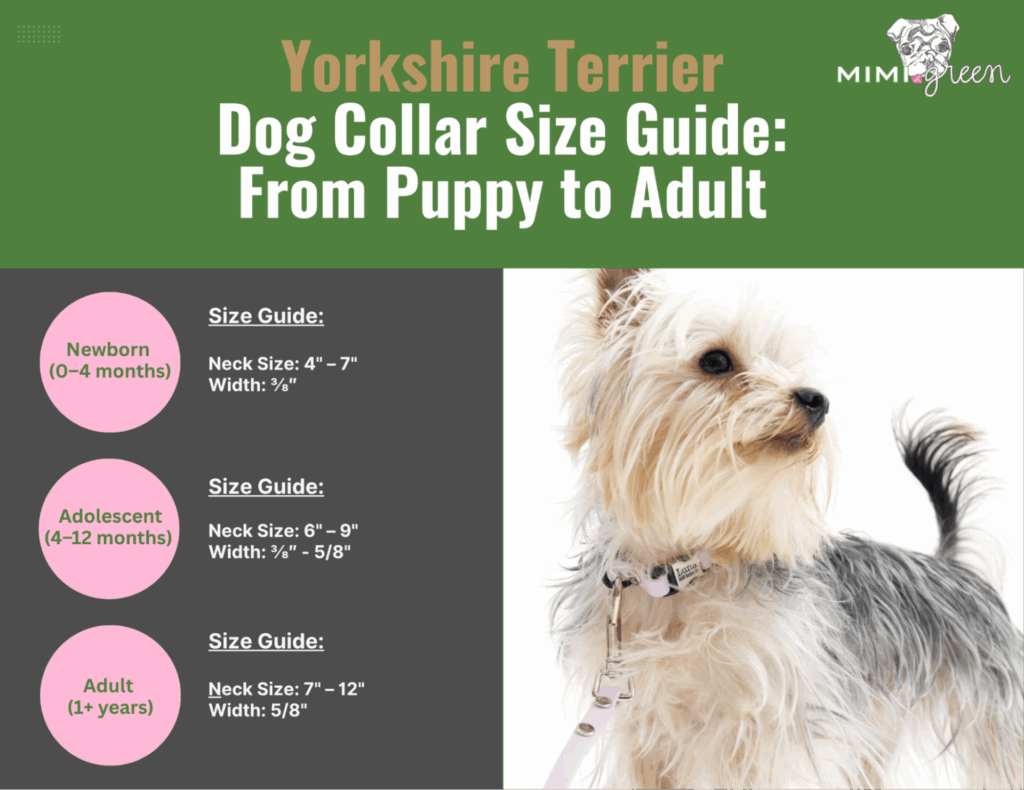
  • Narrow widths (⅜”–5/8″) to fit their petite necks
  • Adjustable sizing to grow with them
  • Soft, high-quality materials like velvet or smooth nylon
  • Smart, stylish designs that avoid bulky hardware or scratchy edges

At Mimi Green, we design collars made just for small breeds like the Yorkie. Hand-sewn in the USA and made-to-order, our collars come in customizable sizes, colors, and materials, including Fi-compatible and velvet options that are as functional as they are fashionable.

If you want to understand why Yorkies need different collars than, say, a Labrador, and what materials and fits will help your dog stay comfortable, safe, and stylish, keep reading. 

We’re digging into all the details next.

Why Collar Fit Matters for Yorkies

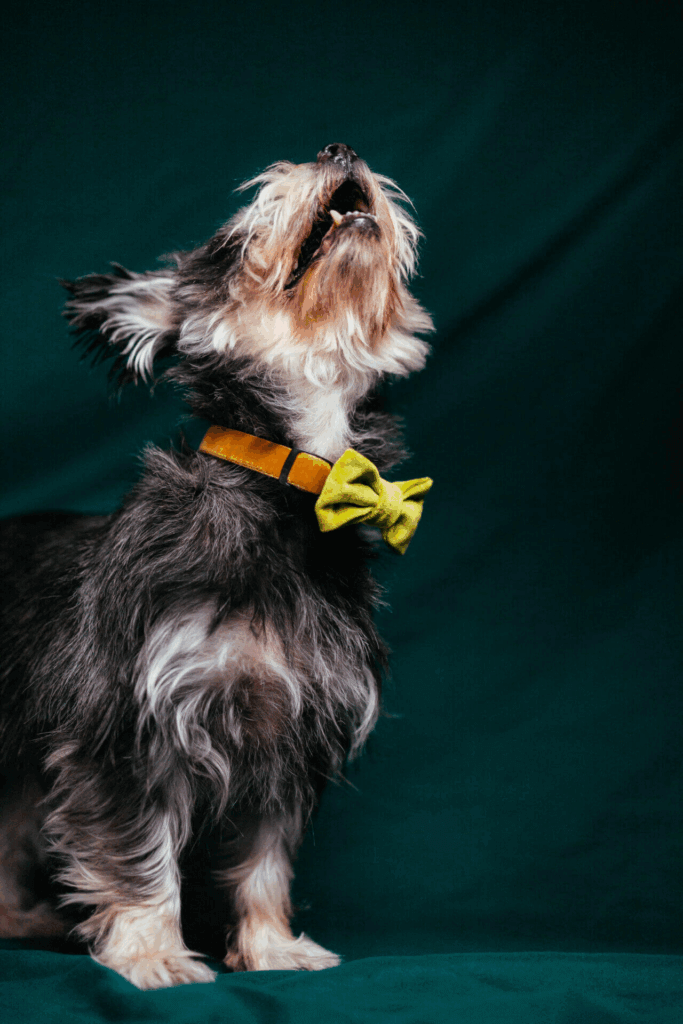
Featured Product: Velveteen Dog Collar Bow Tie – 13 Colors

Yorkies are tiny but tough, yet a bad-fitting collar can lead to injury, escape, or matted fur. Here’s why precision sizing is non-negotiable.

Many store-bought collars are built for bigger breeds, not 5–7 lb dogs with narrow necks and delicate tracheas. 

If a collar is too heavy or wide, it can weigh your Yorkie down or cause serious discomfort, especially during walks.

Here’s How to Get The Right Fit For Your Yorkie

  • Measure around the base of their neck (not the mid-neck like you’d do for larger breeds).
  • Use the two-finger rule: once fastened, you should be able to comfortably slide two fingers between the collar and your dog’s skin.
  • Typical Yorkie size: 7″–12″ for adults, even smaller for puppies. Always measure, don’t guess.

Fit is your first defense against escapes, choking, and irritation, three things no Yorkie parent wants to worry about.

Best Collar Types for Yorkies (Pros & Cons)

Yorkies need collars as dainty and durable as they are. These styles offer the best blend of comfort, control, and cuteness.

Engraved Buckle Collars

Great for daily wear and ID, these are the go-to for most Yorkie parents. Mimi Green offers handmade velvet and canvas versions that are soft on the skin and light enough not to drag down a tiny pup.

  • Best for: everyday wear, indoor lounging, and quick outings
  • Avoid: stiff materials or thick widths, those lead to matting and pressure points.

Puppy/Toy Dog Collars

Lightweight and comfy, Puppy/Toy Dog Collars are ideal for Yorkies, offering a secure fit for tiny necks without bulk, perfect for everyday wear and safe strolls.

  • Best for: growing pups, tiny necks, and everyday comfort.

Harnesses vs Collars for Yorkies

Harnesses reduce neck strain and are often safer for leash walks. Use collars for ID and style, and save the harness for exercise or training.

Use both: A collar holds ID tags and looks great. A harness prevents injury during high-energy walks or pulling.

Best Collar Materials for Yorkies

A Yorkie’s coat and skin are delicate. Here’s what to look for (and what to avoid) to keep your dog comfy and stylish.

  • Cotton: Soft, breathable, and Yorkie-approved. Mimi Green’s cotton collars are lightweight, washable, and strong, without the stiffness of traditional materials.
  • Biothane®: Waterproof, odor-resistant, and ideal for pups who love puddles or have skin sensitivities.
  • High-quality nylon: When done right, it’s gentle on fur and ultra-durable. Mimi Green’s nylon webbing is soft and made to last.

Avoid:

  • Cheap synthetics
  • Bulky hardware
  • Harsh webbing that causes skin irritation
  • Chain-style collars or rough materials that can tangle hair

Collars That Prevent Matting & Discomfort

Long hair + poor collar = matted mess. These materials and tips help Yorkie coats stay silky.

Yorkies with longer coats are especially prone to collar-related tangles. Here’s how to avoid them:

  • Go narrow. Thin collars minimize surface area and reduce friction against fur.
  • Choose smooth seams. Rough stitching or thick layers can press into their coat and create snarls.
  • Say no to Velcro. It snags fur and loses grip fast.
  • Opt for embroidery or engraved buckles. Hanging tags twist and rub, especially during play. Built-in ID is smarter for small dogs.

Mimi Green’s collars use smooth fabrics and optional buckle engraving or embroidered names to help keep your pup tangle-free and fabulous.

Yorkie Puppy vs Adult: Collar Needs Change

Yorkie puppies need different gear than full-grown fluffballs. Here’s how to keep up as they grow.

Puppies grow fast, and their collars should keep up. What fits in May might be too tight by July.

  • Start with something adjustable. Velvet or soft nylon is ideal for young pups with sensitive skin.
  • Check the fit often. Every few weeks, do a quick two-finger test and inspect for signs of tightness or chafing.
  • Upgrade hardware as needed. Adult collars can support stronger buckles and wider bands, but only if your dog’s neck has filled out.

At Mimi Green, every collar is made to order, so you can start with a lightweight puppy collar and upgrade to something bolder and sturdier when they’re ready.

Training Tips for Yorkies 

Featured Product: Beaded Puppy Collar | Friendship Bracelet Style | With Name

Training a Yorkie? These collar-based methods keep things safe, sane, and stylish.

Yorkies are clever, but stubborn. Training requires tools that reinforce boundaries without hurting your bond.

  • Harnesses are perfect for pullers. They protect the neck and are less intimidating for new learners.
  • Avoid harsh corrections. Devices like prong collars or e-collars are too intense for a dog this size and can cause fear or injury.
  • Use positive reinforcement. Reward-based training works best for sensitive, high-energy breeds like Yorkies.
  • Start early. Introduce your Yorkie to collars slowly. A calm, consistent routine helps them build collar confidence without stress.

When to Replace a Yorkie’s Collar

A worn collar isn’t just ugly, it can be unsafe. Here’s when to upgrade your pup’s gear.

Collars wear down over time, especially if your Yorkie is active, growing, or going through seasonal coat changes.

  • Check monthly for fraying fabric, stretched holes, or worn hardware.
  • Post-grooming fit check. A big haircut can affect how the collar sits, and too loose can lead to escapes.
  • Watch for discomfort. Scratching, tugging, or resistance may mean something’s off.
  • Puppies grow quickly. Replacing a collar every 3–6 months is typical during the first year.
  • Even adults need upgrades. For most dogs, 6–12 months is a healthy refresh cycle.

With Mimi Green, reordering is simple. Your pup’s exact size and style are stored for easy upgrades, and you can switch up fabrics or engraving as they grow.

Best Collar + Leash Combos for Yorkies

Don’t just stop at the collar. These matching sets complete your Yorkie’s look while boosting safety and function.

A matching leash and collar not only looks sharp, it ensures consistent comfort and performance.

  • Pair velvet collars with velvet leashes. Soft from neck to hand.
  • Stick to 4–6 foot leashes. Just the right amount of freedom without losing control.
  • Avoid retractables. They’re too heavy and inconsistent for a dog this size.

Looking for a one-stop style upgrade? Mimi Green’s sets are built with small dogs in mind, lightweight, customizable, and ultra-chic.

Final Checklist – Yorkie Collar Essentials

Before you click “buy,” here’s what your Yorkie really needs.

✅ Lightweight collar with secure buckle
✅ Matching 4–6 ft leash
✅ Velvet or nylon material for comfort
✅ Backup harness for walks
✅ ID via embroidery or engraved buckle
✅ Measurement tape to track neck growth
✅ Second collar for backups or special outings

A well-outfitted Yorkie is a safer, happier, more confident companion. Whether you’re styling up or gearing up for training, make sure your collar setup keeps up with your dog’s personality and pace.

Your Yorkie Deserves More Than a Generic Collar

Featured Product: Waterproof Biothane Toy Dog & Cat Collar – Personalized

Tiny dogs come with big needs, and your Yorkie’s collar should do more than just hold an ID tag. 

Whether you’re battling fur matting, looking for a better fit, or trying to prevent leash-related strain, the right gear makes all the difference. Most collars on the market just aren’t made with small breeds in mind, but ours are.

Why Mimi Green Works for Yorkies:

  • Lightweight, breed-appropriate designs that won’t overwhelm a 7 lb pup
  • Custom sizing and soft materials like velvet and Biothane® to reduce matting and skin irritation
  • Made to order in the USA, by hand, with love, not mass-produced overseas

If your Yorkie’s collar has never fit quite right, we’ll change that.

Browse our collars today, and give your tiny sidekick something that fits their size and their sparkle. 👉 Shop Yorkie Collars Now

FAQs – Yorkshire Terrier Collar Edition

Still unsure what’s right for your Yorkie? These answers tackle your top concerns head-on.

What collar size should I get for a Yorkie? Most adult Yorkies wear 6–10″. Measure around the neck base and add 1–2 inches for wiggle room.

Is a harness or collar better for leash walks? Harness. It reduces pressure on the trachea and offers more control. Use a collar for ID or indoor use.

What collar material won’t cause matting? Velvet, smooth nylon, or Biothane work well. Rough webbing and scratchy seams are a no-go.

Best Collar for Siberian Husky | Durable Picks

The best collar for a Siberian Husky is a martingale, it helps prevent escape and offers gentle control. Huskies are strong, clever, and heavy pullers, so your collar needs to combine strength, comfort, and durability. Choose weatherproof, wide-fit, and personalized options for daily use.

If your Husky keeps slipping out of collars, pulling like a sled dog, or chewing through gear like it’s a game, you’re not alone. 

Its two-loop design gently tightens when your dog pulls, helping to prevent escape without choking, a perfect fit for breeds with strong necks and narrow heads.

But not just any martingale will do. Huskies need durable materials, wide-fit comfort, and collars that adapt to their thick seasonal coats. 

At Mimi Green, we design gear for dogs like yours. 

Every collar is made to order in the USA, with thoughtful touches like metal and military-grade plastic buckles, waterproof Biothane, and custom sizing built to handle everything from snow zoomies to summer hikes.

Want to dig deeper into how to choose the right collar for your Husky? Keep reading, we’ve mapped it all out, one wag at a time.

Why Collar Choice Matters for Huskies

Huskies are high-energy escape artists with thick fur and impressive pulling power. Picking the wrong collar isn’t just inconvenient, it can be unsafe.

  • Their head is smaller than their neck, which makes standard buckle collars easy to slip off, especially if they pull backwards.
  • A poor fit or rough materials can lead to fur loss, hidden chafing, or even skin infections under all that fluff.
  • Flat collars often aren’t enough. Many Huskies chew through them or twist out in seconds.
  • And if your Husky pulls hard (which most do), the wrong collar can reinforce that behavior or create neck strain.

Collar selection is about comfort, security, and keeping your dog where they belong: by your side.

Quick List: Best Collars for Huskies

Need the quick list? Here’s a breakdown of collar types that consistently work for Siberian Huskies:

Martingale Collars: The Top Pick for Most Huskies

Martingales are a favorite among Husky parents for good reason. Their unique two-loop design offers better security than flat collars while avoiding the harshness of choke chains.

  • Gently tightens when your dog pulls, then loosens when tension stops
  • Offers escape resistance without causing discomfort
  • Ideal for Huskies’ thick coats and lean heads
  • Available in high-performance fabrics like nylon, Biothane, or leather
  • Our Fi-compatible models support Fi GPS tracking for safety beyond the leash

Collar vs. Harness: Which Is Better for a Husky?

This isn’t a one-or-the-other question, for many Husky owners, the answer is both.

  • Collars are perfect for ID tags, nameplate engraving, and basic training cues
  • Harnesses are great for walks, trail runs, or when managing strong pulling
  • Huskies often have broad chests, so step-in harnesses fit better than front-clip styles, which can rub and irritate

At Mimi Green, we’ve tested dozens of designs. That’s why we make step-in harnesses that fit securely, match our collars, and avoid the usual hot spots Huskies hate.

What to Look for in a Husky Collar

Not all collars are built for high-drive, thick-coated, snow-loving dogs. Here’s what makes a difference:

  • Choose soft-yet-strong materials like leather, Biothane, or smooth nylon
  • Avoid sharp seams, stiff webbing, or metal that freezes in cold weather
  • Look for reinforced stitching, not just glue or heat seals
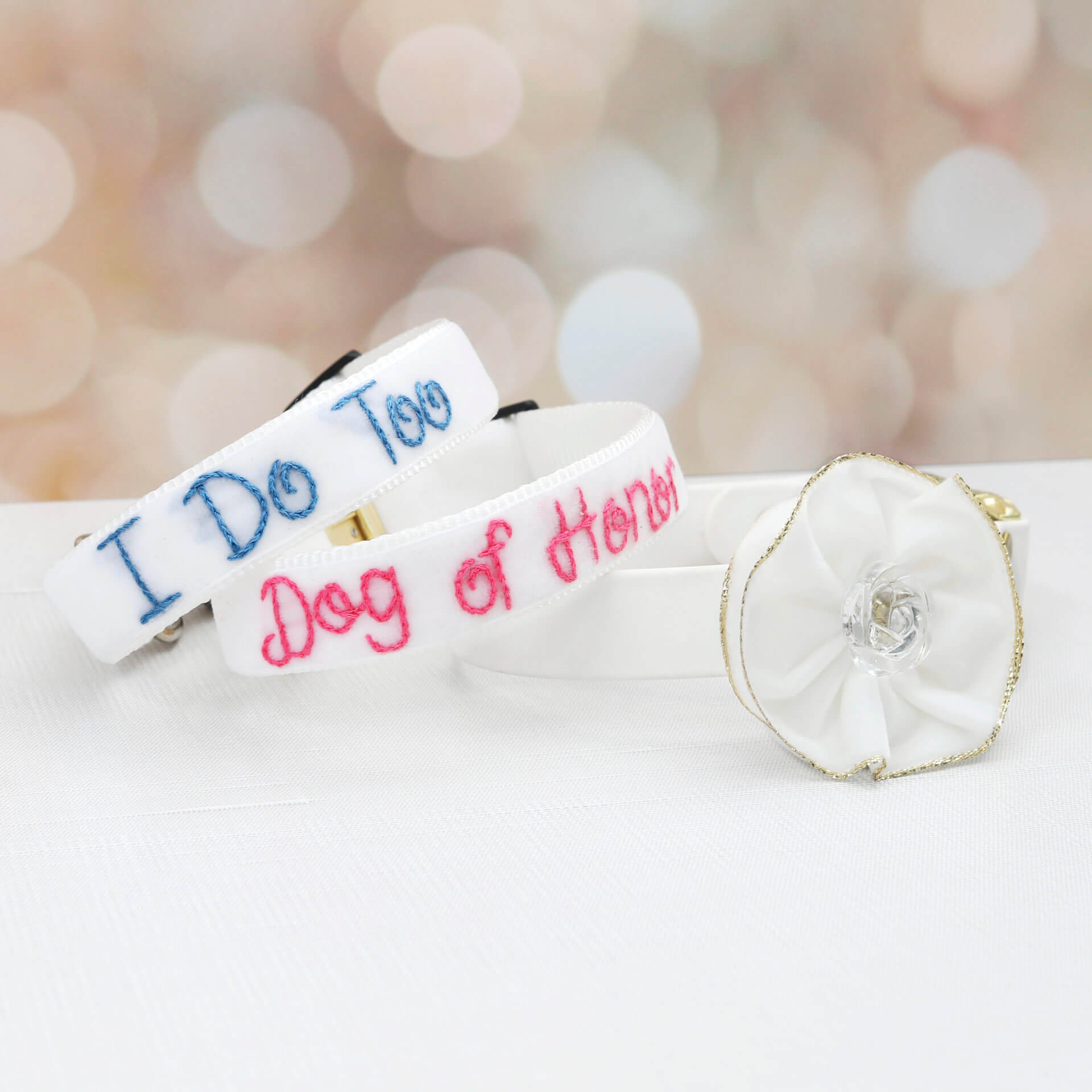
  • Plastic buckles can outperform metal in durability and cold resistance

Durability, safety, and comfort aren’t extras, they’re baseline requirements for a Husky collar.

Sizing & Fit: How to Measure a Husky’s Neck

Getting the fit right means fewer escapes and fewer sore spots. Huskies change coat volume seasonally, so even a well-fitted collar may need readjusting.

  • Use a soft measuring tape at the base of the neck (where the collar sits)
  • Add about 1 inch to allow for comfort and proper movement
  • You should always be able to slide two fingers between collar and neck
  • Most adult Huskies wear collars in the 16–22 inch range
  • Recheck the fit after seasonal shedding, weight changes, or growth spurts

A properly fitted collar won’t ride up or slip off, even when your dog decides it’s time to sprint.

Collars for Husky Puppies vs. Adults

A growing Husky has different collar needs than a fully grown one. One size definitely doesn’t fit all.

  • Puppies need lightweight, adjustable collars, nylon or Biothane work well
  • Avoid training collars (like prongs or martingales) on young pups
  • Check fit monthly during growth stages; puppies can outgrow collars fast
  • Adult Huskies benefit from wider, stronger options like leather or GPS-enabled martingales
  • Engraved buckles eliminate noise and reduce the chance of ID tags getting lost

As your Husky grows, their collar should grow with them, both in size and functionality.

Avoid These Common Mistakes

Featured Product: Custom Beaded Dog Collar Friendship Bracelet Style

With so many collars on the market, it’s easy to get swept up in what looks good. But for Huskies, function should lead form.

  • Don’t size by weight, always measure the neck
  • Martingale collars are more reliable for dogs prone to escape
  • Avoid thin or stiff collars that can rub fur and skin

A collar that slips off, digs in, or gets chewed apart won’t protect your dog, it’ll frustrate both of you.

Real Worries, Real Fixes

You’re not imagining it, owning a Husky comes with some specific gear challenges. Here’s how to stay ahead of them:

My Husky slips out of every collar: Use a buckle-free martingale, fitted snugly with no loose gaps. Add GPS for backup if needed.

My Husky pulls hard on the leash: Try a martingale + harness combo. Use positive reinforcement to reduce pulling.

My dog chews through collars: A properly fitted collar reduces chewing access. Also check that it’s not irritating their skin.

I’m overwhelmed by options: Start with a collar made for Huskies: wide fit, tough fabric, thoughtful details. That’s where Mimi Green comes in.

How Often Should You Replace a Husky Collar?

Even tough collars wear down, especially when your dog is pulling, rolling, or leaping through every season.

  • Inspect monthly for signs of fraying, cracked buckles, or rusted hardware
  • Replace every 6–12 months, or sooner for highly active dogs
  • Puppies will need frequent size updates during growth
  • Materials like Biothane clean easily and tend to outlast fabric or untreated leather

A collar that looks fine on the outside may be worn out where it counts, don’t wait for a break to find out.

Collar + Leash Combos Built for Huskies

Featured Product: Reflective Fi Compatible Martingale Dog Collar – Lightweight Waterproof Biothane with Optional Engraved Name Plate

A strong collar needs an equally dependable leash, especially when a squirrel enters the scene.

  • Match your collar and leash in material and strength, Biothane, leather, or tightly woven nylon
  • Look for grippy, comfortable handles that won’t dig into your palm
  • Skip retractables, they’re unreliable and unsafe with a fast, powerful dog
  • Consider extras like a waste bag holder or key clip for hands-free walks

Consistency between collar and leash doesn’t just look good, it keeps you in control.

Final Checklist – Husky Essentials
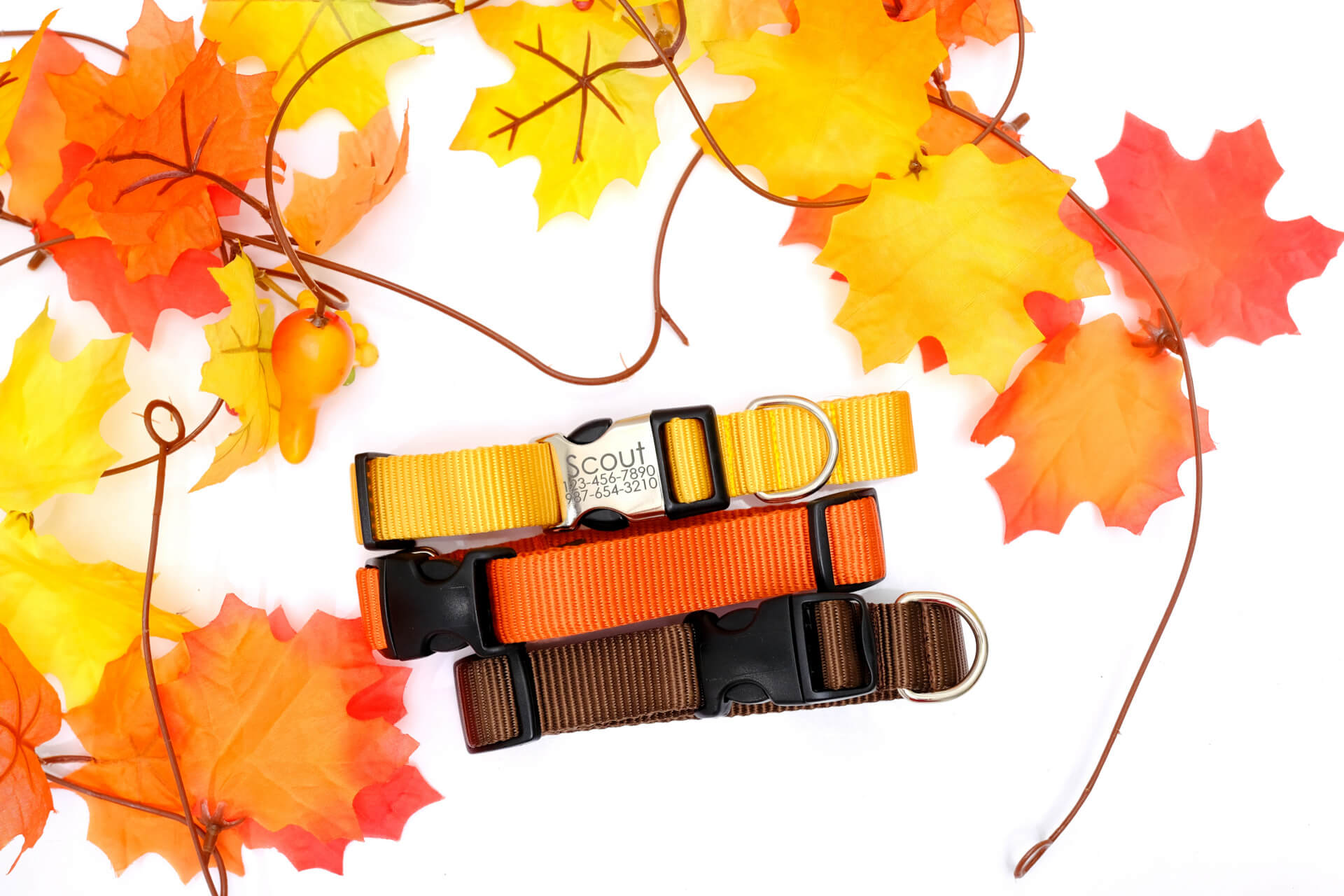
Before your next big adventure (or backyard sprint), make sure you’ve got everything dialed in:

✅ Wide-fit martingale collar
✅ Secure leash (4–6 ft, not retractable)
✅ Step-in harness for additional control
✅ Custom engraved buckle or nameplate
✅ Flexible tape for measuring neck size
✅ Waterproof or reflective options for visibility
✅ Cleaning wipes for post-hike maintenance

Checking your gear is just as important as checking your route.

Ready to Find Your Husky’s Paw-fect Fit?

Siberian Huskies need more than a one-size-fits-all collar, they need something that holds up to the elements, keeps them secure, and still shows off their bold personality.

At Mimi Green, we design every collar, leash, and harness with this balance in mind. Our handmade gear is made to order in the USA, using materials tough enough for Husky-level energy and custom touches that make each set as unique as your dog.
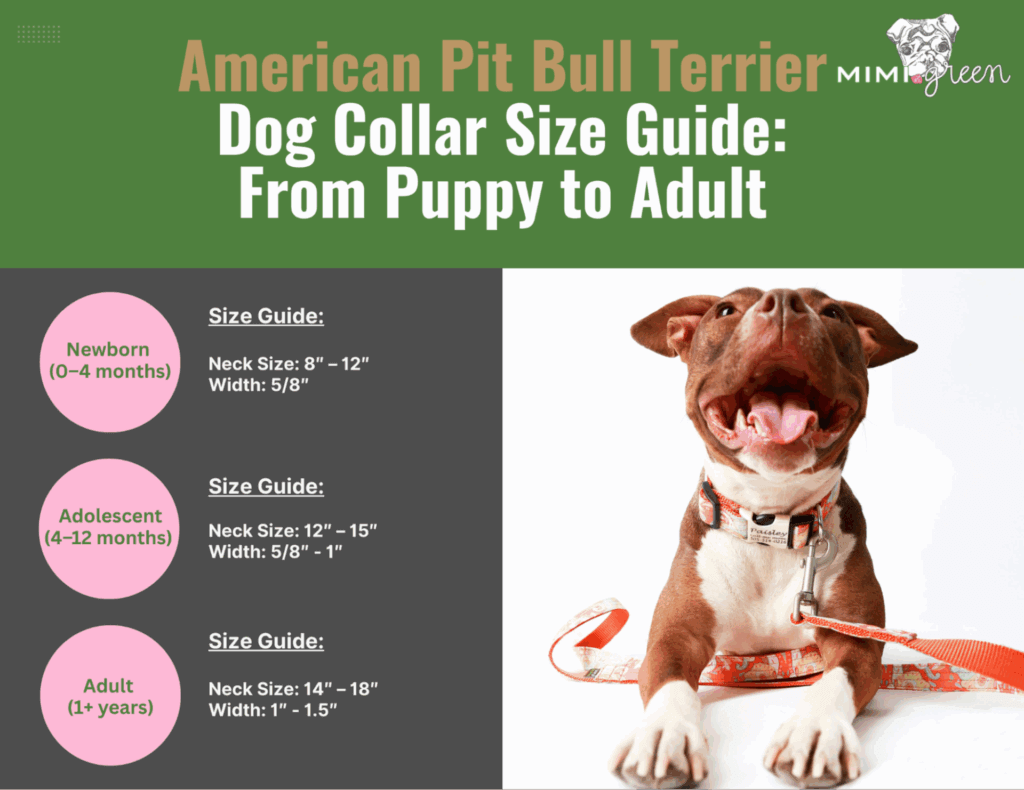
👉 Explore our Husky Collection, your next adventure starts with the right collar.

FAQs Husky Parents Ask

These are the kinds of questions we hear every day, and the real-world answers we share:

What size collar should I get for my Husky puppy? Start small and adjustable. Puppies grow fast, recheck size every few weeks.

What’s the best collar type for a Husky? Martingale collars offer the most secure fit without harsh corrections.

Is a harness better for walking? It depends on the dog. Some Huskies do better with a collar + harness combo.

Should I choose a buckle or buckle-free design? Buckle-free martingales are more secure; buckles make for faster on/off.

Can Huskies wear collars all day? Yes, but only when supervised. Remove at night or during unsupervised play to prevent snagging.