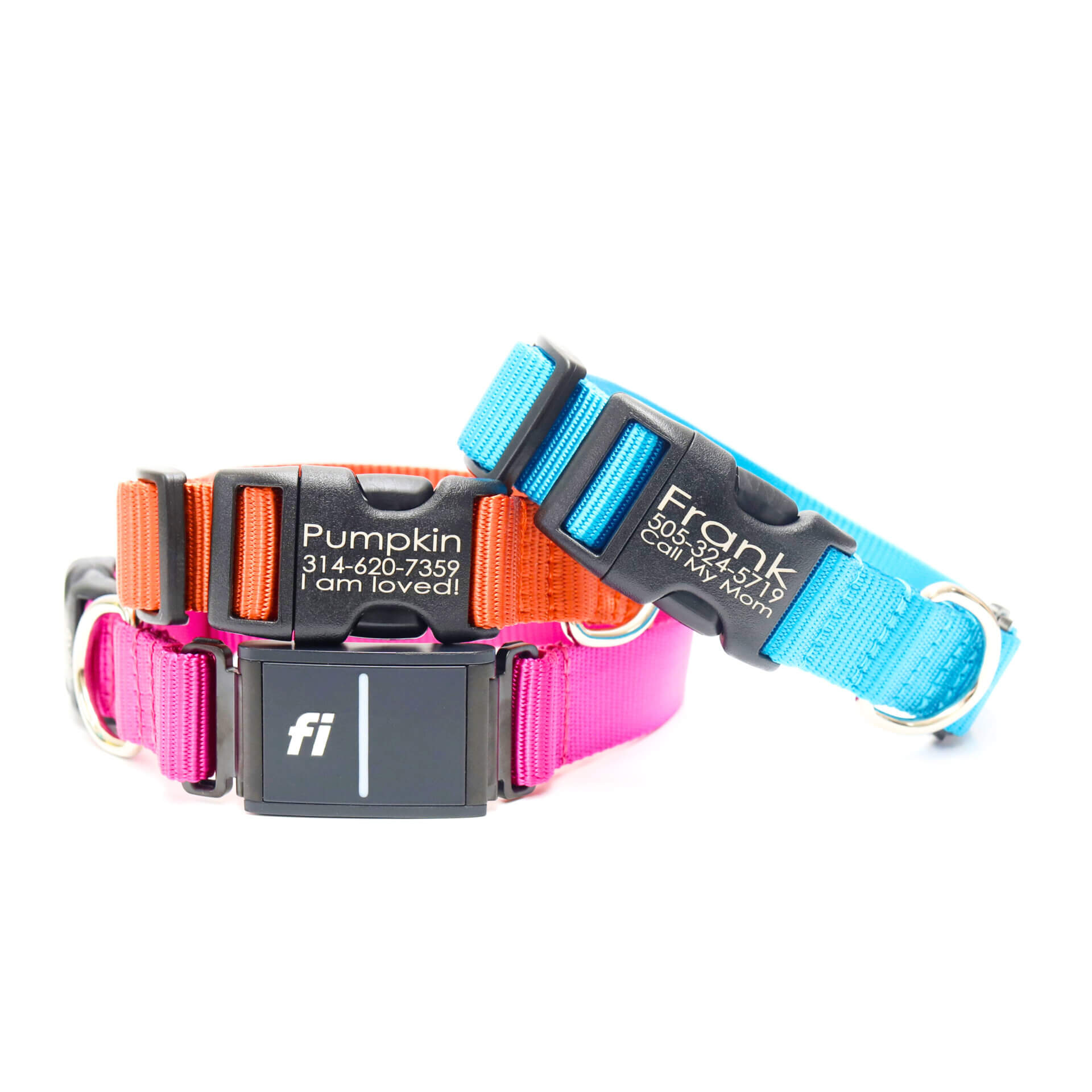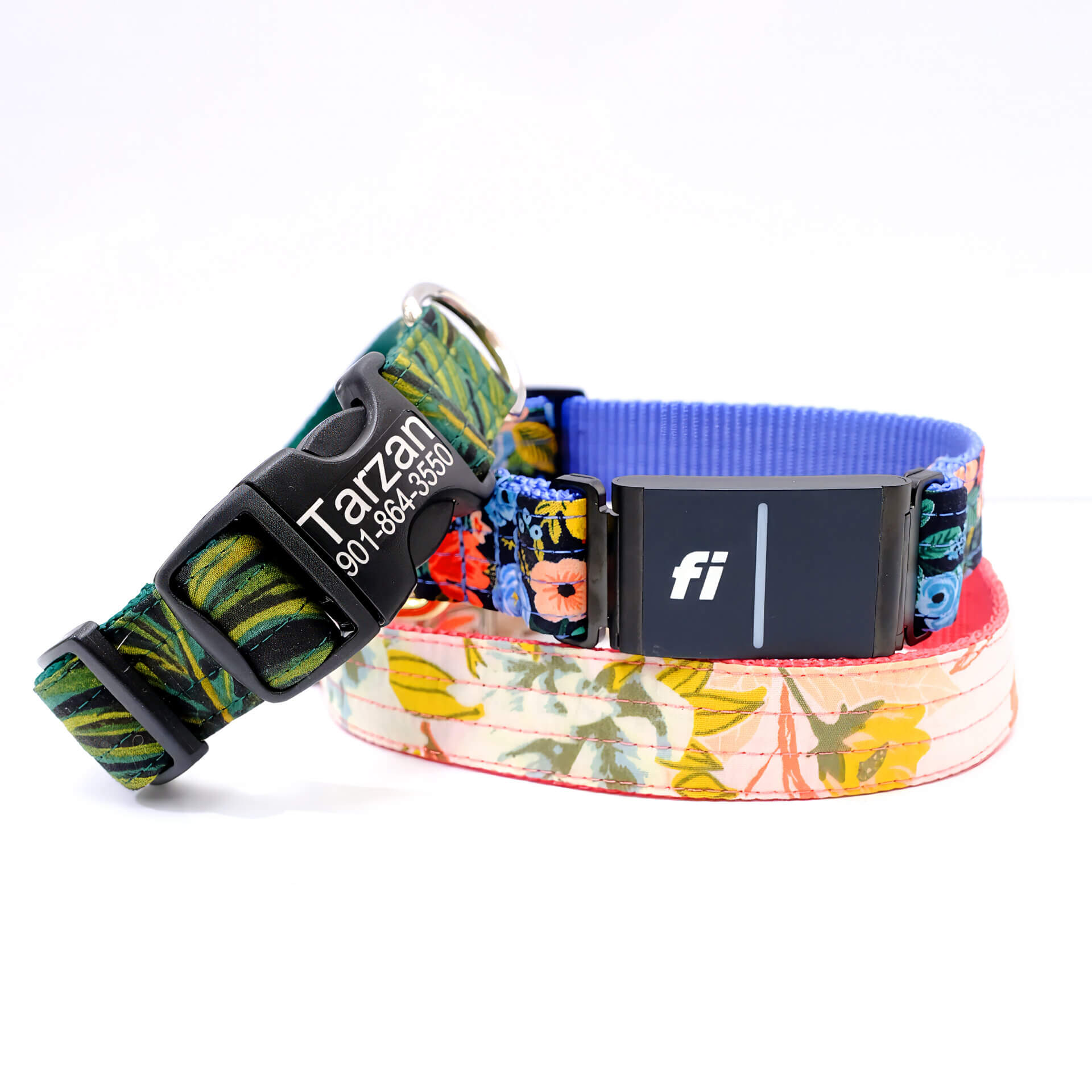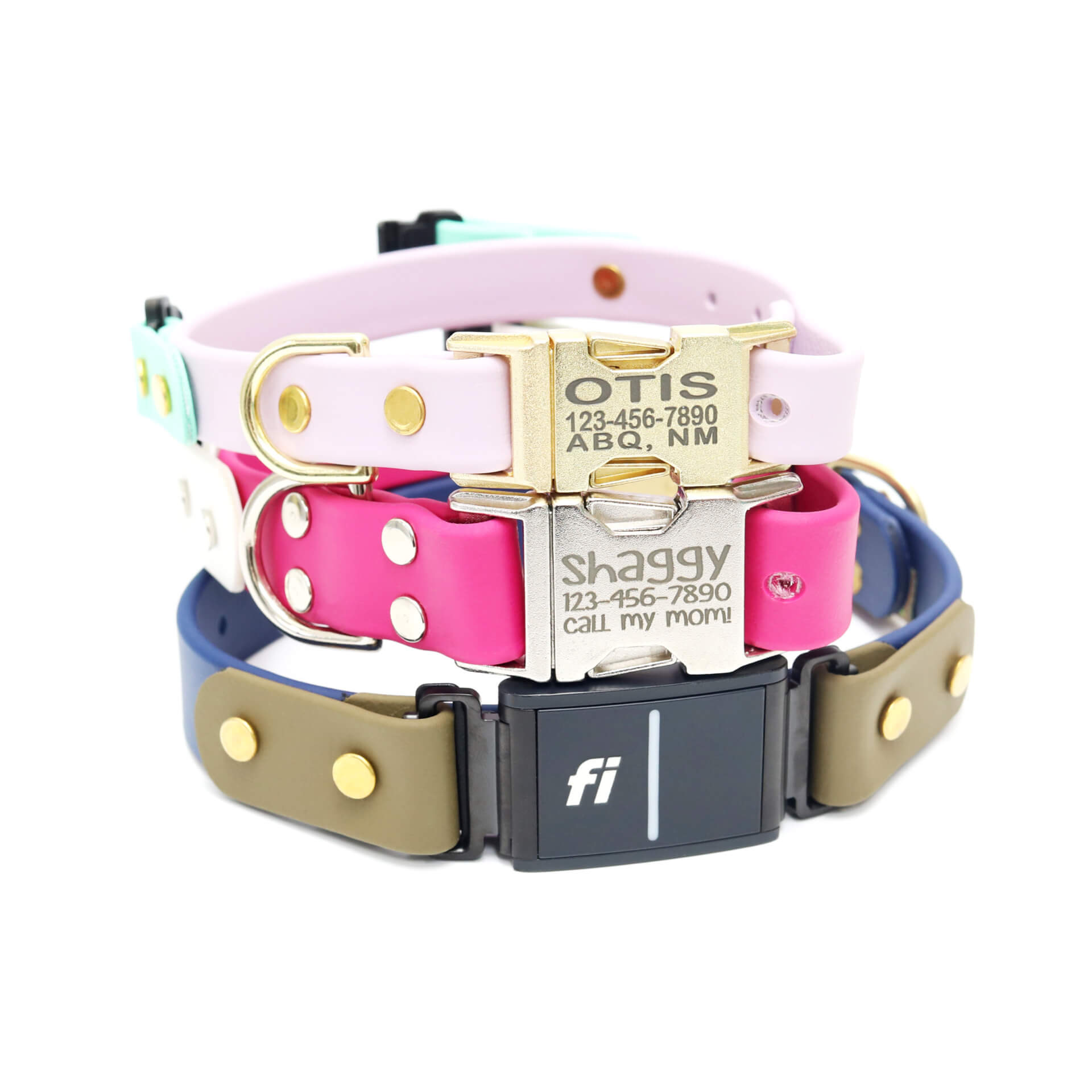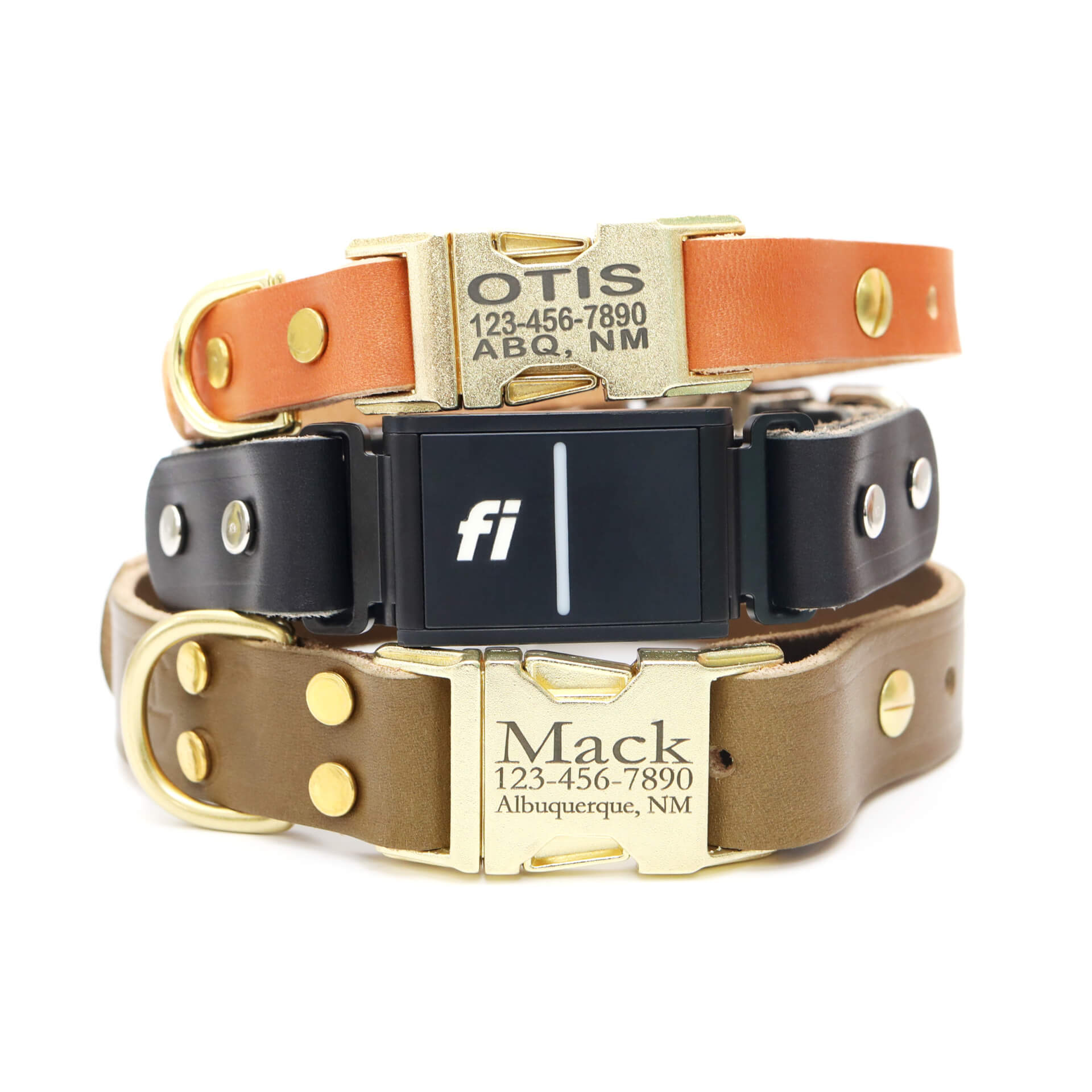
Category Archives: Blog

Best Dog Training Collars for Small Dogs

Training collars aren’t just for big dogs. Small dogs need just as much guidance and structure as their larger counterparts. 

In fact, small breeds can be even trickier to train due to their tendency toward territorial behavior and the temptation many owners feel to simply scoop them up instead of addressing issues through training.

The short answer is yes, small dogs absolutely benefit from clear communication and consistent reinforcement. Training collars, when used responsibly, provide an effective means of reinforcing commands and ensuring safety.

It’s vital to understand that training collars are tools, not shortcuts. They are meant to supplement good training practices, not replace them. Ethical use focuses on reinforcing known behaviors and ensuring your small dog’s comfort and wellbeing.

What Are the Best Dog Training Collars for Small Dogs?

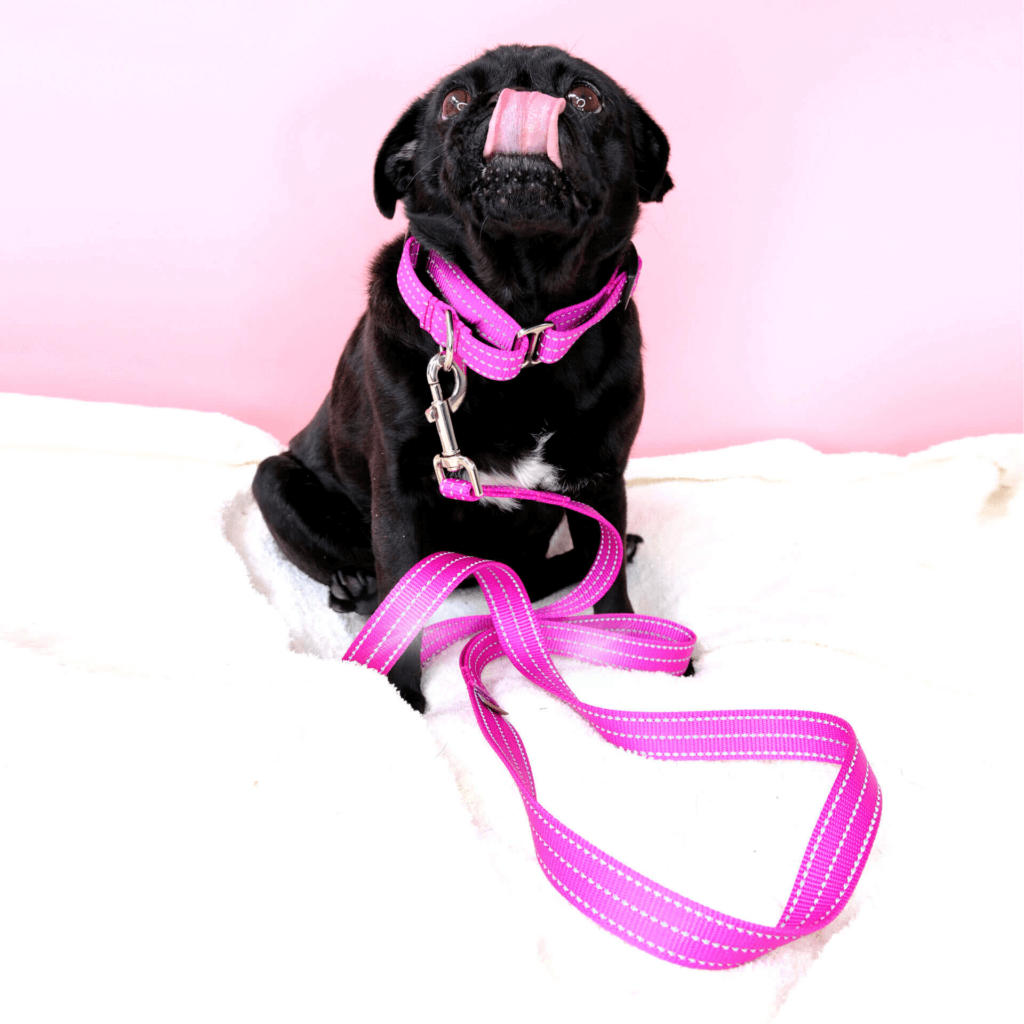
Martingale Collars – Safe Control Without Choking

Martingale collars are a fantastic option for small dogs who tend to slip out of traditional collars. The gentle tightening mechanism offers more control without the risk of choking, making it ideal for escape-prone pups. However, it’s critical to note that martingales should never be left on an unsupervised dog.

Slip Collars – Minimalist Training Tool

Slip collars are another useful tool for training lead manners, especially for small dogs who need a little guidance during walks. These collars allow quick, gentle corrections but should only be used during supervised training sessions. For everyday wear, they are not recommended due to the potential choking risk if left unattended.

eCollars – Advanced Tools That Need Expert Guidance

eCollars (short for electronic collars) are not a product that we sell, but they deserve a place on this list because they may work in certain training contexts. With a skilled professional, they can provide targeted communication that supports behavior correction. Used improperly, though, they can confuse or stress your pup.

If you’re considering an eCollar, work closely with a positive-reinforcement-based trainer who understands your dog’s size and temperament. This tool is never a one-size-fits-all solution, especially for the littlest pack members.

Prong Collars – Controversial but Sometimes Effective

Prong collars tend to raise eyebrows. The metal links apply even pressure around your dog’s neck when they pull, which can be alarming if misused. For small dogs, we don’t generally recommend them. However, when introduced properly under a trainer’s supervision, some dogs can benefit from the structured feedback these collars offer.

Still, there are often gentler alternatives that achieve the same results without risk. If your pup is a puller, consider starting with a front-clip harness or a well-fitted martingale before exploring prong options.

We wrote a full article on the Types Of Dog Collars that’s way more in-depth and for all breeds/sizes.

Are Vibration Collars Safe for Small Dogs?

Pros:

  • Provides a gentle correction without shock.
  • Useful for recall or alerting behaviors.

Cons:

  • May not be effective for all dogs, particularly those who are highly anxious or desensitized.
  • Should not replace broader training strategies.

How to Choose the Right Training Collar for Your Small Dog

Key Considerations

  • Temperament and sensitivity: Some dogs require softer, more gentle tools, while others may need firmer guidance.
  • Weight: Always check weight limits. Some collars are unsafe for dogs under 5 lbs.
  • Training goal: Match the collar to your specific aim, whether it’s improving recall, leash manners, or curbing barking.

Material Matters

  • Opt for lightweight fabrics: Materials like Mimi Green’s velvet or waterproof Biothane prevent discomfort.
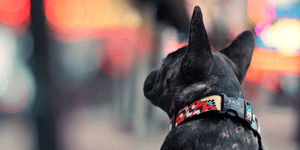
  • Choose hypoallergenic options: These reduce the risk of skin irritation, especially for dogs with sensitivities.

How We Do Training Collars Differently at Mimi Green

  • Custom options: Choose from engraved buckles, Custom Sizing, and embroidered names for personalization.
  • Durable hardware: Built to withstand everyday adventures and training sessions.
  • Stylish designs: Our collars blend fashion with function effortlessly.

Handmade in the USA for a Paw-fect Fit

Every Mimi Green training collar is handmade to order right here in the USA. We offer personalized sizing to ensure safety and comfort for your small dog. Whether you’re looking for soft velvet, durable Biothane, or classic leather, we have a wide selection tailored to your dog’s unique style and needs.

Ethical Craftsmanship

Unlike mass-produced options, Mimi Green collars are crafted with care. We never cut corners with cheap materials. Our commitment to fair wages and sustainable practices ensures that every collar is made with integrity, supporting our small team and community.

Style Meets Function

Our collars go beyond function, they’re a statement of your dog’s personality. Choose from engraved buckles, embroidered names, and a palette of colors and materials. Plus, our durable hardware means you can trust your collar to stand up to everyday adventures and training sessions alike.

Training Collars for Small Dogs Done Right

Training collars can be a safe, humane tool for small dogs when selected thoughtfully and used responsibly. The right collar supports your training goals while keeping your dog comfortable, secure, and stylish.
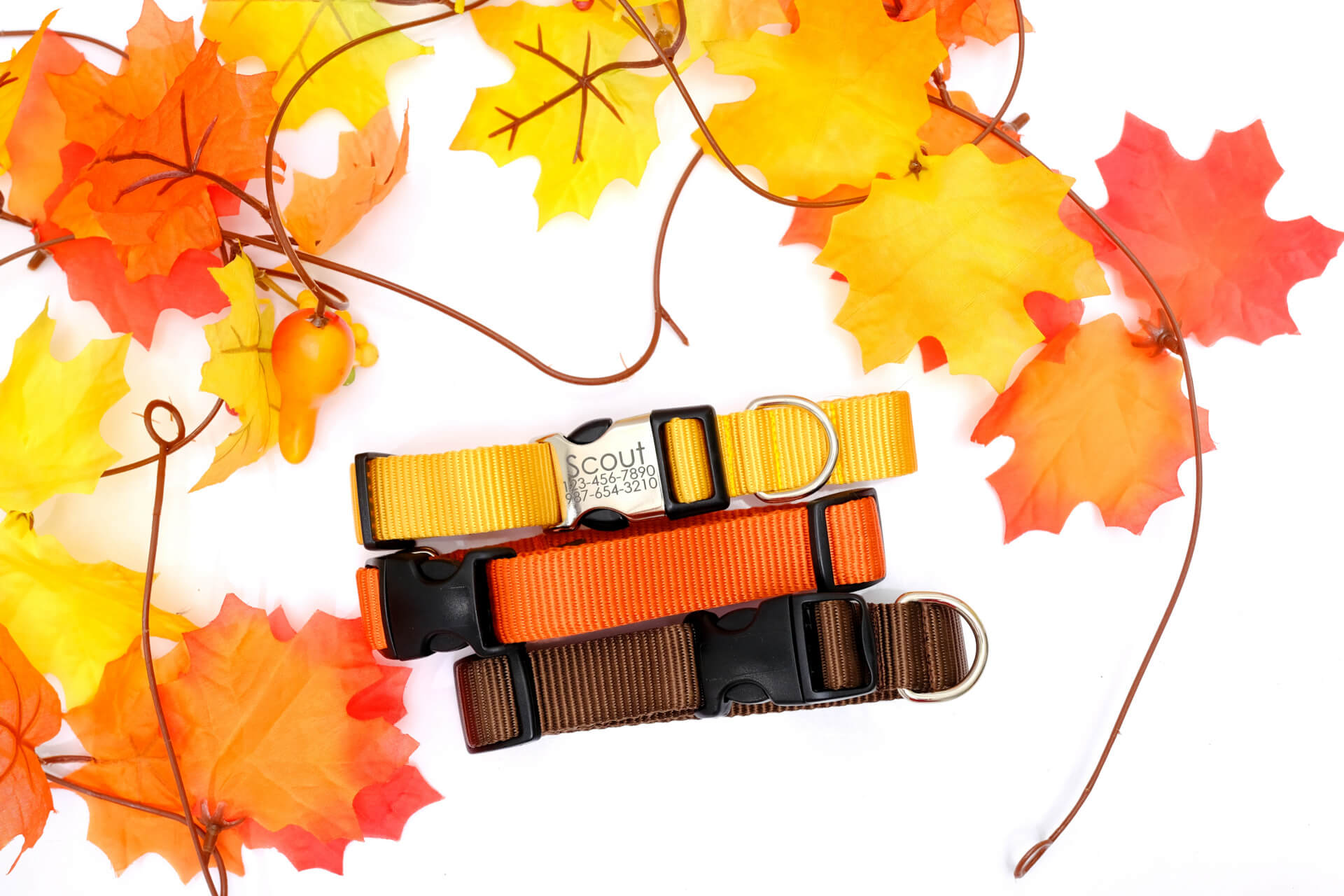
At Mimi Green, we’re proud to offer handcrafted training collars that combine safety, durability, and design. Made with love, care, and your pup’s individuality in mind, our collars help you and your dog communicate better while looking fabulous on every walk.
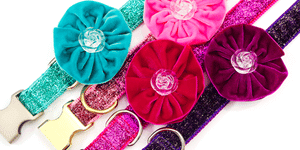
Ready to upgrade your training toolkit? Browse our Collars here!

Why Do Dogs Wear Collars? | Are They Necessary

Your dog’s collar is more than just an accessory, it’s their passport, seatbelt, and favorite hoodie all rolled into one. It keeps them safe, lets them express their personality, and even comforts them in unfamiliar situations.

In this guide, we’ll dig into why dogs wear collars, whether they should wear them all the time, and how to pick the perfect one for your pup’s lifestyle.

What Is the Purpose of a Dog Collar?

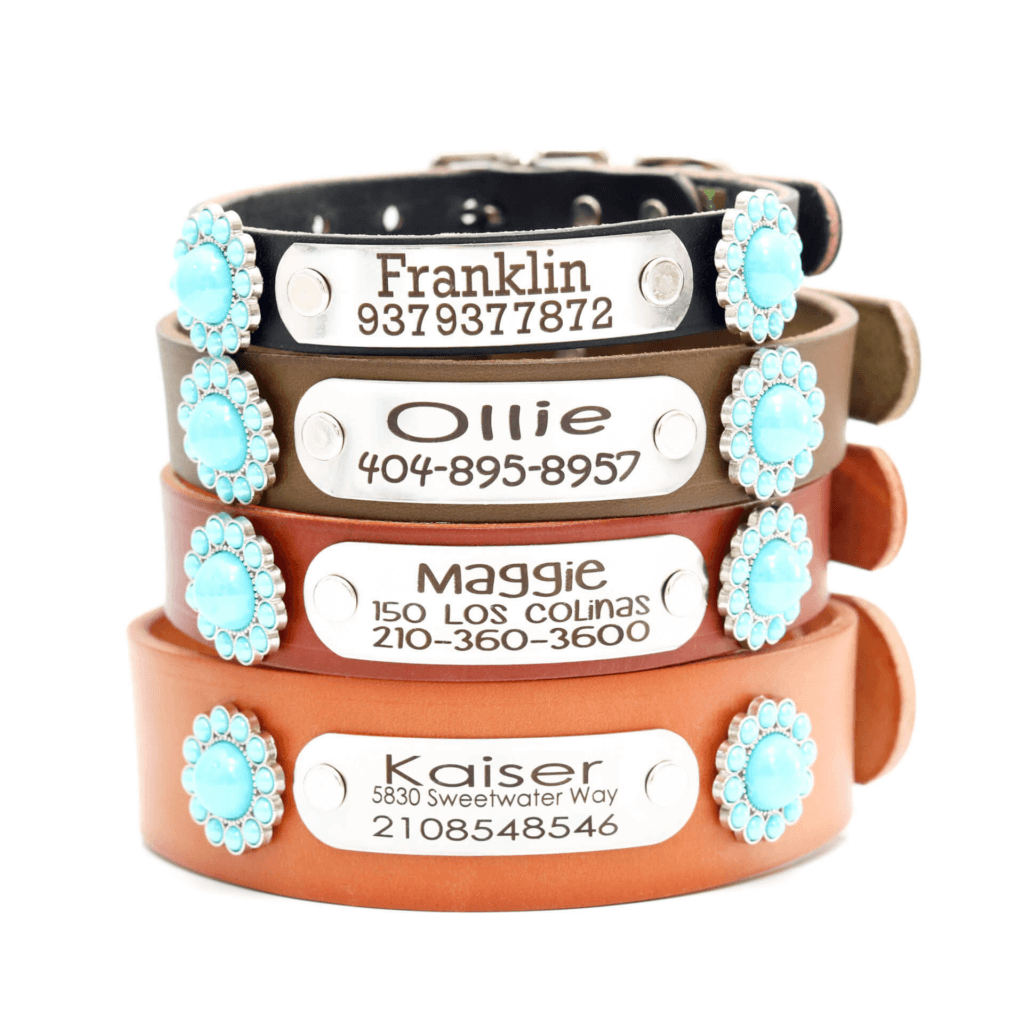
Featured Product -> Leather Concho Dog Collar with Engraved Nameplate

Safety and Identification

At its core, a dog collar is a safety device. It holds ID tags that can quickly reunite lost dogs with their families. Even in a world of microchips, a collar remains the fastest way for a stranger to help a lost pup find their way home. Not everyone carries a microchip scanner, but most people know how to read a tag.

Personalized engraved collars take this a step further. At Mimi Green, we make collars that allow your pet’s name and your phone number to be permanently displayed, eliminating the risk of noisy tags falling off. This direct contact method can make all the difference in an emergency.

Leash Control and Training

Dog collars also provide a secure point for leash attachment, allowing safe restraint and clear communication during walks. For dogs that tend to slip out of traditional collars, Martingale collars offer a solution, tightening slightly under tension to prevent escapes but without choking.

For nighttime adventures, Reflective Dog Collars or those with integrated GPS systems enhance safety. Whether you’re on a dawn hike or letting your pup explore the backyard at dusk, these smart features give peace of mind.

Emotional Security and Routine

Beyond function, collars serve as a source of emotional security for many dogs. They are a symbol of family and routine, part of the daily rhythm of walks, meals, and cuddles. Dogs often feel “naked” without their collar, sometimes even anxious or worried about what comes next, like an unexpected bath.

This attachment is similar to how humans feel about favorite clothing or accessories, familiar, comforting, and part of their identity. It’s not uncommon for dogs to eagerly nudge their collar, signaling that they’re ready for the next adventure.

Do Dogs Need to Wear Collars All the Time?

The Case for Continuous Wear

  • Quick identification if your dog escapes, an open door or broken fence can happen in seconds.
  • Ensures your dog returns home safely by keeping ID on at all times.
  • For some dogs, consistent wear reduces anxiety; they may feel unsettled or stressed when the collar is removed.
  • Easy indicator that your dog has an owner should they get out.
  • Allows you to easily separate dogs if needed.

When to Remove a Collar

  • Collars can snag on furniture or crates, posing a risk of injury, especially indoors.
  • Dogs with sensitive necks or respiratory issues may do better with a harness for walks.
  • Removing the collar during grooming or bedtime can prevent matting, irritation, or pressure points, particularly for long or thick-coated breeds.
  • Balance safety and comfort by assessing your dog’s environment and daily activities.

Why Do Dogs Like Wearing Their Collars?

Positive Associations

  • Collars signal exciting activities: walks, treats, attention.
  • Built through classical conditioning, collar predicts an enjoyable experience.
  • Many dogs get visibly excited when their collar is picked up, associating it with adventure.

Identity and Belonging

  • A collar is a symbol of belonging, much like in “Lady and the Tramp” where it signifies being part of a loving home.
  • Dogs recognize their collar as part of their identity, it says: “I have a family.”
  • For many owners, a dog’s collar becomes a cherished keepsake after their pet’s passing.

Habitual Comfort

  • Like humans with favorite clothing or jewelry, many dogs feel secure and “dressed” when wearing their collar.
  • Some dogs proudly parade around with their collar, treating it like a badge of honor.
  • The right collar, especially one tailored to your dog’s personality, enhances their daily confidence and comfort.

Choosing the Right Collar for Your Dog’s Needs

Everyday Collars

For most dogs, a standard flat collar is ideal for daily wear. It provides a place to attach ID tags, ensuring quick identification if your dog ever gets lost. These collars strike the right balance between comfort and practicality.

For Dogs That Pull or Slip

  • Martingale Collars:
    👉Provide gentle control by tightening when needed.
    👉Prevent escape without choking, ideal for narrow-headed breeds.


  • Harnesses:
    > Recommended for severe pullers or dogs with tracheal issues.
    > Distribute pressure across the body rather than the neck.

Water-Loving Dogs

For adventurous pups who love splashing through streams or romping on the beach, Biothane® collars are the go-to choice. 

These collars are waterproof, odor-resistant, and easy to clean, perfect for muddy hikes or lakeside weekends.

Sensitive Skin

  • Opt for hypoallergenic materials like cotton or leather.
  • Avoid rough synthetics that may cause irritation.

Breed Size

  • Small breeds need lighter, narrower collars to prevent strain.
  • Large breeds require sturdy, wider collars for strength and durability.

What Your Dog’s Collar Really Means

The right collar keeps your dog safe, stylish, and comfortable. Regularly checking for proper fit and wear ensures your dog’s continued comfort and security.

At Mimi Green, we believe that every collar should be as unique as your dog. We’re proud to offer a wide variety of collars tailored to different needs and styles:

All of these collections are handmade to order, ensuring a truly personalized experience. 

Rope Leash vs Flat Leash: Which Is Better?

Leash choice often stirs up concerns about comfort, durability, and safety, for both you and your pup. No one wants to deal with painful leash burns, slippery grips, or equipment that wears out too quickly. 

And let’s face it, when it comes to walking your dog, comfort and control aren’t just nice to have, they’re non-negotiable.

Let’s dig deeper and explore why that is.

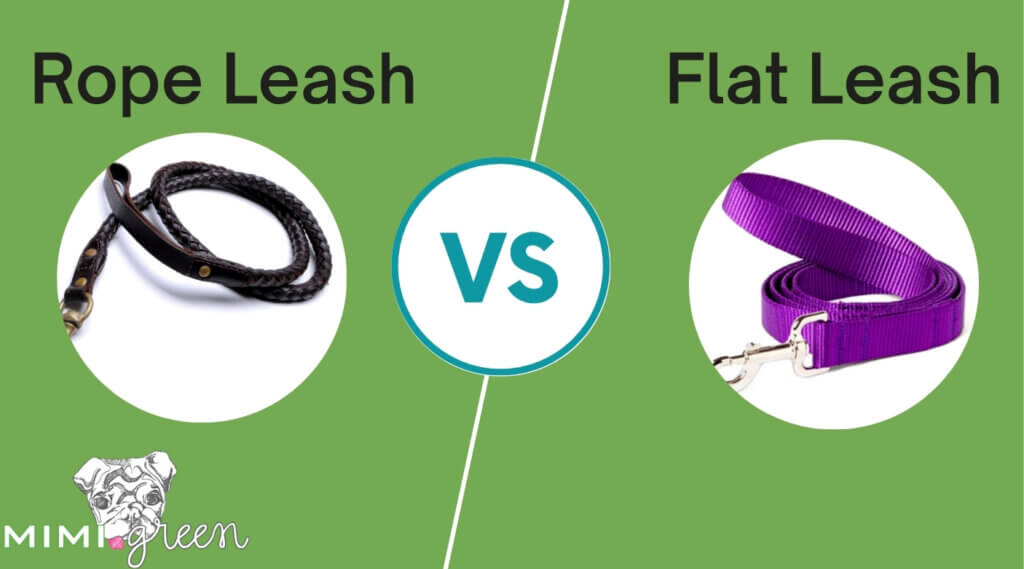
What’s the Difference Between Rope and Flat Leashes?

Rope Leash:

  • Thick, round, climbing-rope style made from synthetic fibers.
  • Often includes heavy-duty carabiners for secure attachment.
  • Rugged, sporty aesthetic suited for outdoor activities.

Flat Leash:

  • Made from fabric or synthetic webbing that lays flat.
  • Available in materials like nylon, Biothane®, velvet, and canvas.
  • Simple, versatile design that’s easy to grip and personalize.

Pros and Cons of Rope Leashes

The Strength and Durability Factor

Rope leashes are often praised for their strength and durability. Made from climbing-grade materials, they’re designed to withstand extreme strain, making them a popular choice for large dogs or pups who tend to pull. 

Their resistance to fraying under tension and their weatherproof qualities make them a go-to for rugged outdoor adventures like hiking, camping, or running along the beach.

Risks of Rope Leashes: Leash Burns and Grip Issues

With strength comes potential risk. Rope leashes, when used improperly or without gloves, can cause severe hand injuries during sudden pulls. 

Dog owners often experience rope burns, painful abrasions caused by friction when a dog lunges unexpectedly.

Moreover, dogs with sensitive skin are vulnerable too. The same friction that can harm your hand can also lead to neck abrasions or friction burns on your dog.

Pros and Cons of Flat Leashes

The Everyday Leash: Comfort, Style, and Versatility

Flat leashes are the standard for a reason: they excel as the go-to choice for daily walks. Their design distributes pressure evenly across your hand, reducing the risk of painful friction injuries.

And when it comes to style? Flat leashes are endlessly customizable. Lightweight and 

User-Friendly

Flat leashes are also generally lighter than rope alternatives, making them ideal for puppies and small dogs. The reduced weight means less strain on both dog and owner, allowing for longer, more comfortable walks.

Additionally, flat leashes are easy to fold and store, slipping neatly into a pocket, bag, or glove compartment, perfect for pet parents on the go.

Concerns: Tangling and Fraying

Flat leashes, especially when used with multiple dogs, can be prone to tangling due to their broad surface area and pliability. This can be frustrating during walks and may require a bit more mindfulness when managing multiple pups.

What Situations Call for Rope vs Flat Leash?

Flat Leash: Training, Urban Walks, Everyday Use

  • Excellent for controlled environments such as dog training classes.
  • Provides precision and consistent feedback, ideal for loose-leash walking and scentwork.
  • Lighter weight and easier tension management preferred by professional trainers.
  • Simplifies navigation in crowded urban spaces and when crossing busy streets.
  • Flexible design makes it a top choice for multi-dog households, helping to manage tangling more effectively.

Rope Leash: Outdoor Adventures

  • Ideal for rugged environments like mountains, forests, and uneven trails.
  • Made from climbing-grade materials that resist tension and abrasion.
  • Popular among hikers, climbers, and outdoor enthusiasts.
  • Offers a rugged, sporty aesthetic that complements adventurous lifestyles.
  • May not be practical for daily routines or dogs with sensitivities due to weight and grip considerations.

Is My Dog Safer on a Rope or Flat Leash?

For dogs that pull or react unpredictably, flat leashes offer more controlled feedback, allowing handlers to manage corrections gently and effectively. On the other hand, rope leashes, while sturdy, can increase the likelihood of injury if not handled properly. 

So, for most pet parents, particularly those with dogs prone to pulling, a flat leash offers a safer, more manageable option.

How to Choose the Best Leash for Your Dog

Consider Your Dog’s Size and Strength

  • Big dogs: Need strong, durable hardware but not necessarily a rope leash.
  • Small dogs: Benefit from the lightweight nature of flat leashes, reducing strain.

Think About Your Activities

  • Outdoor adventures: Rope leashes can be useful, but weigh risks like leash burns and grip issues.
  • City strolls and training: Flat leashes are ideal for control, comfort, and handling.

Personal Comfort and Safety

  • Flat leashes: Often include padded handles, reducing the risk of hand fatigue and leash burn.
  • Rope leashes: Require gloves or specialized grips to avoid injury.
  • DIY modifications: Possible to make rope leashes safer but not always practical for everyday use.

Choosing What’s Best for You and Your Pup

Flat leashes offer the flexibility, safety, and comfort that most dog owners need for daily walks, training, and city adventures. We have:

➡️Waterproof Dog Leashes: Made from Biothane®, perfect for water-loving, adventurous pups.
➡️Reflective Designer Dog Leashes: For enhanced visibility during nighttime walks.
➡️Velvet Dog Leashes: Soft, luxurious velvet combined with sturdy webbing for a stylish, cozy grip.
➡️Hands Free Dog Leashes: Adjustable for wearing around the waist or shoulder, ideal for running or multitasking.
➡️Leather Dog Leashes: Choose embellishments and hardware for custom leashes.

Ready to find your dog’s leash? 👉 Shop our handmade leashes now!

5 Benefits of Waterproof Dog Collars

Waterproof dog collars are perfect for active and outdoor dogs. Whether you and your furry friend like swimming, hiking or rainy day adventures, waterproof dog collars are specially designed to withstand wet conditions. They’re made from durable materials that resist water, dirt and odors, so your companion can have a “wet hair, don’t care” attitude.

If you’re looking for the best dog collar for swimming or want something that’s more durable for your pup’s active lifestyle, learn more about the benefits of waterproof collars.

1. Ruff and Tumble Ready

Waterproof dog collars are built for durability and longevity — they’re resistant to fraying, stretching and fading, ensuring they maintain their quality even after numerous outdoor escapades. Unlike traditional collars made from leather or nylon, waterproof collar materials resist wear and tear more easily.

One of the standout features of waterproof collars is their weather resistance. They can handle various conditions — be it rain, mud or dirt — without compromising their integrity. This durability results in fewer replacements, ultimately saving you money in the long run! The rust-resistant hardware used in these collars remains strong and reliable, providing extra peace of mind during outdoor adventures.

2. Fur-get About Odors

Microorganisms thrive in warm, moist environments. Collars that are made of absorbent materials will absorb water, dirt and grime easily. This forms ideal conditions for yeast or bacterial growth, potentially leading to irritation, odors and skin infection.

Waterproof collars provide the following advantages:

  • Odor resistance: A waterproof, odor-resistant dog collar retains no water, preventing the development of unpleasant smells, especially for active dogs.
  • Bacteria and mold resistance: Waterproof materials resist bacteria and mold growth, promoting better hygiene for your pet.
  • Minimized skin issues: Wet collars can cause friction and irritation, which can lead to hot spots, rashes and fungal infections. Waterproof collars reduce these risks by keeping moisture away from the skin.
  • Quick-drying materials: Collars made from quick-drying materials ensure that moisture doesn’t linger against your dog’s skin, enhancing comfort.
  • Freshness without constant washing: Waterproof collars stay fresh and odor-free for longer, eliminating musty smells after rainy walks or fun in the water.

3. Less Collar Cleaning Drama

After a muddy play session, it can feel like a mission to clean your four-legged friend’s collar. Depending on the material, regular collars often need to be soaked in hot water mixed with baking soda and vinegar to help break down dirt and odors. Sometimes, you even need to scrub the collar to remove stubborn grime and stains, which can be time-consuming.

Even after cleaning, collars may retain unpleasant odors, requiring additional cleaning efforts or special products to eliminate smells. Waterproof collars, on the other hand, are easy to clean and maintain. Many waterproof dog collars are designed to resist stains, ensuring they maintain their appearance longer, even after multiple muddy journeys. All you need is a damp cloth to remove dirt and grime or a quick rinse in the sink — no special cleaning products needed.

Less maintenance means more quality time with your pup and less time washing and cleaning dirty collars.

4. Comfort for Active Dogs

Waterproof dog collars are specifically designed to provide maximum comfort for active dogs. These features contribute to a more comfortable fit:


  • Lightweight design: Waterproof collars are crafted from lightweight materials, ensuring that they do not weigh down your dog during activities. For dogs that are constantly on the move, a heavy collar can become uncomfortable and cumbersome.
  • Hypoallergenic materials: The materials used in waterproof collars are often hypoallergenic, making them suitable for dogs with sensitive skin. This means you can use these collars without worrying about causing irritation or allergic reactions.
  • Smooth and flexible: The smooth and flexible nature of waterproof collars reduces the risk of chafing, allowing your dog to move freely without discomfort. This is particularly important for active dogs who need to be able to run, jump and play without restrictions.

5. Paw-some Personalization and Style Options

Waterproof collars may be built for practicality, but they can be stylish, too! Your pooch can make a fashion statement while staying protected with a personalized waterproof dog collar. Whether you prefer a classic, understated look or a bold, vibrant design, there’s a waterproof collar to suit every dog’s personality.

Here are some personalization options to choose from:

Questions About the Best Waterproof Dog Collar

When choosing a waterproof dog collar for your furry companion, consider the following questions to ensure you make an informed decision.

What Is the Best Material for a Waterproof Dog Collar?

BioThane® is a waterproof polyester webbing coated with PVC or TPU, making it highly durable and water-resistant. Known for its strength and longevity, BioThane collars can withstand years of wear and tear. This material is resistant to odors and can be easily wiped down with a damp cloth.

Can Dogs Swim With Leather Collars?

While dogs can technically swim with leather collars, it’s not recommended for the following reasons:

  1. Leather is a porous material that absorbs water.
  2. If a leather collar gets wet, it can become heavy and uncomfortable.
  3. Leather collars take a longer time to dry.
  4. Prolonged exposure to water can cause leather to warp, lose its shape or stink.

How Do You Waterproof a Leather Dog Collar?

Waterproofing a leather dog collar can help protect it from moisture and dirt and may even extend its lifespan. However, before you can apply any waterproofing treatment, like leather cream, you need to clean the collar thoroughly.

BioThane collars have a great leather look without the required maintenance. Plus, they take less time and effort to clean.

What Is the Best Waterproof Collar for a Dog That Escapes?

waterproof martingale collar is an excellent choice for owners who prefer collars but are nervous about taking their escape artists for walks. Unlike a choke chain, these collars are designed to provide a secure fit without the risk of choking. Martingale collars don’t easily slip over dogs’ heads, which is particularly beneficial for pups that tend to back away or try to escape.

Get a Collar for Every Tail Wag From Mimi Green

Waterproof collars are durable, odor-resistant and easy to maintain, which makes them ideal for active dogs that enjoy outdoor activities. Your furry friend will stay comfortable and healthy with these collars protecting their neck areas against moisture, dirt and bacteria.

There are plenty of waterproof dog collars to discover on Mimi Green. Explore the waterproof BioThane collars available now.


How to Measure a Dog for Clothes

To measure your dog for clothes, record back length (neck to base of tail), chest girth (widest part of the ribs), and neck girth (where the collar sits). Use a soft tape, ensure a snug, not tight, fit. These measurements ensure comfort, safety, and the paw-fect fit for dog sweaters.

Step by Step: How to Measure Your Dog for Clothes

Taking accurate measurements isn’t just about getting the size right, it’s about ensuring your dog feels comfortable, looks great, and can move freely. Here’s how to measure your dog like a pro.

Step 1: Gather Supplies

  • A soft measuring tape, rigid rulers don’t bend to your dog’s curves.
  • A notepad or your phone to record each measurement.
  • Treats to reward cooperation and keep your pup relaxed.

At Mimi Green, we always recommend setting the mood with positive reinforcement, measuring time should feel like playtime, not a chore.

Step 2: Position Your Dog

Make sure your dog is standing naturally on all fours, not sitting or lying down, as this affects their posture and measurements.

Use treats as a distraction and to encourage them to stay still. A relaxed dog ensures more accurate numbers and a smoother experience for both of you.

Step 3: Take Measurements

  • Back Length: From where the neck meets the shoulders to just above the tail base.
  • Chest Girth: Around the widest part of the chest, just behind the front legs.
  • Neck Girth: Where their collar sits; leave room for two fingers to ensure comfort.
  • Optional > Tummy Length: From collar to the end of the ribs, a helpful extra for snug sweaters or dogs with unique proportions.

Always measure twice to be sure! At Mimi Green, we believe a second check can be the difference between a snug fit and an awkward one.

Step 4: Compare with Size Charts

Each brand’s sizing is different. That’s why it’s essential to match your dog’s measurements to the specific chart provided by the manufacturer.

When in doubt, size up. A slightly looser fit is usually better than a restrictive one, especially for active pups. For example, our Mimi Green sizing accommodates various dog body types, including broad-chested bully breeds and lean sighthounds.

The Dog Measurements You Need Before Buying Clothes

1. Back Length

Measure from where your dog’s neck meets the shoulders, tracing along the spine to just an inch above the base of the tail. This is often the primary sizing guide for dog clothes.

Mimi Green’s Tip: Always measure with your dog standing naturally. Sitting or lying down alters posture and can throw off your numbers.

2. Chest Girth

Wrap a soft measuring tape around the widest part of your dog’s chest, usually right behind the front legs. This is the most critical measurement for stocky breeds like pitbulls, bulldogs, and boxers.

Many pet parents worry about getting this right, and with good reason. A too-tight fit here can restrict breathing and movement. When in doubt, size up slightly to give your dog room to move comfortably.

3. Neck Girth

Measure around the part of your dog’s neck where their collar normally sits. You should be able to slip two fingers comfortably between the tape and your dog’s neck.

Mimi Green’s Tip: Bully breeds tend to have thicker necks relative to their head size. This makes neck girth especially important when choosing clothing that goes over the head.

4. Optional: Tummy Length

For custom sweaters or tailored outfits, measuring from where the collar sits to the end of the ribcage is invaluable. This often-overlooked measurement ensures that garments fit snugly without being restrictive, particularly for dogs with unique body shapes like dachshunds or corgis.

Considerations for Different Dog Breeds and Body Types

Every dog is unique, so should be their clothes. Here are breed-specific considerations to ensure comfort and style.

Stocky Breeds (e.g., Pitbulls)

Chest girth is the most critical measurement here. Broad-chested dogs often don’t fit standard size charts. When outfitting your pitbull, always prioritize chest room over back length.

Also, ensure clothing doesn’t restrict leg movement, tight sleeves or narrow neck openings can make walks uncomfortable.

Long-Coated Breeds

Long-haired dogs risk matting under poorly-fitted clothing. Choose garments with smooth linings and avoid tight elastic around the neck or chest. Rolled collars can also help minimize hair breakage.

For accuracy, measure after grooming, your dog’s post-salon silhouette is the one that counts!

Puppies

Puppies grow fast. Leave extra room when selecting clothing and check fit often. What works this month might be snug by next!

Mimi Green’s Tips to Ensure a Paw-fect Fit

  • Layering: Planning to dress your dog in layers? Measure them with those layers on to avoid too-tight outfits.
  • Material Matters: Fleece works for chilly weather, but opt for breathable cotton or laminated cotton for warmer days or sensitive skin.
  • Martingale Collars: When measuring for clothes worn over collars, remember Martingales should have at least 1.5 inches between the rings when taut, this ensures comfort and prevents accidental tightening.
  • Harness Compatibility: If your dog wears a harness regularly, check that clothes fit comfortably over or allow for easy access to it. Mimi Green designs accommodate such practical needs without sacrificing style.

What Size Clothes Should I Get My Dog?

Use your dog’s measurements to match with the brand’s chart. Don’t guess based on breed alone, an XL in one brand might be a Medium in another.

If your dog’s measurements fall between sizes, always size up for freedom of movement and comfort.

Consider how the clothing will be used:

  • Snug fit for sweaters meant to keep your dog warm.
  • Looser fit for raincoats or layered outfits.

For broad-chested breeds like pitbulls, always prioritize chest girth over back length when choosing a size, comfort and range of motion come first.

Our Favorite Materials for Dog Clothes

Choosing the right material is as essential as getting the right size, it affects how comfortable your dog feels, how the clothing performs, and how long it lasts. At Mimi Green, we handpick our materials based on both functionality and fashion.

Why Material Choice Impacts Fit and Comfort

  • Velvet: Velvet offers a soft, luxurious texture that’s perfect for making a style statement. It’s our go-to for photoshoots, special occasions, and anyone who wants their pup to stand out. Bonus: it feels as good as it looks!
  • Waterproof Fabrics: For outdoorsy pups who never met a mud puddle they didn’t love, waterproof fabrics are a must. These materials keep dogs dry and comfortable, even during the messiest adventures. Our waterproof options also clean up in a snap, perfect for pet parents on the go.
  • Breathable Cotton: Cotton is an excellent choice for dogs prone to overheating or those with sensitive skin. It’s lightweight, natural, and gentle, ideal for warmer days or for breeds that need extra airflow under their clothes.
  • Biothane: This modern, durable material is waterproof, odor-resistant, and tough enough for the most active dogs. Biothane stands up to rough play, bad weather, and anything else your adventurous pup gets into, without compromising on comfort.

How Mimi Green Makes Dog Clothes Differently

At Mimi Green, we believe your dog deserves more than a generic, mass-produced item. That’s why every product is designed or embroidered in-house.

  • Personalization That Lasts: Our embroidery is more than decoration, it’s engineered to withstand years of wear, even with the roughest play. Unlike other brands, we hand-stitch every letter and detail, ensuring it stays put.
  • Ethically Produced: We never mass-produce. We don’t cut corners with cheap, scratchy nylon. Our business supports fair wages, personal growth, and sustainability for our team.
  • Unique Material Selection: From buttery velvet to waterproof Biothane, we offer an unmatched range of materials, including limited-edition prints you won’t find anywhere else.
  • Designed for Real Dogs: Our designs accommodate everything from harness use to stocky chests and special needs dogs. We know not all dogs fit the mold, that’s why we don’t either.

Ready to Stop Guessing and Start Dressing Your Dog 

Measuring your dog is just the first step. The real transformation happens when you pair those measurements with clothes made just for them. At Mimi Green, we take the guesswork out of finding the paw-fect fit by offering solutions tailored to your dog’s unique shape, lifestyle, and personality.

Here’s How Mimi Green Can Help:

  1. Custom-Fit Dog Clothes and Collars: Every product is handmade to order based on real measurements, not generic sizing. This ensures comfort, style, and safety in every adventure, whether your dog is a muddy trail blazer or a couch snuggler.
  2. Durable, Personalized Embroidery: Our embroidery isn’t just pretty, it’s designed to endure everything from daily walks to wild playdates, giving your dog personalized style that lasts.
  3. Materials for Every Lifestyle: From soft, stylish velvet for family portraits to rugged, waterproof Biothane for hiking enthusiasts, we’ve curated materials that work as hard as your dog does.

Is Mimi Green Right for You?

✅ You value quality, style, and comfort for your dog.
✅ You appreciate the peace of mind that comes with knowing your dog’s clothes and accessories fit perfectly and safely.

Imagine This…

Every walk is comfortable. Every photo looks stunning. Your dog isn’t just wearing clothes, they’re wearing pieces made with love, care, and purpose. No more struggling with ill-fitting outfits or worrying about chafing, overheating, or discomfort. Just a happy, stylish pup, and a proud pet parent who knows they made the right choice.

Ready to elevate your dog’s wardrobe? Shop our dog clothes or contact us for personalized options.

We can’t wait to make something special for you and your furry family member!

What Size Harness for a Golden Retriever Puppy? | Mimi Green Guide

An approximately 8-week-old golden retriever typically needs a small or medium harness, with a chest girth of 14-18 inches. Always measure neck and chest girth before buying. Opt for adjustable harnesses to accommodate growth and prevent pulling

Choosing the right harness for your golden retriever puppy means balancing safety, comfort, and the inevitable reality of rapid growth. Golden retrievers grow quickly, by the time your puppy reaches 4 to 6 months, they may need to transition to a Medium or even Large harness. 

To avoid missteps, embrace this guiding principle: measure frequently and adjust as they grow. This simple step ensures comfort and reduces the risk of your puppy slipping out of an ill-fitting harness.

Typical Sizes for Golden Retriever Puppies at Different Ages

  • 8 Weeks: Small or Medium (10-15 lbs; 14-18” chest girth)
  • 4-6 Months: Medium to Large as their chest and shoulders broaden rapidly

Regular measurements not only help you maintain a safe fit but also extend the usefulness of adjustable harnesses before needing to size up.

How to Measure Your Golden Retriever Puppy for a Harness

Sizing based on breed and age alone is not enough, every puppy is unique. That’s why measuring your golden retriever puppy before purchasing is the best approach.

The Essential Measurements

  • Neck Circumference: Measure where a collar would naturally sit.
  • Chest Girth: Measure around the widest part of your puppy’s chest, just behind the front legs.
  • Back Length: From the base of the neck to the base of the tail, less commonly needed but helpful for some vest-style harnesses.

Mimi Green’s Tip: Always use a soft measuring tape, and after fitting the harness, check that you can slip two fingers comfortably between the strap and your puppy’s body. This ensures the harness is secure without being restrictive.

What Size Collar Does an 8-Week-Old Golden Retriever Need?

At around 10-12 inches in neck circumference, an adjustable XS or Small collar typically fits an 8-week-old golden retriever well. Since puppies at this stage grow rapidly, adjustable collars provide flexibility as they gain weight and girth.

For puppies with sensitive skin, we recommend soft, hypoallergenic materials such as cotton or leather, these reduce the chance of irritation compared to synthetic alternatives.

Mimi Green’s Tip: Concerned about tightness? Rely on the two-finger rule: slide two fingers between the collar and your puppy’s neck to confirm a comfortable, safe fit.

Should You Use a Harness or a Collar for a Golden Retriever Puppy?

While collars serve well for holding ID tags, they are not ideal for walks, especially for energetic and curious breeds like golden retrievers. A harness is the safer choice for leash training, distributing pressure across the chest and shoulders rather than straining the neck.

For maximum security and flexibility, many experts suggest using both:

  • Collar for ID purposes
  • Harness for walks and training

This approach reduces the risk of neck injuries and makes leash training safer and more effective.

Helpful Resource -> Harness Vs. Collar For Dogs

Front-Clip vs. Back-Clip Harness for Golden Retrievers

Harness attachment style plays a significant role in managing your puppy’s behavior. A front-clip harness is often the preferred choice for leash training, it helps redirect your golden retriever when they pull, making walks more manageable.

  • Use front-clip for training and behavior correction.
  • Use back-clip for casual, relaxed walks.
  • Consider a dual-clip harness for the best of both worlds.

Best Harness Styles for Golden Retriever Puppies

Choosing the right harness style is just as essential as getting the size correct. Golden retriever puppies have unique needs due to their rapid growth, thick coats, and energetic personalities. Here’s what to consider:

Y-Shaped Harness

The Y-shaped harness is an excellent option for golden retriever puppies because it distributes pressure evenly across the chest and shoulders. This design reduces the risk of strain on the neck, making it a safer choice during those energetic puppy walks.

It’s particularly helpful during rapid growth phases, ensuring the harness doesn’t impede natural movement or cause discomfort.

Customizable Dog Harnesses

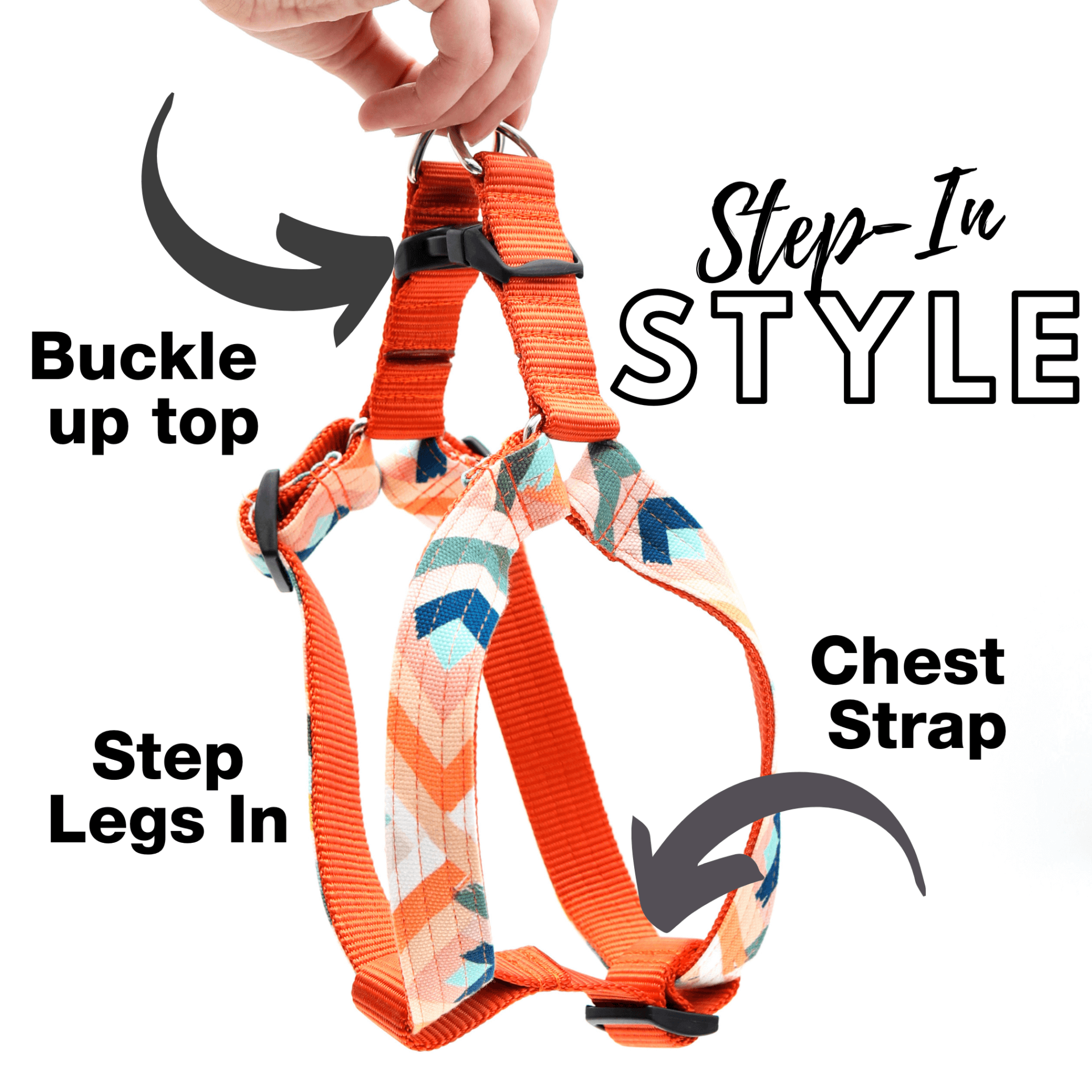
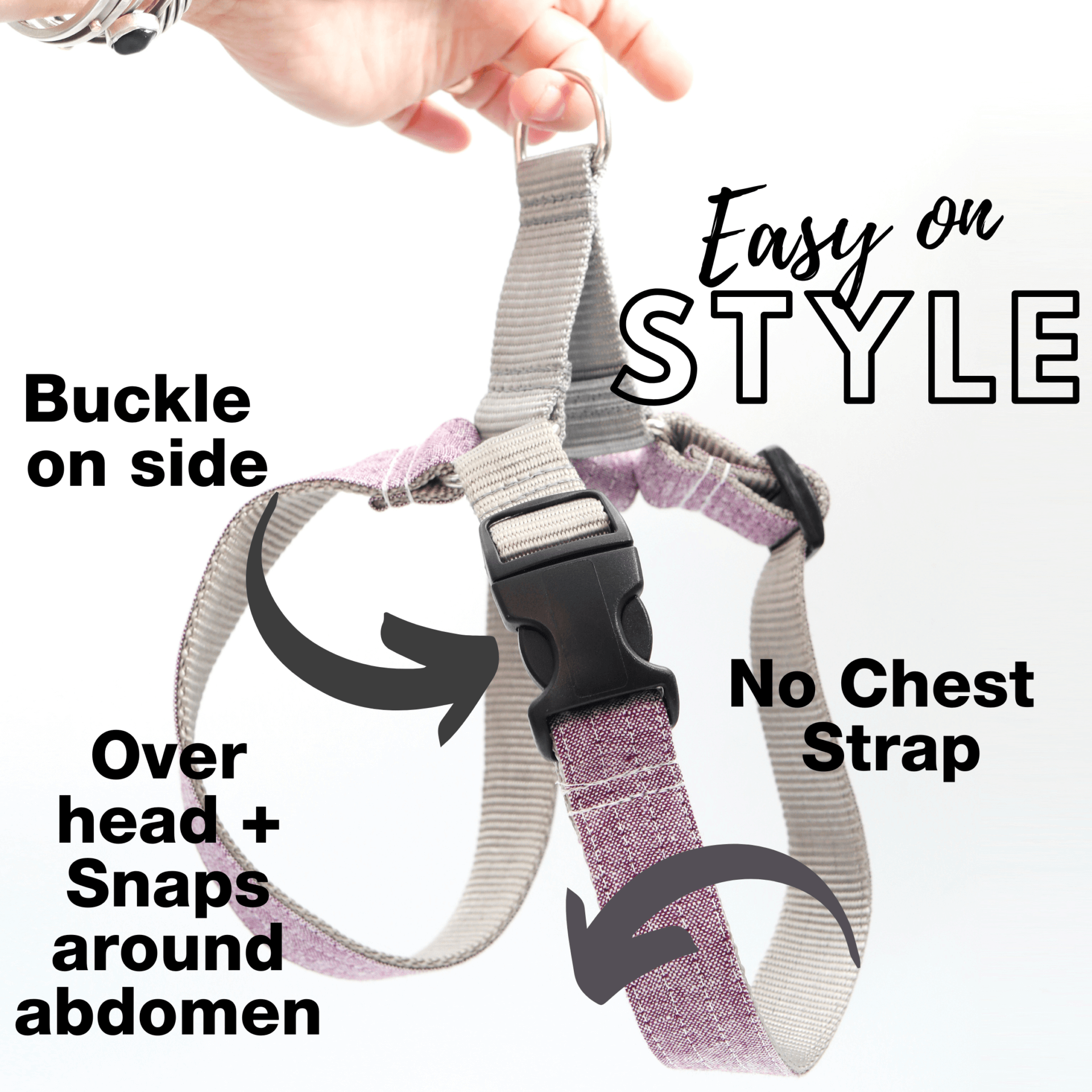
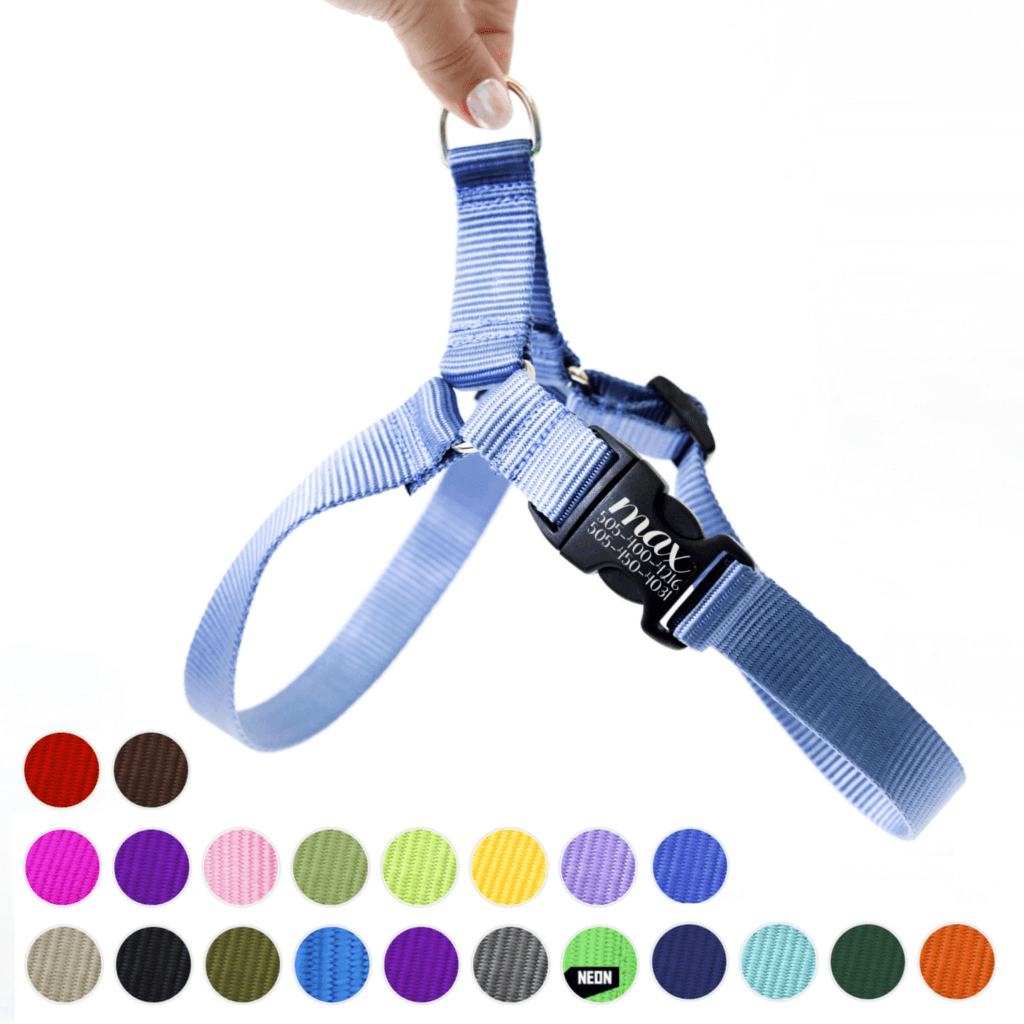
Mimi Green offers two customizable dog harness types with an easy-on design and a step in design, washable materials, safety features and personalization options. A properly fitted harness reduces strain on your dog’s neck and makes play time or walks safer and more fun for you and your dog. 

The Step In Design is great for dogs that slip out of other harness designs as it has a secure adjustable chest strap. For dogs unfamiliar with harnesses however, it can take some adjusting to placing their front feet in the harness.

For a simple to put on harness with a sleek lightweight design, I would recommend the Easy On however.

Adjustable Harnesses

An adjustable harness is a must-have for golden retriever puppies. Given how quickly these dogs grow, a harness with multiple adjustment points is key to maintaining a proper fit.

Look for models with at least three adjustment points, around the neck, chest, and girth. This will allow you to fine-tune the fit as your puppy’s body changes over the weeks and months.

Many dog owners find it helpful to start with a budget-friendly mesh harness for the first few months, then upgrade to a higher-quality, more durable option once their puppy’s size stabilizes.

When Should I Buy a Harness for My Golden Retriever Puppy?

Ideally, you should purchase a harness just before bringing your puppy home. Having the right size ready helps you establish healthy leash habits from day one.

However, some pet care professionals recommend waiting until after the first veterinary check to confirm your puppy’s current weight and measurements. Since golden retrievers grow so quickly, the harness that fits at 8 weeks may be too snug within just a few weeks.

How Often Should I Adjust or Replace My Puppy’s Harness?

During the first six months, expect to check and adjust the fit weekly. Signs that a harness is too tight include:

  • Chafing under the straps
  • Restricted movement during walks
  • Resistance to putting it on

Additionally, regular grooming, a must for golden retrievers, can affect the fit. As your puppy’s thick coat grows out or is trimmed, the harness may need to be loosened or tightened accordingly.

Mimi Green Tip: Our adjustable harnesses are thoughtfully designed to make resizing simple and secure. They accommodate your golden retriever’s growth while ensuring lasting comfort.

Special Considerations for Golden Retriever Puppies

Golden retrievers are known for their luxurious coats and friendly temperaments, but these traits also introduce specific challenges when selecting a harness.

Sensitive Skin

Golden retrievers, especially puppies, can experience skin sensitivity. That’s why choosing materials that are hypoallergenic is beneficial. At Mimi Green, we recommend options like cotton, leather, or Biothane, each offering a gentle touch against your puppy’s skin while ensuring durability and style.

For puppies prone to skin irritation, steering clear of cheap, synthetic fabrics reduces the risk of rubbing, chafing, and allergic reactions.

Matting and Fur Care

Golden retrievers’ long, dense coats can easily become matted, particularly under harness straps. Using a rolled leather harness or collar significantly reduces friction, helping to prevent matting and protecting your dog’s coat health.

Mimi Green Exclusive: We proudly offer handcrafted rolled leather and waterproof harnesses designed specifically to support golden retrievers’ coat care and active lifestyles. Our materials blend comfort, functionality, and style, ensuring your pup looks great and stays healthy.

Mimi Green’s Custom Harnesses for Golden Retriever Puppies

At Mimi Green, every harness is handmade-to-order right here in the USA, ensuring a product that’s as unique and special as your golden retriever.

You can choose from an array of high-quality materials:

  • Velvet for soft elegance
  • Waterproof Biothane for adventure-loving pups
  • Classic leather for timeless durability
  • Reflective fabrics for added safety on evening walks

Every harness can be personalized with your puppy’s name, offering both style and function.

Our designs provide the “paw-fect fit”, giving your golden retriever comfort and security without compromising on personality.

Why we’re different:

  • Ethical production: We believe in fair wages and a supportive workplace.
  • Custom fit: Every product is tailored to your pup’s specific measurements.
  • Premium materials: Safe, long-lasting, and beautiful, our harnesses stand the test of time and activity.

Ready to choose the perfect, custom-fit harness that will grow with your golden retriever puppy?
👉Shop Mimi Green Harnesses Now!

Breakaway Collar vs Regular Collar: Which is Right for Your Pet?

Choosing the right collar for your pet often feels like navigating a maze of conflicting priorities. On one side, there’s the safety-first approach; on the other, the practical needs of daily life. 

We’ve crafted this guide to help you make the most informed decision, balancing safety, practicality, and, of course, style.

What Is a Breakaway Collar?

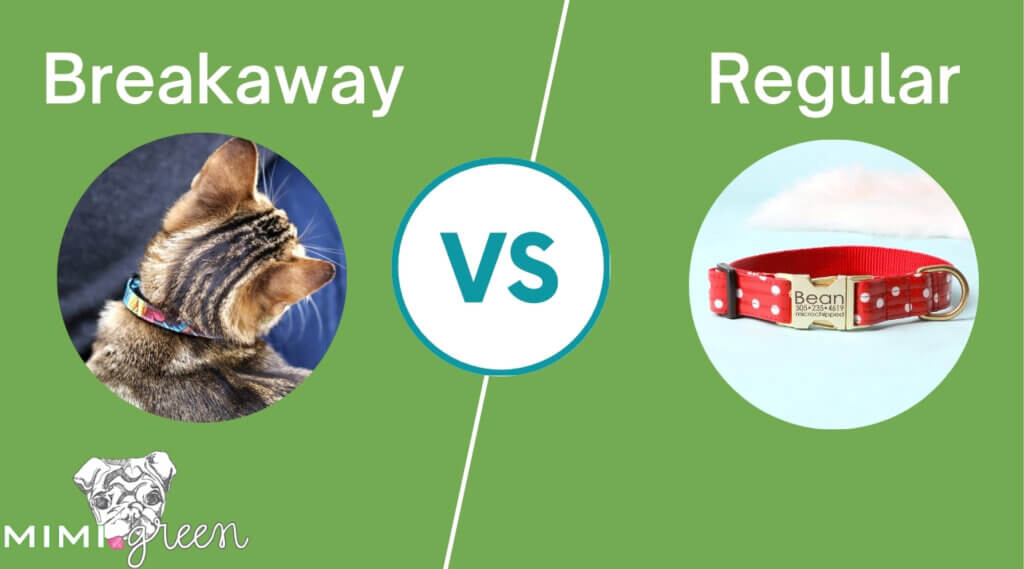
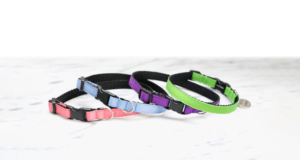
Breakaway Cat Collar grosgrain ribbon

The safety mechanism in breakaway collars is designed with a quick-release clasp that automatically opens when significant pressure is applied. Many pets get their collars caught on branches, furniture, or fences. 

By releasing under tension, the collar prevents potential choking or serious injury, especially for adventurous pets that explore tight spaces or climb.

When Breakaway Collars Shine

Breakaway collars are ideal for outdoor cats, those natural explorers who leap from fences to trees, squeezing through the smallest gaps. 

Animal welfare groups, including the RSPCA and SPCA, actively recommend breakaway collars for these feline adventurers to minimize the risk of entanglement injuries. Additionally, these collars are perfect for particularly curious kitties who tend to get into everything, ensuring their safety without constant supervision.

For dogs, breakaway collars are recommended in specific use cases, like when crated, or in unsupervised play groups.

Will My Pet Lose Their Breakaway Collar?

It’s a valid concern, yes, breakaway collars can and do detach. But that’s precisely their purpose: to release and prevent harm. 

The risk of losing the collar is a small price to pay compared to the potential consequences of a collar that doesn’t give way. To maintain your pet’s safety and ensure they can always find their way home, pairing a breakaway collar with microchipping offers a reliable backup for identification.

Are Breakaway Collars Just For Cats?

All dog breeds can benefit from breakaway collars.

Here are a few use cases that come to mind:

  1. They’re curious climbers or love squeezing into tight spaces
  2. Dogs in a crate (where the collar can get stuck on the bars)
  3. In doggie day care, another dog could get hold of their collar.

Just like with cats, the quick-release mechanism provides an extra layer of safety.

What Is a “Regular” Collar?

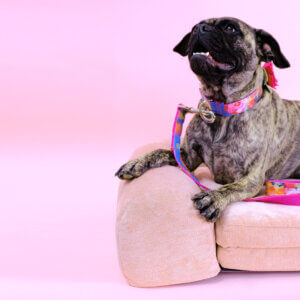
best collar for frenchie amelia floral

Featured Product -> Buckle Engraved Dog Collar Laminated Cotton Styles

Regular collars feature a fixed clasp or buckle designed to stay fastened, no matter how much your pet pulls or moves. These are the standard for most dogs, particularly those walked on a leash, and are also commonly used for some indoor cats.

When Regular Collars Work Best

Regular collars excel in scenarios where stability and control are priorities. They are ideal for leash walking, ensuring your pet remains securely connected to you.

They also suit pets that don’t habitually climb, squeeze into narrow spaces, or engage in other risky behaviors. Many pet parents favor regular collars because they provide reliable identification without the risk of accidental detachment.

Am I Endangering My Cat With a Regular Collar?

Veterinary professionals often note that while cases of cats being injured by non-breakaway collars are relatively rare, they do happen. 

For adventurous or outdoor cats, the risks of entanglement are higher, making breakaway collars a safer choice. However, for calm, indoor-only cats with little inclination to climb or explore precarious places, a regular collar may offer a perfectly suitable balance of safety and functionality.

Breakaway vs Regular Collars: Pros and Cons

Breakaway Collar Pros

  • Designed to prevent strangulation by releasing under pressure: The defining feature of a breakaway collar is its quick-release mechanism, which disengages if the collar becomes caught on something, greatly reducing the risk of choking or serious injury.
  • Safer choice for outdoor adventures and curious climbers: For pets that spend time exploring trees, fences, or tight spaces such as crates, breakaway collars provide peace of mind by minimizing entanglement hazards.
  • Strongly recommended for cats that spend time exploring outside: Animal welfare organizations endorse breakaway collars as the safest option for outdoor cats, whose inquisitive nature makes them more vulnerable to accidents.

Breakaway Collar Cons

  • Can fall off easily, raising concerns about losing ID tags: Since these collars are designed to release, they may come off during play or exploration, increasing the likelihood of your pet losing its identification unless paired with microchipping.
  • May require more frequent replacement due to accidental detachment: The very safety feature that makes these collars valuable can also lead to them being lost or damaged more often, necessitating regular replacements.
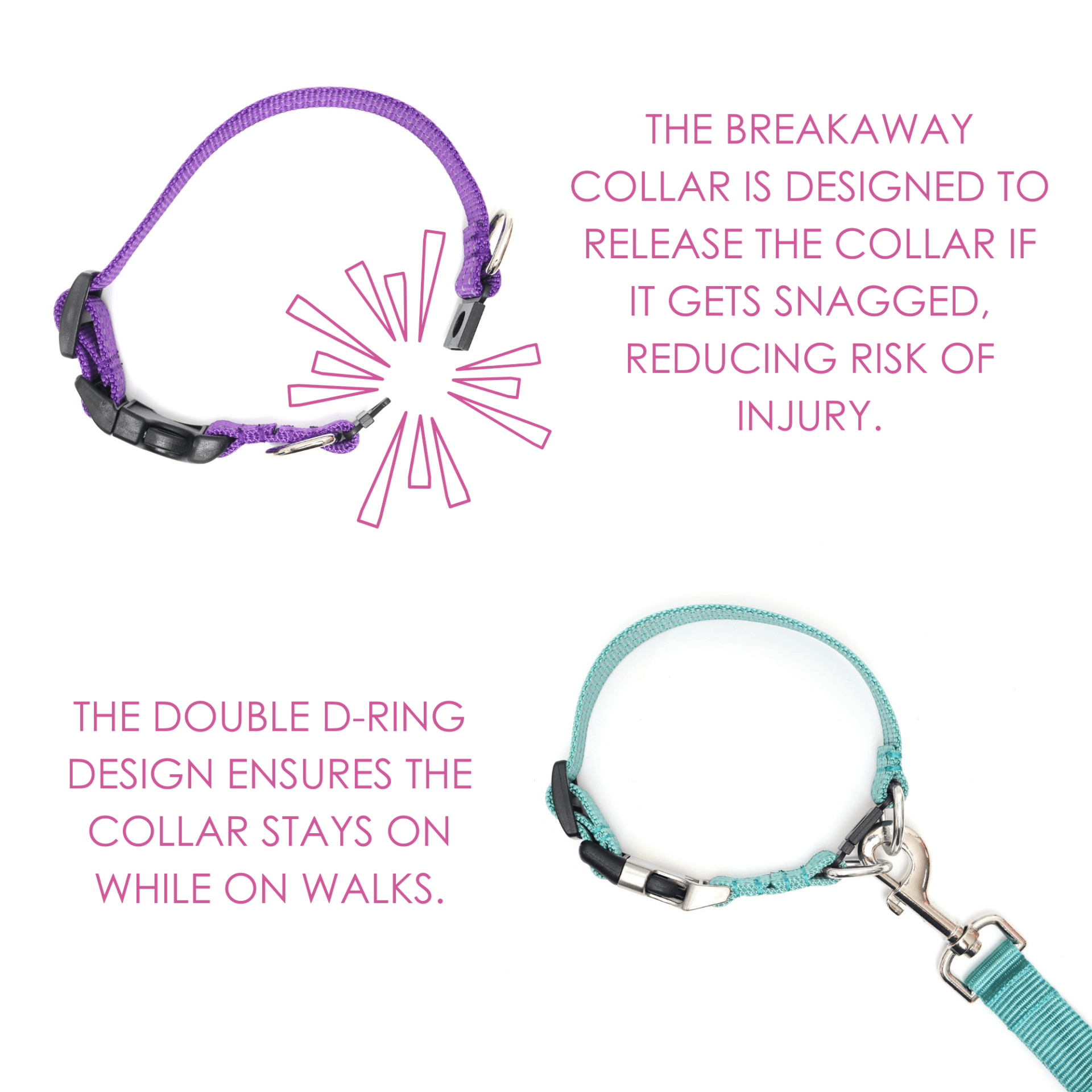
  • Not suitable for leash walking; sudden pulls can cause the collar to release unexpectedly: Breakaway collars are not built to withstand the sustained tension of leash walks. A sudden tug could cause the collar to open, potentially allowing your pet to escape. Some breakaway dog collars are designed with two d-rings to prevent breakaway when leash walking however – like Mimi Green’s.

breakaway collar explainer chart

See more about how Mimi Green’s Breakaway collars work HERE

Should Cats Always Wear Breakaway Collars?

Outdoor Cats

A breakaway collar is a must-have for any cat that roams outdoors. These adventurous pets are exposed to numerous hazards, branches, fences, and tight spaces, that could lead to dangerous entanglements. The quick-release feature ensures they can escape such situations safely.

Indoor Climbers

Even within the home, some cats are notorious for climbing furniture, scaling shelves, or squeezing into precarious spots. For these agile explorers, a breakaway collar adds an extra layer of safety by preventing accidental injury from getting caught.

Active Kittens

Young cats are naturally curious and full of energy. Their playful antics often involve climbing and wriggling through tight spaces, making a breakaway collar essential to protect them from potential accidents during their frequent adventures.

The Case For Regular Collars

  • Strictly indoor, calm cats: For cats that lead a quiet, predictable life indoors, with little inclination to climb or explore risky areas, a regular collar can be a safe and practical choice. These pets benefit from having a consistent form of identification that stays securely in place.
  • If paired with regular checks and supervision: Even when using a regular collar, it’s critical for owners to routinely check the fit and condition of the collar. Ensuring it isn’t too tight or worn out helps prevent potential injuries, maintaining both comfort and safety for the cat.

Are Breakaway Collars Suitable for Dogs?

Mostly No, but Sometimes Yes

For dogs, especially those walked on a leash, breakaway collars are not recommended. The quick-release mechanism can detach under strain, leading to potential escapes in situations where control is paramount. 

However, some dog owners use breakaway collars indoors as a precautionary measure to prevent entanglement when their pets are left unsupervised. For leash walking and regular outdoor activities, standard or martingale collars offer better control and reliability.

Choosing the Right Collar for Your Pet: A Quick Guide

Pet Type Collar Recommendation
Outdoor Cat Breakaway
Indoor Cat (Calm) Regular
Indoor Cat (Active) Breakaway
Dog for Leash Walking Regular or Martingale
Dog for ID Only Regular, with engraved buckle

How Mimi Green Collars Are Different

blue velvet dog collar for puppy

Every collar is handmade to order in the USA with care and creativity. 

You may not find another website that has the range of premium materials, I’m talking:

  • Velvet
  • Waterproof Biothane
  • Reflective
  • Leather
  • Glitter
  • Laminated cotton.

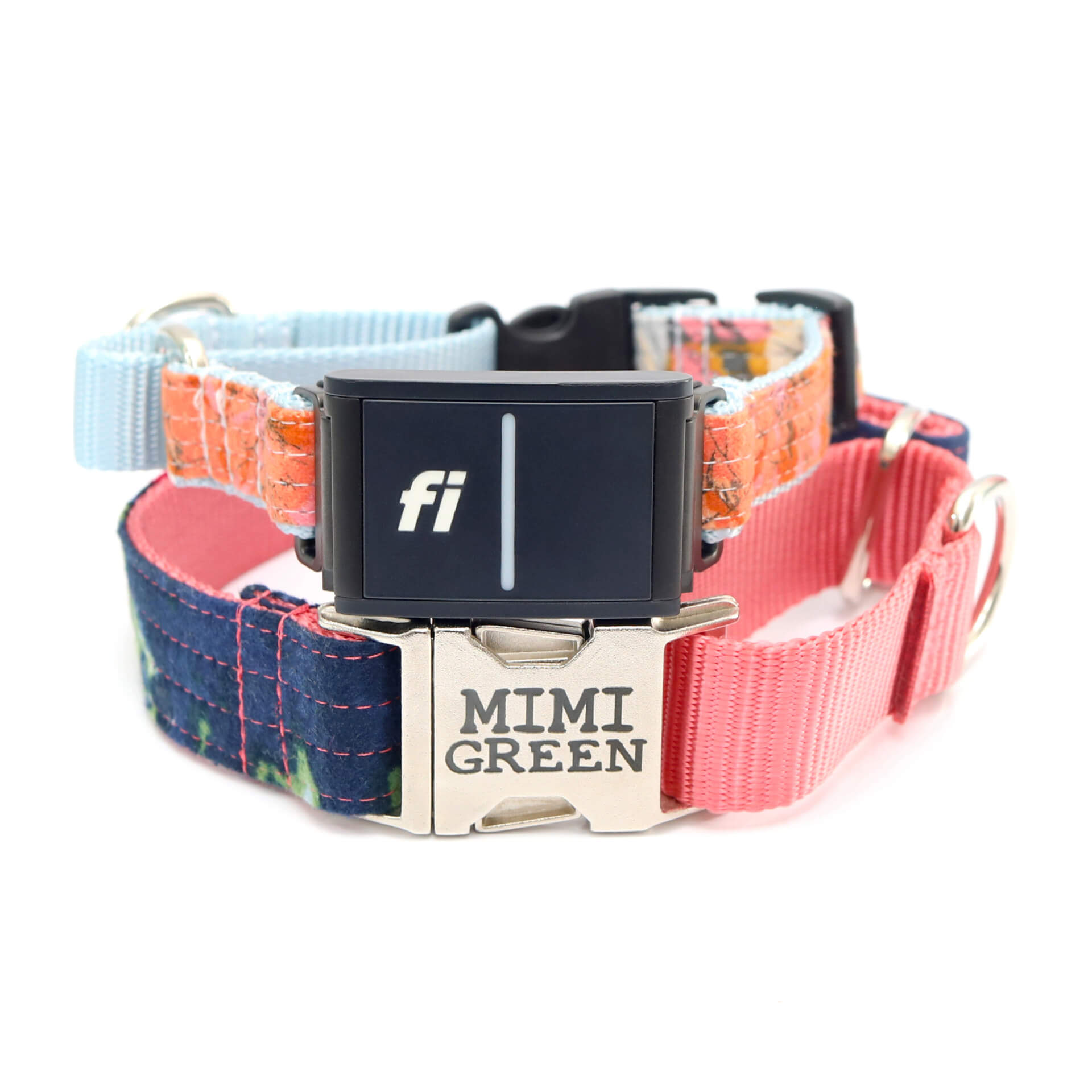
Personalization is our hallmark, choose engraved buckles, embroidered names, or matching accessories such as leashes, harnesses, and even Fi-compatible collars for GPS tracking. 

Our wide array ensures that your pet’s collar is as unique as they are.

Whether you’re seeking a safety-first breakaway collar for your adventurous cat or a fashionable regular collar for your chic pup, Mimi Green handcrafts every piece with your pet’s comfort and your peace of mind in mind. Your pet is one-of-a-kind, and their collar should be too.

Ready to Choose the Right Collar for Your Pet?

Choosing between a breakaway and a regular collar ultimately depends on your pet’s personality, environment, and your priorities as their guardian. 

Whether you’re looking for the security of a breakaway collar for your adventurous outdoor cat or the reliability of a regular collar for your leash-trained dog, Mimi Green offers handcrafted solutions made with care, creativity, and your pet’s unique needs in mind.

Ready to find the paw-fect fit? 👉 Shop Cat Collars or Browse Designer Dog Collars now.
When Were Dog Collars Invented? | A Complete History

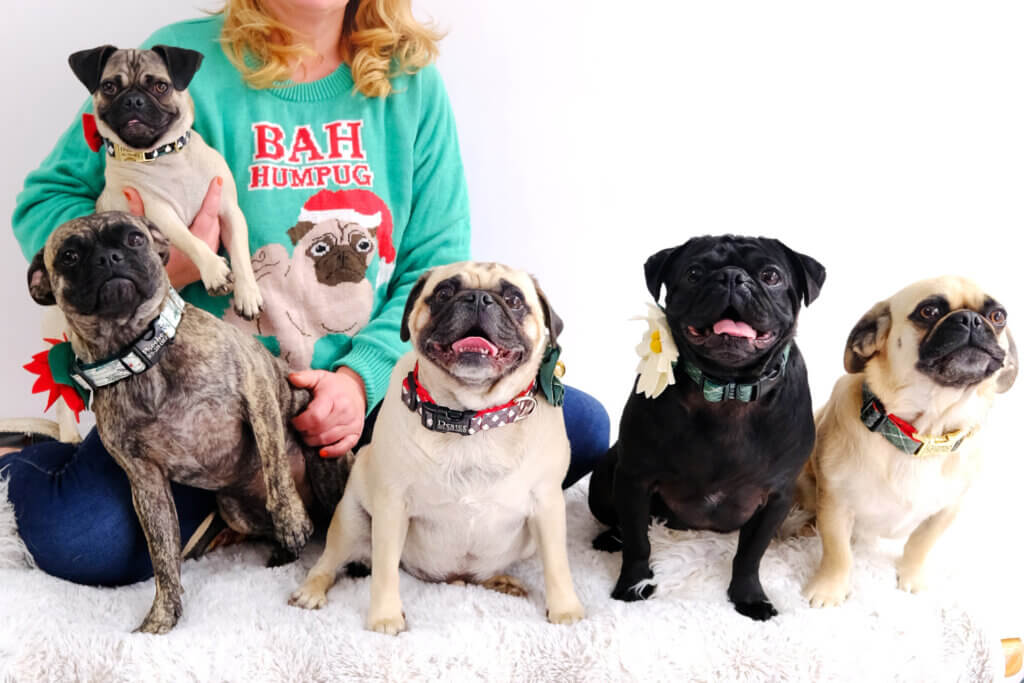
holiday dog collars pugs

Every time you clip on your dog’s collar, you’re participating in a tradition that began over 8,000 years ago. 

Dog collars have a rich history that spans continents and civilizations, evolving from simple cords used by ancient hunters to sophisticated symbols of status, protection, and affection. 

In this article, we’ll trace the origins of dog collars, explore their roles through medieval times, unpack how leashing practices developed, and reveal how collars carried deep symbolic meaning across cultures.

The Oldest Evidence of Dog Collars: 8,000-Year-Old Petroglyphs

Photo Source -> Arabian Rock Art Heritage

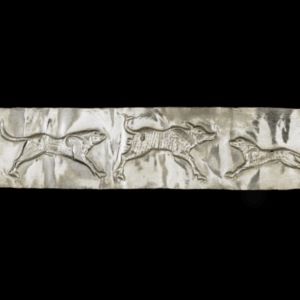
One of the earliest known depictions of dogs on leashes appears in the ancient rock art of Shuwaymis, a site in what is now Saudi Arabia. These petroglyphs, dating back around 8,000 years, show hunters accompanied by dogs, two of which are tethered by clear lines to their human companion.

I wonder what they named dogs back then? Zeus, or sprinkles?!

While some scholars interpret these lines as symbolic connections, most experts agree they represent functional leads, the earliest visual evidence of humans intentionally restraining and guiding dogs. 

Ancient Mesopotamia: The Likely Birthplace of the Dog Collar

Photo Source -> World History Encyclopedia

While Shuwaymis offers the earliest imagery, ancient Mesopotamia, particularly the Sumerian civilization, is often credited with creating the first practical dog collars. 

Initially, these were simple cords looped around a dog’s neck, used primarily for control during hunting or guarding. Over time, these rudimentary devices evolved into more sophisticated leather bands, reflecting advances in craftsmanship and societal complexity.

Beyond mere function, dog collars in Mesopotamia were steeped in cultural and spiritual significance. Dogs were closely associated with deities such as Gula, the goddess of healing, who was often depicted alongside dogs believed to possess curative powers through their saliva. 

Ishtar, the goddess of love and war, was also commonly portrayed holding dogs restrained by thick collars and leashes.

Thus, Mesopotamian dog collars were not simply utilitarian tools; they carried layered meanings of health, protection, and divine favor. This dispels the myth that early collars served only practical purposes. 

In reality, they represented an early convergence of symbolism, spirituality, and companionship, a tradition that persists in the emotional significance we attach to our pets’ accessories today.

Collars Through Time: Ancient Egypt, Persia, and Rome

Egypt: Where Dog Collars Became Works of Art

By 1570 BC, dog collars in ancient Egypt had transcended functionality to become elaborate works of art. Archaeological discoveries, such as the collars found in the tomb of the nobleman Maiherpri, showcase intricate designs adorned with brass studs, lotus motifs, and even the dog’s name, a tradition that marked the emergence of the first known “dog tags.”

These ornate collars were not merely decorative; they reflected the elevated status of dogs in Egyptian society. 

As symbols of loyalty, protection, and hunting prowess, dogs were often buried alongside their owners, their collars serving as enduring markers of their valued place within the household and the afterlife.

Persia: Gold-Trapped Collars and Afterlife Beliefs

Photo Source -> Dogs in Ancient Persia

In ancient Persia, dog collars also bore cultural weight, particularly in expressing the social status of both the dog and its owner. Wealthy Persians adorned their dogs with collars made of fine linen or even embedded with gold. 

This luxury mirrored broader societal beliefs: how one treated animals, particularly dogs, could influence their journey in the afterlife.

For Persians, dogs were protectors, hunters, and companions, and their collars reflected these roles. The most opulent collars signified the owner’s wealth and reverence for their canine companions, reinforcing the idea that collars were not just utilitarian but expressions of human-animal relationships.

Rome: Military Dogs and Functional Collars

Photo Source -> Ancient Rome Live

The Romans, known for their innovations in military strategy and engineering, also contributed significantly to the evolution of dog collars. 

Roman war dogs often wore protective collars, some of which were spiked to deter attackers during combat. These designs served dual purposes: safeguarding the dog and providing an offensive weapon.

Roman dogs also played roles in hunting and domestic protection, and their collars were adapted accordingly. The functional designs of Roman collars later influenced the development of similar tools in medieval Europe, particularly in the creation of spiked collars for hunting dogs and guard animals. 

This lineage illustrates how practical innovations in dog collar design were passed down and refined across centuries and cultures.

Did Medieval Dogs Have Collars? Yes, But They Were Spiky

As dog collars evolved through history, the Middle Ages introduced a significant functional adaptation: the spiked collar. Primarily used to protect herding and hunting dogs from predators like wolves, these collars were constructed with metal spikes facing outward, acting as a formidable deterrent against bites to the neck.

But beyond mere protection, collars also served as status symbols among the European aristocracy. Hunting was a pastime of the noble class, and their dogs wore collars that reflected their owners’ wealth and social standing. 

These ornate collars, often made from high-quality leather and sometimes embellished with decorative metalwork, indicated that the dogs were valuable assets and companions.

So, did medieval dogs have collars? 

Absolutely, but their primary purposes were functional and protective, rather than decorative. The spiked designs of the era underscore a utilitarian approach to dog gear, balancing the needs of safety, control, and status in a world where working dogs played essential roles in survival and sport.

When Did Dogs Start Being Leashed?

The practice of leashing dogs is not new. From ancient Mesopotamia, where simple cords controlled dogs, to structured collars that evolved to accommodate leashes, humans have long sought ways to guide and manage their canine companions.

Evidence of this practice is immortalized in ancient art.

Assyrian bas-reliefs depict handlers walking dogs on leashes; Egyptian murals show hunting dogs restrained with leads; and Persian ceramics illustrate similar scenes of human-dog partnerships. 

These artifacts confirm that leashing is a tradition dating back thousands of years, far predating modern pet ownership.

This historical continuity dispels a common myth: leashing is not a recent invention but a practice deeply rooted in human-animal cooperation. The functional evolution culminated in the industrial age when Mary A. Delaney patented the first U.S. retractable leash in 1908, marking a turning point in pet product innovation.

Modern Collars: From Function to Fashion

The Victorian era marked a pivotal transformation in dog collar history. No longer just functional tools, collars became luxury accessories crafted with engraved nameplates, intricate designs, and fine materials. 

These personalized details elevated collars to symbols of affection and refinement.

Queen Victoria herself profoundly influenced this cultural shift. As a devoted dog lover, her public displays of affection for her pets popularized the idea of dogs as beloved family members rather than mere working animals. This royal endorsement spurred a burgeoning market for fashionable pet accessories.

I like to think that our Velvet Dog Collars are a glimpse into times past.

Today, dog collars serve multiple roles: they are fashion statements, safety devices, and personal identifiers. 

At Mimi Green, we embrace this multifaceted legacy by offering handcrafted collars that blend style, comfort, and functionality. Our designs continue the tradition of making collars not only practical but also meaningful expressions of the special bond between you and your dog.

Beyond History: What Sets Mimi Green’s Collars Apart

Handcrafted Tradition Meets Modern Design

At Mimi Green, we honor the ancient tradition of dog collars with a distinctly modern approach. Our hand-embroidered limited edition collars not only offer exceptional durability but also introduce a level of style and individuality rarely seen in mass-produced pet products. 

Each collar is made-to-order, allowing for personal touches that reflect your dog’s unique personality and your own aesthetic preferences.

This commitment ensures that your dog wears a collar imbued with history, love, and craftsmanship, a wearable testament to a partnership that began thousands of years ago.

Material Innovation: From Velvet to Waterproof BioThane

The diversity of materials we offer reflects both historical continuity and innovation. From the timeless elegance of velvet and leather to the practical benefits of reflective webbing and Waterproof BioThane, Mimi Green’s collection addresses the evolving needs of modern pet owners.

Featured Product 🐶 Waterproof Biothane® Dog Collars

Just as ancient collars solved problems of control and protection, our designs tackle contemporary challenges like skin sensitivity, coat matting, and exposure to the elements. For dogs with allergies, materials like laminated cotton and BioThane provide comfort without compromising on style or durability.

Through this carefully curated selection, we pay homage to millennia of collar evolution while providing solutions that resonate with today’s conscientious pet parents.

Ethical Production You Can Trust

Mimi Green isn’t just about making beautiful collars, it’s about making them the right way. As a family-owned business based in the USA, we reject overproduction and avoid using cheap, scratchy nylon that can irritate your pet’s skin.

Our collars are sustainably crafted, ensuring that each piece is both environmentally responsible and ethically made. 

For us, ethical production isn’t a marketing angle, it’s a reflection of our values and commitment to doing better for both pets and people.

Featured Product 🐶 Designer Leather Dog Collars

Join an 8,000-Year Tradition, But Make It Yours.

When you choose a Mimi Green collar, you’re not just picking an accessory, you’re continuing an ancient tradition with your own modern twist. 

From velvet to leather, waterproof BioThane to personalized embroidery, our handcrafted collars connect you and your dog to a lineage of companionship that stretches back millennia.

Your dog deserves more than a generic collar. They deserve a piece of history, thoughtfully crafted, lovingly worn.

Your Dog’s Collar: A Link to History and a Choice for Today

For over 8,000 years, dog collars have evolved from simple tools of survival to cherished symbols of companionship and identity. Now that you know where collars come from, the next question is: what kind of collar will tell your dog’s story today?

At Mimi Green, we don’t just make collars, we make heirloom-quality pieces that reflect your pet’s personality and your values.

Your Modern-Day Collar Solutions

  1. Velvet Dog Collars: Perfect for the dog who deserves a touch of elegance with everyday comfort.
  2. Waterproof BioThane® Collars: Durable and odor-resistant for adventurous pups who don’t mind getting wet.
  3. Personalized Collars: For pet parents who want their dog’s gear to be as unique as their bond.

Ready to find the perfect collar that honors your dog’s unique place in history?
👉 Shop Now and create something timeless.

Best Slip Lead for Dogs | Fit Guide & Custom Options

If you’ve ever wished for a leash that’s as quick and versatile as your dog is curious, you’re in the right place. Whether you’re a seasoned trainer needing fast, responsive control, a rescue dog parent easing your pup into new routines, or an everyday adventurer tired of soggy nylon and tangled gear.


The best slip lead for dogs combines safety, comfort, durability, easy maintenance, and control. Vets recommend them for training but not prolonged walks.

What is a Slip Lead, and How Does it Work?

Slip leads are a clever combination of leash and collar in one seamless tool. This design makes them especially popular for training sessions and moments requiring quick application or removal.

When your dog pulls, the slip lead naturally tightens, offering immediate feedback. As your dog relaxes, the tension releases. This direct response mechanism helps guide behavior effectively without the need for multiple pieces of equipment.

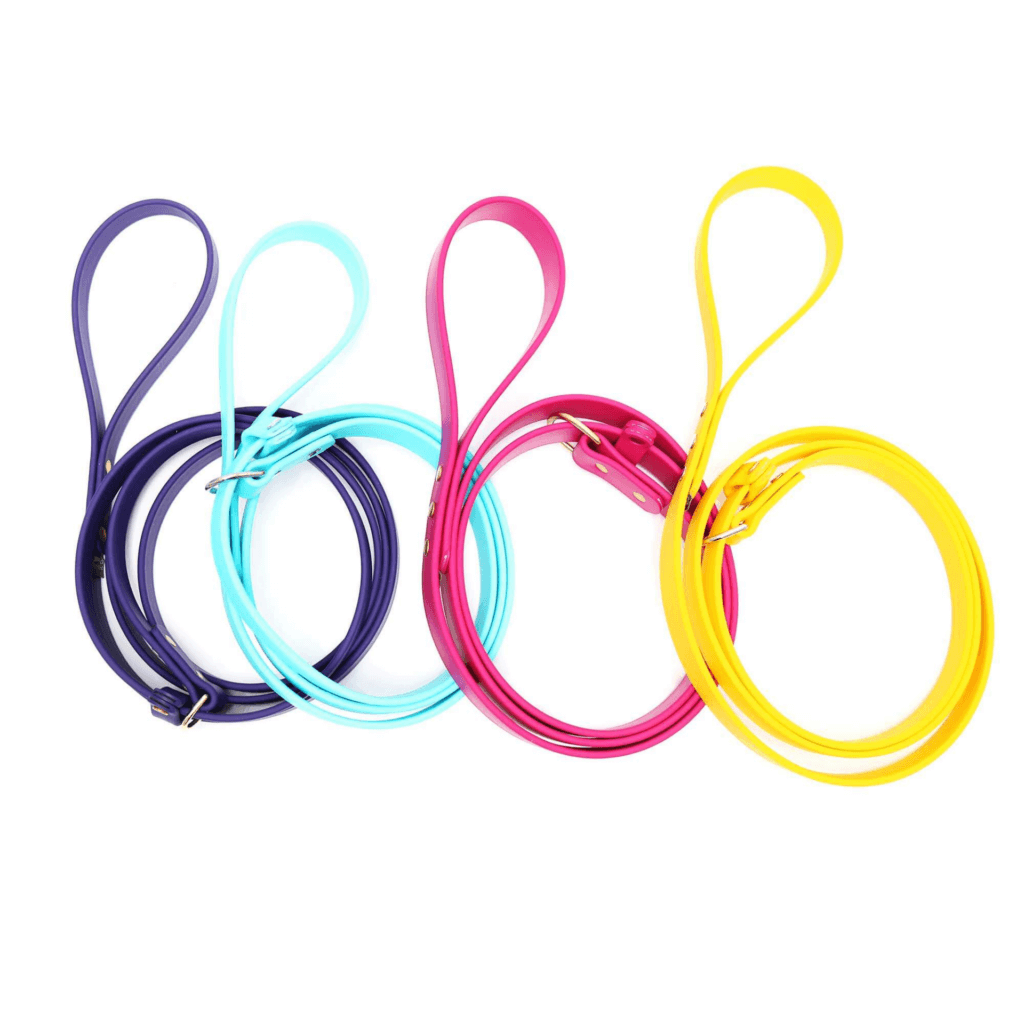
Waterproof Biothane Slip Leads stand out for their durability and easy maintenance. When your dog pulls, the lead naturally tightens for immediate feedback; when relaxed, it loosens to avoid discomfort.

What’s The Best Slip Lead For Dogs?

So, which one should you buy?

The best waterproof slip lead for dogs combines durability, easy maintenance, and control. 

We recommend our Biothane Slip Lead Leash:

  • Waterproof & Odor-Resistant: Ideal for pups who love puddles, mud, or beach days—Biothane repels grime and stays stink-free.
  • Easy to Clean: Just wipe it down with soap and water. No scrubbing, no fraying, no fuss.
  • Soft Yet Strong: Unlike stiff plastics or scratchy nylon, Biothane is flexible and smooth in your hands while still holding up to daily use.
  • Durable Hardware: Outfitted with solid brass or stainless steel for a leash that won’t rust, weaken, or snap mid-walk.
  • Custom Colors & Sizes: Made-to-order in 22 vibrant colors and multiple widths, it’s as unique as your dog.

Slip Lead Vs Regular Leash

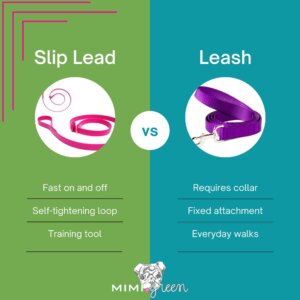
A slip lead is a single piece of rope or nylon with a loop on one end that goes around the dog’s neck and tightens with tension. It doesn’t require a separate collar.

Key Features:

  • Self-tightening loop: The leash tightens if the dog pulls, and loosens when the dog stops pulling.
  • Integrated collar: Acts as both leash and collar.
  • Used for quick control: Often used by shelters, rescues, groomers, and veterinarians.

The dog leash that you’re thinking about is a leash that clips onto a separate collar or harness.

Key Features:

  • Comes in different materials (nylon, leather, chain).
  • Typically 4 to 6 feet long.
  • Clips onto a D-ring on a collar or harness.

Should You Use a Slip Lead? Vets and Trainers Weigh In

Do Vets Recommend Slip Leads?

Yes, veterinarians and professional trainers often recommend slip leads for controlled training and specific scenarios, such as obedience classes or brief outings requiring quick control. This blog from Clark Fork Veterinary Clinic edifies the use of slip leads.

However, for dogs with respiratory concerns or habitual pulling behaviors, most experts advise against slip leads. These dogs may benefit more from equipment designed to distribute pressure safely, such as harnesses.

Is a Slip Lead Better Than a Harness?

Both tools serve distinct purposes. Slip leads excel in situations where fast application is required and temporary control is the goal, such as with working dogs or during initial training.

Harnesses, on the other hand, are the preferred choice for dogs prone to pulling or for extended walks. They distribute force across the chest and shoulders rather than concentrating it on the neck, reducing the risk of injury.

What’s the Best Thickness for a Slip Lead?

General Rule of Paw

You can choose from a variety of lengths and widths on our website when buying your Biothane Slip Lead.

Slip lead thickness significantly impacts both comfort and control. For small breeds, a 5/8″ diameter lead is often ideal, offering sufficient control without overwhelming the dog.

For medium to large breeds, a thicker lead, ranging from 3/4″ to 1″, provides the strength and durability necessary to manage more substantial pulling forces.

Why Diameter Matters

Leads that are too thick can cause discomfort and limit precise control. On the other hand, leads that are too thin may risk injury, fray easily, and lack the durability required for regular use.

One Lead, Many Uses: How Our Slip Lead Fits Every Walk

For Training Sessions

Need reliable correction and quick feedback? Our Biothane slip lead offers the gentle tightening action trainers love, without bulky hardware or extra clips. The adjustable stopper ensures a snug, custom fit, perfect for structured lessons and obedience work.

For Nervous or Rescue Dogs

Anxious pups often need simplicity. Our slip lead slides on in seconds, eliminating the stress of multiple buckles or harness fittings. It’s especially helpful for dogs adjusting to new environments or who are wary of traditional gear.

For Messy, Mud-Loving Dogs

Puddles? Streams? Mud pits? Bring it on. Our waterproof Biothane material shrugs off the mess and wipes clean with ease. It won’t fray, smell, or hold bacteria—so it’s ready for your next romp, rain or shine.

For Eco and Style-Conscious Owners

Handmade to order in vibrant colors and premium hardware, our lead is as stylish as it is functional. Plus, because we only make what’s needed, you’re supporting a low-waste, ethical production model that’s good for the planet and great for your pup.

For Everyday Adventures

Whether it’s a trip to the vet or a walk around the block, our slip lead is the all-in-one tool that simplifies your routine. Strong, secure, and made with love right here in the USA—it’s the leash you’ll reach for every time.

What to Look for in a Slip Lead

Key Features

When selecting a slip lead, focus on features that balance functionality, safety, and longevity. The material is paramount: Biothane and rope are standout choices. Biothane is ideal for its waterproof, odor-resistant, and easy-to-clean properties, making it perfect for dogs who love outdoor adventures. It maintains flexibility without fraying, even under frequent strain.

Rope also remains a preferred choice for its natural strength and pliability, offering excellent handling comfort. Both options outperform common materials like flat nylon, which can degrade and become uncomfortable over time.

An adjustable stopper keeps the lead secure and prevents overtightening, protecting your dog’s neck while ensuring reliable control.

Additionally, prioritize leads with reinforced stitching and premium hardware, such as brass or stainless steel rings. These details significantly enhance the lead’s durability and provide confidence during training and daily walks.

Comfort Considerations

Your dog’s comfort should never be compromised. Look for a lead that’s wide enough to distribute pressure evenly, reducing the risk of skin irritation. Materials like soft rope or smooth Biothane minimize friction injuries, ensuring a safer, more pleasant experience for your dog.

Common Worries Pup Owners Have About Slip Leads

Will the Slip Lead Fall Down My Dog’s Neck?

It can, particularly if it’s not fitted properly. A loose slip lead may slide down to the shoulders, reducing effectiveness and increasing the risk of injury.

Solution: Always position the loop high on the neck, just behind the ears, and use the adjustable stopper to secure it in place. This not only maintains control but also protects your dog from unnecessary strain.

Are Slip Leads Safe for Pullers?

Slip leads are not recommended for dogs that pull excessively. A determined puller can drop their head and cause the lead to slide to their shoulders, negating its effectiveness and risking injury.

For these dogs, martingale collars or well-fitted harnesses provide safer, more secure alternatives. These options help maintain control while distributing pressure more safely across the dog’s body.

Step-by-Step Guide: How to Properly Fit and Use a Slip Lead

  1. Place the loop high on your dog’s neck, just behind the ears. This position offers optimal control and minimizes the risk of the lead sliding down.
  2. Tighten the stopper to secure the lead. It should be snug but not restrictive, allowing for smooth corrections without discomfort.
  3. Monitor your dog for any signs of distress or discomfort during use.
  4. Use the slip lead for short durations or structured training sessions only, rather than as an all-day walking tool.

Alternatives to Slip Leads: When to Consider Other Tools

Martingale Collars

Martingales are an excellent alternative for dogs that pull or back out of collars. They offer more controlled tightening without the risk of the lead sliding down the neck, making them safer for dogs who require additional restraint.

Head Collars and Harnesses

For long walks or when managing behavioral challenges, head collars and harnesses provide superior control. They distribute pressure across the body rather than concentrating it on the neck, reducing injury risk and improving overall comfort.

These tools are particularly beneficial for excessive pullers or dogs with respiratory sensitivities, where slip leads may not be suitable.

Ready to Try the Mimi Green Waterproof Slip Lead?

waterproof slip leashes

If you’re looking for a slip lead that’s durable, stylish, and easy to clean, our Waterproof Biothane Slip Lead is the perfect solution. Designed for quick application and smooth training sessions, this slip lead combines flexibility with strength, ideal for dogs who love outdoor adventures in any weather.

Why Choose Our Waterproof Slip Lead?

  • PVC coated polyester Biothane webbing
  • Solid brass or stainless steel hardware
  • Durable, weather resistant, smell proof and waterproof
  • Wipes clean with soap and water
  • Available in 3 widths
  • Available in 22 colors vibrant colors
  • Has a great leather look without the maintenance of leather
  • Handmade in the Mimi Green studios

👉 Shop the Waterproof Biothane Slip Lead Now


The Best Dog Leashes and Harnesses for Hikes With Your Dog

Heading for the great outdoors with your furry companion should always be a fun, memorable adventure. Having a safe, enjoyable experience starts with the right equipment for hitting the trails. Leashes and harnesses are more than just pup fashion. They’re safety tools that can help you maintain control of your beloved pooch while still giving them freedom to explore.

Hiking gear needs to accommodate your dog’s size, temperament, and the terrain you’ll be tackling together. Here’s what to know.
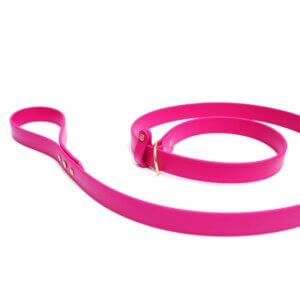
 

How to Choose the Best Dog Leash for Hiking

No matter where you’re hiking, you want to make sure your beloved pet is safe. It helps to have a leash that can withstand environmental challenges while providing appropriate control. The ideal hiking leash balances durability, comfort and functionality to meet the specific demands of wilderness exploration. Consider the following:
  • Material: The best hiking leashes are designed to be durable and are made with materials that can withstand rugged conditions. Heavy-duty nylon webbing is an excellent choice for large and high-energy dogs because it can withstand significant pressure. Look for reinforced stitching at stress points, like the handle and clip connections, if your dog is heavy or pulls a lot. Leashes that are crafted with washable materials are perfect for muddy trail adventures. Our lightweight waterproof BioThane® leashes are also built to last through hikes, walks in the rain, and so much more with incredible strength.
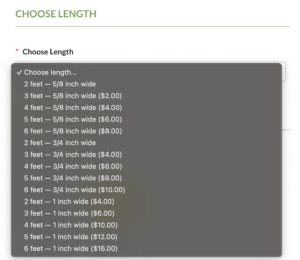
  • Length: Length and adjustability are equally important. When choosing a leash, factor in terrain difficulty and your dog’s size and training level. A 4- to 6-foot leash offers versatility to accommodate different trail conditions. Wider leashes provide better control for larger dogs, while narrower options work well for smaller breeds.
  • Features: Reflective leashes are particularly useful for early morning or evening hikes. Hands Free leashes are able to convert the leash for standard use and then switch back to hands-free quickly, without taking the clip off your pup. Other features to consider include padded handles for extra comfort during long hikes and weather-resistant or washable materials for easy cleanup.


How to Choose the Best Dog Harness for Hiking

Collars are great for showing your dog’s style when you go out for a stroll, but they don’t offer enough control for hitting the trails. Harnesses distribute pressure evenly across your pup’s body to prevent strain on the neck and provide more security when navigating challenging landscapes. To choose the best harness for hiking with your dog, consider these factors:

Material: Comfort is key when selecting a dog harness for outdoor hiking. Choose one made with breathable, weather-resistant materials to prevent overheating and keep your pup dry.

  • Design: Front step-in-harness designs allow unrestricted leg movement during climbs. Look for a harness that also has multiple adjustment points to prevent uncomfortable shifting when traveling over rugged terrain.
  • Fit: With so many new sights, sounds and smells to experience, the trail is sure to leave your dog excited and ready to explore! Choosing the right harness is the best way to keep them secure and comfortable. You’ll know it’s a proper fit if you can slip two fingers between the harness and your dog’s body while it remains snug enough to prevent escape. Padding and adjustable straps can help you create a customized fit tailored to your dog’s needs.
  • Features: Safety features like reflective strips provide visibility during early morning and evening hikes. Other helpful features include, GPS tracking, Fi-compatible harness for extra safety, large-gauge D-rings and reinforced stitching for enhanced durability, and handle options on the back to assist your dog over obstacles like fallen trees or steep rock faces.


Bonus Accessories That Will Improve Your Hike

While a good harness and leash are the foundation of a good hike, these accessories can make the experience even more comfortable and memorable for both of you:

  • Bag dispenser: Part of good trail etiquette is cleaning up after your pet. Clip-on poop bag dispensers make that easy — just attach it to the leash, harness or even to a keychain around your wrist for easy access.
  • Collapsible bowl: Look for a collapsible, lightweight bowl you can clip onto your dog’s leash or harness to make hydration easier.
  • Protective footwear: Some terrains might be rough on sensitive paw pads. Booties made specifically for nature walks can help protect your pup’s feet so they can enjoy a long afternoon in the great outdoors.
  • Dog hoodie: soft dog sweatshirt or hoodie is the perfect way to keep your pup warm during colder months and early morning hikes. Just be sure to monitor them for signs of overheating, as they may work up a sweat throughout the walk. If you plan to hike frequently, consider investing in a raincoat for your dog so you’re not limited by the weather forecast.

  • ID tags: Your dog should always wear some form of identification, and that’s especially important on the trails. Choose a durable, stylish tag you can easily attach to your dog’s collar, then personalize it with your pup’s name and your phone number to help them get back home if they get away from you.

Tips for Hiking Safely With Your Dog

Enjoying a safe and enjoyable hiking experience requires thoughtful preparation and attention to your dog’s well-being throughout your adventure. Even with the right equipment, proper planning and monitoring are essential to prevent accidents or health issues on the trail. Taking appropriate precautions before and during your hike can create memorable outdoor experiences while keeping your furry friend safe and comfortable.

Preparing for the Hike

Before taking your first hike, train your dog to respond reliably to basic commands like come, stay and leave it. If your dog pulls excessively, practice leash training on shorter walks before attempting longer trips. Pack essential supplies, including plenty of water and a compact pet first aid kit with bandages, antiseptic wipes and tweezers.

Consider bringing along your dog’s favorite high-energy treat to maintain their stamina throughout challenging portions of the trail.

During the Hike

Maintain a consistent hydration schedule by offering water every 15 to 20 minutes, especially in warm weather or during strenuous sections of your hike. Monitor your dog closely for signs of fatigue or discomfort, including excessive panting, drooling, lagging or reluctance to continue. Schedule regular rest breaks in shaded areas to prevent overheating and give paw pads time to recover from rough terrain.

Perform quick body checks during breaks, examining paws for cuts or embedded debris and checking for ticks or plant material in the coat. Dogs often push beyond their limits to please their owners, so be prepared to cut your hike short if you notice signs of exhaustion or distress.

Gear Up With Mimi Green for Your Next Adventure


Choosing the right hiking gear is an investment in safety and enjoyment for you and your four-legged companion. Quality leashes and harnesses help prevent injuries while enhancing control on challenging trails. Mimi Green offers exceptional handcrafted options that combine durability with distinctive style. From reflective materials for dawn expeditions to waterproof designs for unexpected showers, our customizable products adapt to your specific hiking needs.